
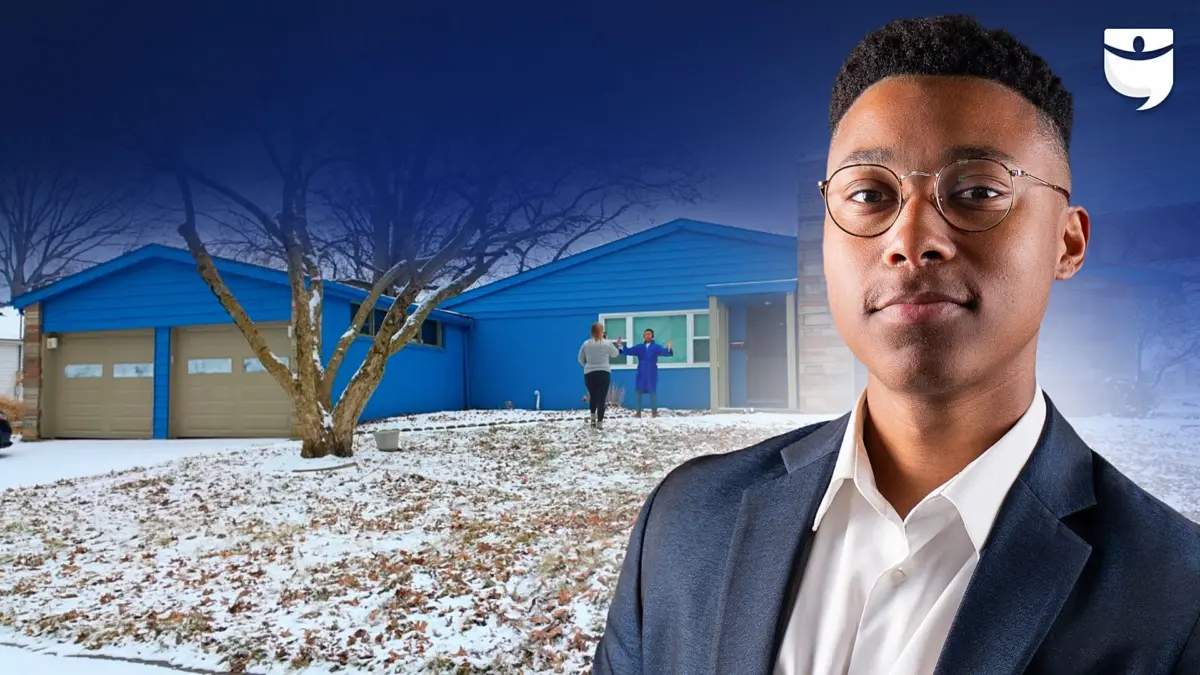
When Obi Johns was a teenager growing up in Columbus, Ohio, he witnessed a masterclass in real estate appreciation that would alter the trajectory of his life. His parents sold their long-time family home—a property they had purchased for roughly $80,000 in the late 1990s—as a fixer-upper for about $230,000. To a teenager, the idea that his family could live in a home for twenty years and essentially get paid to do so through passive market appreciation felt remarkable, especially since they had done very little heavy remodeling.
However, the real shock came months later. The private investor who bought the childhood home put it back on the market after completing some cosmetic updates and sold it rapidly for a staggering $600,000—pocketing a profit of nearly $400,000. Staring at the massive gap between what his family walked away with and what the experienced investor secured, a young Obi looked at his parents and thought to himself, "That should have been us."
That pivotal moment planted a deep seed of curiosity about the mechanics of real estate. Yet, following high school, Johns took a traditional route. He enrolled at Ohio State University, majoring in political science. It took him four years and a college degree to realize that politics was not his true calling. He graduated right into the teeth of the COVID-19 pandemic era, a time defined by historic 3% interest rates, a booming housing market, and widespread public fascination with passive income and financial freedom championed by platforms like BiggerPockets. Recognizing it was time for a career pivot, Johns decided to pursue his real estate license and test whether the industry was right for him.
Entering the Market as an Agent and House Hacker
Before diving headfirst into major investment projects, Johns immersed himself in every facet of the business. He dabbled in wholesaling, studied real estate fundamentals, and successfully earned his license to begin working as a residential real estate agent in Columbus. For his first year or two, he balanced retail client transactions and investor representation, gaining a comprehensive view of how properties moved in the central Ohio market.
Eager to practice what he preached, Johns soon executed his first personal real estate deal: a house hack on a century-old duplex located just blocks away from his childhood neighborhood. In Columbus, strict historical zoning codes enacted in the 1950s and 1960s meant that most multi-family properties were roughly a hundred years old. Finding available inventory was a challenge, with most duplexes tightly held by long-term landlords.
Johns circumvented the traditional Multiple Listing Service (MLS) by attending local real estate meetups. There, he connected with an active local investor who typically flipped 50 to 60 homes a year and retained select properties as rentals. Spotting a video of a nearly finished duplex renovation on the investor’s social media story, Johns immediately recognized the address as being right in his target buy box. He toured the property within twenty minutes, secured his wife’s approval despite her initial hesitation regarding multi-family living, and purchased the home using a conventional loan with a low 5-percent down payment.
While the property required monthly mortgage payments of roughly $3,400, renting out the neighboring unit for $1,800 cut their personal housing expenses down significantly compared to the soaring post-pandemic Columbus rental market, where updated two-bedroom apartments routinely commanded between $2,000 and $2,200. Despite weathering a stressful and costly $7,000 sewer line collapse shortly after moving in, the house hack proved to be a foundational stepping stone in his investing journey.
The Viral House Flip and the Birth of ‘Vibe Flipping’
Armed with practical knowledge from representing clients and navigating his own duplex purchase, Johns decided to take the plunge into house flipping. He wanted to understand the complete cycle—from contractor management and project financing to understanding buyer psychology—so he could advise his clients from a place of firsthand experience rather than theoretical observation.
He acquired his first flip off-market for $153,000, located about ten minutes away from his residence. The project required approximately $40,000 in cosmetic updates, basement finishing, and minor exterior repairs. What separated this project from standard investment plays, however, was Johns’ decision to document the entire journey on Instagram.
Starting from day one—when he encountered unexpected abandoned items left behind by previous occupants—Johns shared daily updates detailing problems, setbacks, and solutions. The series unexpectedly went viral, accumulating over seven million views and rapidly swelling his follower count by 100,000 in just a few days.
Rather than relying on the predictable "copy-and-paste" finishes that saturated the market—such as standard gray walls and generic white shaker cabinets—Johns chose to let his growing online audience dictate the design choices via interactive polls. This listener-driven design model evolved into what he calls "vibe flipping." By testing design concepts in real-time with prospective buyers, Johns ensured the final product met actual consumer demand.
The strategy yielded historic results. When the property was listed, it broke records for the zip code by generating 26 showings in a single day—the highest single-day showing volume in the area for 2024. The home attracted ten offers on its first day on the market, ultimately selling for $25,000 over the asking price and netting Johns a profit exceeding $44,000.
Balancing Stress, Social Media, and Long-Term Strategy
Despite the financial success of his initial flip, Johns made a measured pivot back toward his agency business rather than scaling up an aggressive house-flipping empire. While he acknowledged that flipping was lucrative, he realized that the distinct brand of stress involved did not align with his personal definition of fulfillment. For Johns, the deeper professional reward came from helping retail clients secure wins and guiding first-time homebuyers through major life milestones, a form of stress he found far more tolerable and balanced by personal reward.
His social media presence, built through raw vulnerability rather than projecting an image of infallible expertise, gradually transformed his business. Although building a digital footprint demanded substantial time as a one-man operation, the long-term return on investment materialized significantly. By his third year of active social media marketing, approximately 80 percent of his real estate business stemmed from digital platforms, with prospective clients regularly reaching out because they recognized him as the agent who transparently flipped his first home online.
Subsequent flips, including a mid-century modern project that attracted an out-of-state buyer from Oregon via Zillow and generated a $57,000 profit, continued to validate his audience-driven design approach. By maintaining average days-on-market figures of just five days in a city where average market times hover around 30 to 40 days, Johns demonstrated that prioritizing cozy, thoughtful aesthetics and listening to consumer taste directly improves project margins and sales velocity.
Today, at 28 years old, Johns operates primarily as a top-performing agent in Columbus—ranking in the top 5 percent of his brokerage—while selectively executing a single flip per year to stay attuned to market trends. Alongside preparing for his growing family with his wife, he continues to advocate for low-risk entry points like house hacking and single-family projects, encouraging new investors to embrace initial trial and error as they discover their own path within the real estate industry.