
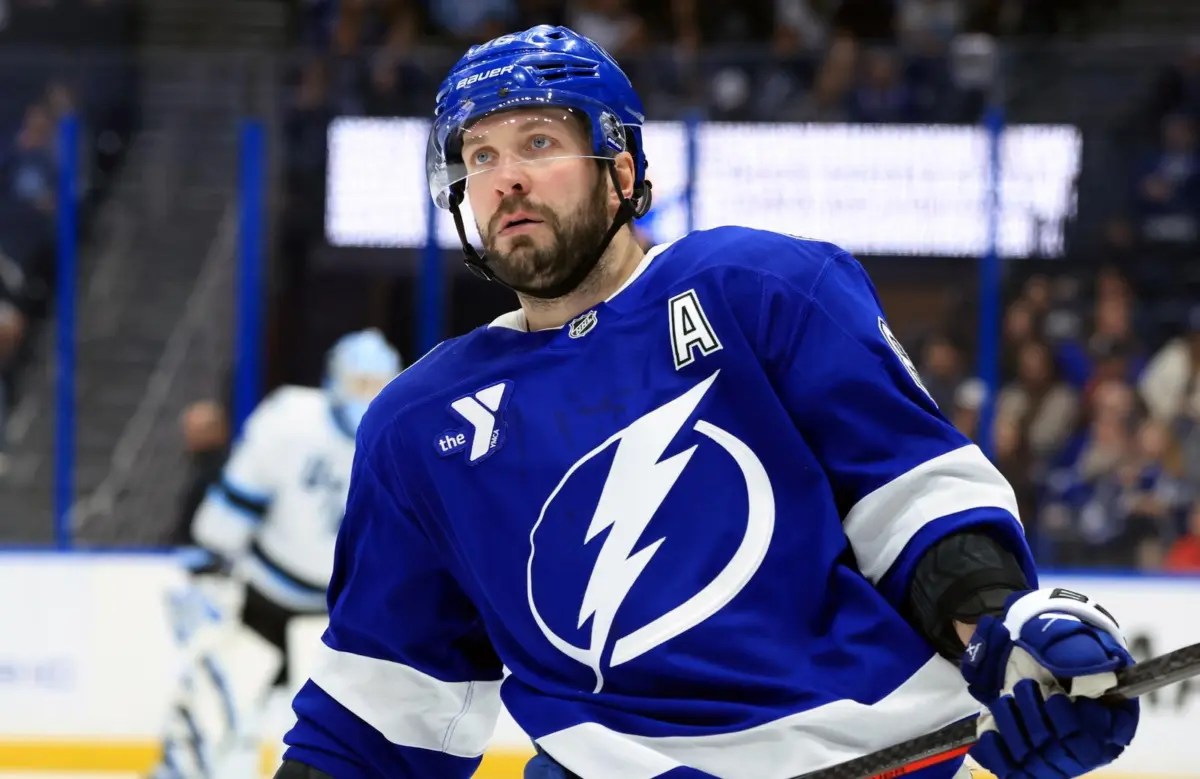
When an NHL franchise enjoys the historic level of success that the Tampa Bay Lightning have experienced over the past nine seasons, the organization naturally builds a pantheon of beloved franchise icons. In that remarkable span, the Lightning captured back-to-back Stanley Cups and reached the conference final an astonishing four times, establishing a standard of excellence that few, if any, modern teams can rival.
Yet, the realities of the salary cap era and a shifting competitive landscape wait for no one. Over the past four seasons, the Bolts have suffered early playoff exits, bowing out in the first round each year while winning a total of just seven postseason games across those four series. Despite the relentless efforts of general manager Julien BriseBois, the front office has been unable to replicate the dominant championship formula that defined the club from 2018 through 2022.
Rather than blindly reinvesting in the veteran stars who delivered so many golden moments to the organization, BriseBois has drawn a hard line in the sand. In doing so, he is signaling a new, uncompromising era in Tampa Bay—one that is steadily pushing legendary figures out the door when their salary demands no longer align with the team’s financial philosophy.
This calculated approach first stunned the hockey world in the summer of 2024. Rather than meeting the contract terms desired by superstar winger and longtime captain Steven Stamkos, BriseBois chose to move on. Stamkos, whose final contract with the Lightning paid him an average annual value of $8.5 million per season, was allowed to test the open market. He ultimately signed a four-year contract with the Nashville Predators worth $8 million annually, leaving Tampa Bay without a return asset for their generational leader.
Now, lightning has struck twice, and the shockwaves are even larger. Reports indicate that the Lightning are unwilling to extend superstar winger Nikita Kucherov’s contract on his terms, leading to a situation where Kucherov has reportedly indicated he will not re-sign with Tampa Bay when he becomes an unrestricted free agent this coming summer. Kucherov currently earns $9.5 million per year—the highest salary of any player on the Bolts roster—but reports suggest he is seeking a substantial raise on his next deal. Some projections indicate he is eyeing a megadeal similar to Kirill Kaprizov’s $17 million AAV, potentially pushing into the $15 million to $20 million per season range. If BriseBois and the front office were prepared to meet that financial threshold, an extension would have been finalized long ago.

This uncompromising stance raises a compelling question across the NHL landscape: Have the Tampa Bay Lightning effectively transformed into the Vegas Golden Knights of the Eastern Conference? Both organizations have certainly earned reputations as take-no-prisoners operations, demonstrating a ruthless, business-first mentality in their relentless pursuit of championships year after year.
The path of least resistance for any management group facing this kind of decision would be to hand over a blank check to their established superstars, pushing the complex task of filling out the rest of the roster down the road. But imagining another recent Stanley Cup-winning organization cutting ties with the very players who built their championship identity highlights just how rare BriseBois’ approach is. In certain traditional hockey markets, fans might revolt in the streets if leadership treated club legends the way BriseBois handled Stamkos, and is now handling Kucherov. Pushing iconic players out the door is often viewed as an unforgivable sin in sports, yet BriseBois clearly operates with a strict budgetary boundary he refuses to cross—even if it means parting ways with elite players who still possess high-level hockey in their futures.
The Vegas Golden Knights have famously—or infamously, depending on the perspective—cast aside productive, high-profile players in their ongoing quest to remain a Stanley Cup front-runner every single season. Now, the Lightning belong squarely in that same conversation. Stamkos and Kucherov were hardly at the twilight of their careers when management balked at their financial demands. Stamkos was 34 years old when he departed for Nashville, and he subsequently proved he could still produce at an elite level by netting 42 goals for the Predators last season. Similarly, Kucherov will turn 34 in June and remains one of the fiercest, most productive competitors in the entire NHL.
To be fair, the calculated gamble BriseBois is taking with Kucherov could ultimately benefit Tampa Bay. Should Kucherov’s performance begin to decline, locking him into a long-term contract worth nearly double his current salary would severely cripple the franchise’s flexibility and compromise its ability to ice a competitive supporting cast for years to come. Conversely, if Kucherov continues to dominate in another team’s uniform while the Lightning struggle to find consistent offensive production, the backlash from the fanbase could be severe.
By playing hardball with arguably the most prolific player on the roster, BriseBois is undeniably tempting fate. Yet, a consistent operational principle is at play here, and credit is due to a general manager willing to implement a strict financial structure despite knowing it will draw the ire of paying customers. Adopting this hardline approach with a single aging star is one thing, but applying it to two cornerstone icons sends an unmistakable message throughout the organization: no player is above the budget, and anyone could be moved if the economics no longer make sense.
Unless a dramatic shift occurs and Kucherov alters his stance to remain a Bolt for life, the Tampa Bay Lightning must now be viewed through the lens of Vegas South-East—a franchise fully prepared to walk away from the very players who once defined their entire identity. It remains a high-stakes, bold strategy, but one that carries the constant potential for either long-term financial stability or utter organizational turmoil.