
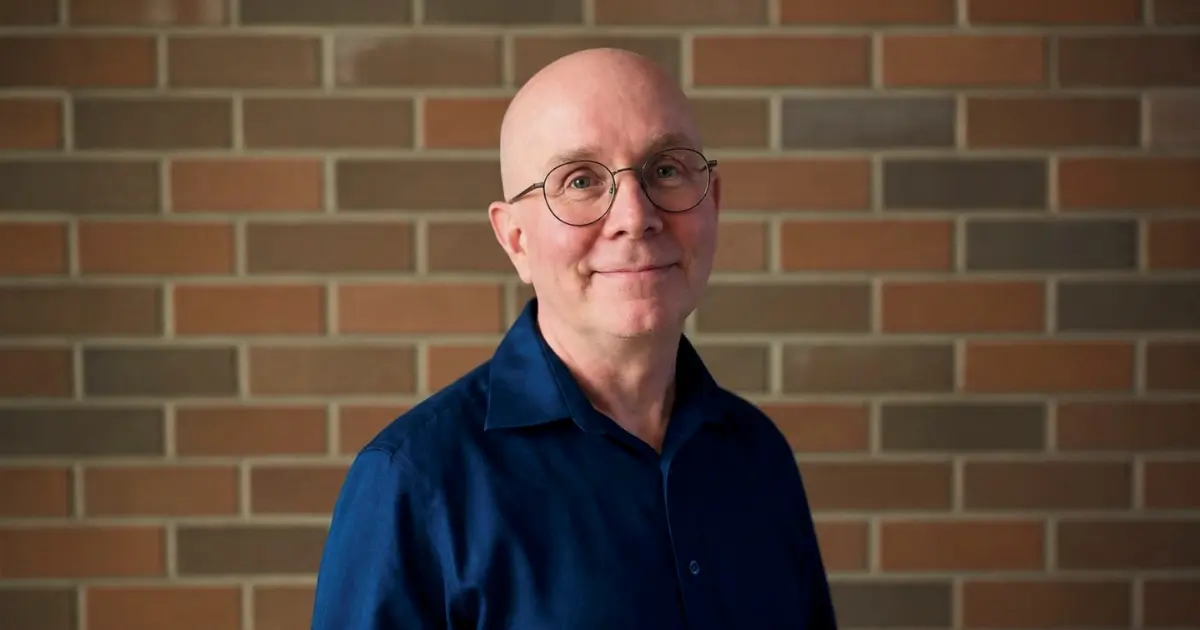
As he prepares to officially step into his new role on January 1, Reverend Éric Hébert-Daly is already deeply immersed in the transition process. Confirmed at a General Council Executive meeting in September following a rigorous seven-month search, Hébert-Daly is stepping up to succeed the retiring Reverend Michael Blair as the general secretary of the United Church of Canada. Between meetings at a bustling Montreal train station, Hébert-Daly spoke with Broadview editor Janice Young about his vision for the denomination, the lessons he is bringing from his diverse career in politics and nonprofit leadership, and his hopes for a church navigating a period of profound cultural and institutional transformation.
Why the Call to Lead?
Reflecting on his motivation for taking on the demanding national leadership role, Hébert-Daly expressed a deep enthusiasm for challenging conventional wisdom within the church. He spoke of the desire to break out of well-worn paths that have long defined institutional religious life.
"I started to imagine what that could look like on a national scale and how I could hopefully bring a little bit of optimism and enthusiasm to the church over the next little while," Hébert-Daly explained during the interview. For him, this calling is rooted in a natural place of spiritual guidance, rooted in where he believes God is leading the denomination forward.
A Vision for a Smaller, More Impactful Church
When asked about his long-term vision for the United Church of Canada, Hébert-Daly pointed to societal trends that consistently highlight a widespread spiritual hunger. Despite polls indicating a strong public appetite for connecting to something larger than oneself, the institutional church has often struggled to bridge that gap.
"And here we are, in a place that talks about deep stuff and is all about community, yet we’re not meeting that need somehow," he noted.
Looking ahead, Hébert-Daly envisions a different kind of footprint for the denomination—one that prioritizes depth and cultural resonance over sheer size. He voiced a desire to see a church that may be slightly smaller in numbers, but is nationally recognized—even by those who do not regularly attend services—as a primary destination for deep spiritual experiences, meaningful conversations, and authentic community engagement.
Lessons from Political and Nonprofit Leadership
Before answering the call to ministry, Hébert-Daly built a robust career in political and nonprofit leadership. Most notably, he served as the national director of the New Democratic Party (NDP) under the late Jack Layton during a period when many political analysts had written off the party as a spent force.
Drawing parallels between his past political career and his upcoming tenure as general secretary, Hébert-Daly recalled Layton’s forward-looking philosophy. Rather than dwelling on past glories or institutional decline, Layton frequently urged his team to focus on the road ahead, famously comparing political campaigns to running a race where looking backward slows a runner down.
"Those lessons from politics, which of course led Jack to the biggest breakthrough the NDP ever had, are something I carry with me," Hébert-Daly said. He firmly rejects the narrative that the decline of the church is a prewritten, inevitable conclusion, noting that he has seen institutions and movements written off before, only to experience remarkable renewal.
Bridging Communities and Overcoming Colonial Mindsets
As the first francophone general secretary in the denomination’s history, Hébert-Daly’s election marks a significant milestone. However, he remains pragmatic about the broader historical context in Canada, where the majority of the francophone population has historically been rooted in the Roman Catholic tradition. Integrating francophone communities more fully into the United Church has required intentional effort and time.
Expanding on the theme of inclusion, Hébert-Daly emphasized that fostering deeper connections with francophone, Indigenous, migrant, and diasporic communities requires a fundamental shift in how the church approaches ministry. Instead of trying to satisfy internal institutional needs, the focus must shift toward genuinely meeting the needs of diverse populations.
Addressing the vital relationship with Indigenous communities of faith, Hébert-Daly referenced the concept of the two independent canoes, asserting that the church must completely abandon colonial mindsets. At the same time, he emphasized the importance of periodic, meaningful encounters.
"We also occasionally need to tie our boats together, have lunch, and then continue, because those encounters and relationships will be transformative for both of us," he said. "We need to find ways where the church is being transformed as a whole, not ‘you stay over there, and I stay over here and we’ll do our thing.’"
Navigating Challenges and Embracing Evangelism
As he prepares to assume office, Hébert-Daly identifies several pressing challenges facing the general secretary’s office. Alongside the ongoing, evolving relationship with the Indigenous church—which was highlighted as a major turning point following the National Indigenous Spiritual Gathering this past summer—he noted concerns about how local congregations view their own ministries. He cautioned against Sunday services that begin to feel overly administrative, resembling structured meetings with an agenda rather than sacred spaces open to the movement of the Spirit.
The conversation also turned to the delicate subject of growth and community engagement, specifically touching on the concept of evangelism. Hébert-Daly acknowledged that the word itself has long made the United Church uncomfortable, given how aggressive or exclusionary forms of evangelism have played out over past generations.
Yet, he believes the denomination must reclaim a healthy, authentic way of sharing its faith. "If we are in a relationship with God and we’ve had an impact through our communities of faith or through prayer or through our connection with the divine, it’s unfortunate that we’re not sharing that. It’s unfortunate that we’re not screaming that from the rooftops," he said.
Fostering Lay Leadership and Supporting Ministers
Looking forward to the opportunities ahead, Hébert-Daly highlighted the importance of empowering lay leadership and recognizing the ministry of the entire people of God. He stressed the urgent need to ensure that ministry personnel feel adequately supported, inspired, and resilient, acknowledging that serving as a minister in the contemporary Canadian Christian landscape is exceptionally demanding.
Supporting one another, celebrating what he calls "failing forward"—the process of trying new initiatives, learning from missteps, and trying again—will be crucial. Having observed a cultural shift during his four years as a regional executive minister, where congregations moved from demanding isolation to embracing collaboration, he believes the church is at a pivotal turning point.
Reflecting on his time working with smaller rural communities of faith, Hébert-Daly shared how those experiences continue to inspire his leadership. He praised the unique strengths of rural churches, noting their natural ability to maintain porous boundaries between the church building and the surrounding community.
A Personal Journey to the United Church
Hébert-Daly’s path to leading the United Church of Canada is deeply personal. Born into a francophone Roman Catholic family, his parents—children of Quebec’s Quiet Revolution—actively distanced themselves from the church and discouraged his participation. It was his grandparents who brought him to church and kept him connected to his faith.
As he grew older, however, he found himself struggling with various aspects of Catholic policy, particularly regarding the treatment of women, divorced individuals, and the queer community. Discovering the United Church provided a spiritual home where he could bring his full self while worshipping alongside people holding diverse viewpoints. In an era marked by societal polarization and a lack of listening, he sees the church as uniquely positioned to serve as a sacred place of encounter.
"Can you imagine if the church was known for being a school for how to love one another?" Hébert-Daly asked, reflecting on the foundational teachings of Christ. "What an amazing legacy for us to have as a church—as a great societally transforming place. That gives me shivers."