
If you haven’t yet seen Louis Theroux’s documentary Inside the Manosphere, media critics and cultural commentators agree it should be marked down as must-see television for parents, particularly those raising boys. However, it comes with a sobering warning: it functions less like standard documentary filmmaking and more like a psychological horror film that lingers in the viewer’s mind long after the credits roll. As modern cultural landscapes go, horror cinema has little on the chaotic and often toxic ecosystem that is the contemporary manosphere.
In the documentary, Theroux—known for his understated, calm, and clinically detached British journalistic style—explores the manosphere entirely from the inside. As he engages with some of the internet’s most extreme influencers who peddle varying degrees of misogyny, antisemitism, conspiracy theories, and homophobia, Theroux finds himself inadvertently pulled directly into the fray. He is made into content, selectively edited out of context, and expertly trolled by his subjects, even while operating his own camera. During one particularly tense and disturbing night out, one British influencer looks directly into Theroux’s camera and remarks, “He really don’t wanna be in the live. He don’t wanna be on the content. But he’s got no choice.”
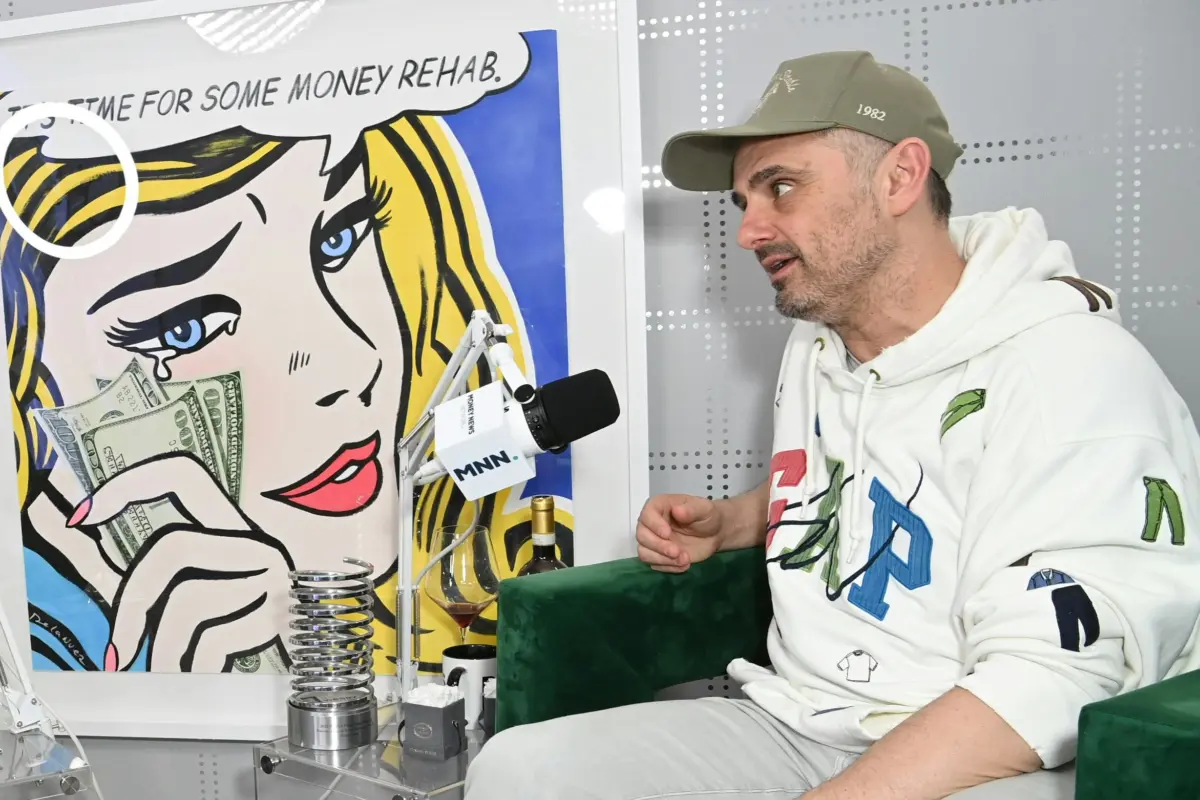
Yet, parents navigating the digital age do have a choice. They retain the agency to shield their children from digital depravity, push back against aggressive cultural creep, and steer youth toward healthier figures. Enter figures like Gary Vaynerchuk—the best-selling author, media personality, entrepreneur, and unabashed public personality who has increasingly positioned himself as an intentional antidote to the vitriol, radicalization, and grievances proliferating across the manosphere.
As a high-powered corporate executive serving as the CEO of VaynerMedia and Chairman of VaynerX, Vaynerchuk presents a hard-nosed, fast-talking entrepreneurial ethos rooted in the concept of self-reliance and bootstrapping one’s life. Beneath the high-energy business persona, however, he maintains a foundational belief in basic human decency and kindness. Reflecting on his own upbringing, Vaynerchuk has noted that his security comes from strong parenting and an identity deeply wrapped up in being a fundamentally decent person.
According to Vaynerchuk, parents can choose kindness, but they must simultaneously embrace accountability. He argues that modern households have fallen into a trap of aggressively coddling children on one hand while attempting to micro-manage their daily lives on the other—whether through constant digital tracking or stepping in to solve minor conflicts. Supporting a child, Vaynerchuk emphasizes, is everything, but enabling a child is a disaster. Walking that delicate tightrope is the central challenge of modern parenting.
When examining why modern young people—and particularly young men—are increasingly checking out from both the traditional workforce and active social engagement, Vaynerchuk points squarely to a collective failure in contemporary parenting methodologies.
“I think modern parenting has lost its way,” Vaynerchuk explains, noting that society tends to scapegoat social media simply because accepting accountability is difficult. He points to the widespread adoption of participation trophies, an overemphasis on conflict avoidance, and a general culture of excessive coddling as primary missteps. While acknowledging his own identity as a devoted family-oriented person, he recalls a childhood marked by standard neighborhood conflicts and parental detachment from minor playground disputes, contrasting it with today’s hyper-involved helicopter parenting.
Vaynerchuk notes a distinct historical shift over the past two decades, pointing out that parents in previous generations did not routinely confront teachers over a grade of B instead of an A, nor did they track their adult children’s locations via constant smartphone check-ins. Asking why parents feel compelled to continuously monitor 27-year-old sons through shared family tracking plans, he argues that society must allow young men the space to face adversity independently. Employing a vivid metaphor, he asks whether a lion raised securely within the confines of a metropolitan zoo could ever truly compete with a lion raised in the harsh realities of the jungle, concluding that modern society has spent decades producing zoo lions rather than resilient individuals.
Sports, in Vaynerchuk’s view, remain one of the most vital training grounds for teaching young people how to handle conflict, emotional distress, and competitive failure. He recalls encouraging children who cried after losing athletic matches rather than suppressing those intense emotions or shielding them from disappointment. Treating competitive sports as trivial by telling a child “it’s just a game,” he suggests, teaches a dangerous apathy that can eventually manifest as depressive tendencies later in life.
Furthermore, Vaynerchuk strongly advocates for allowing children to navigate difficult authorities—such as an overly demanding or unyielding sports coach—without parental interference. Dealing with a difficult coach, he argues, prepares a young person for the inevitability of encountering a difficult boss, a strict government official, or challenging figures in everyday life. The rise of young adults throwing temper tantrums in their late twenties often stems directly from a fundamental lack of exposure to uncompromising authority during their developmental years.
Humility, Vaynerchuk maintains, is forged through this exact crucible of competition, loss, and accountability. Reflecting on his own childhood, he admits that early athletic successes initially led him to possess an inflated self-image, believing himself to be exceptionally talented. However, continuous cycles of losing matches, dusting himself off, and trying again introduced him to the necessary, albeit bitter, taste of humility. Much like an acquired culinary taste, he suggests that humility eventually becomes a powerful and grounding internal compass, serving as the foundation for long-term personal and professional development. Rather than fearing adversity or failure, Vaynerchuk embraces the underdog narrative, expressing a deep-seated appreciation for the mental resilience built through struggle.
A core philosophical pillar of Vaynerchuk’s parenting philosophy—one frequently cited by modern families—is the blunt assertion that a parent’s primary role is not to act as their child’s best friend. When confronting the reality of modern parenting, Vaynerchuk argues that if parents fail to teach their children about consequences and accountability, life will eventually teach those lessons later, often with far harsher consequences once a young adult enters the independent world at age 22 or beyond.
While maintaining a warm, supportive relationship with a child is essential, Vaynerchuk warns against crossing the line into enablement. Parents who constantly shield their children from the fallout of their own actions risk becoming enablers who deal out the dangerous drug of zero accountability. By routinely blaming external factors for a young person’s struggles, parents inadvertently rob them of the agency required to mature into capable adults.
When discussing the practical application of these principles to financial independence and the modern work ethic, Vaynerchuk offers a similarly uncompromising perspective. He suggests that financial support should taper off sharply as teenagers reach late adolescence, warning that financially maintaining a son or daughter well into their twenties ultimately undermines their self-worth.
Drawing from thousands of direct messages and interactions with young men in their mid-to-late twenties, Vaynerchuk unearths a troubling psychological phenomenon. While young men may outwardly accept financial assistance from aging parents to maintain a high-consumption lifestyle—funding luxury gym memberships, rideshare apps, vacations, and upscale social habits—internal resentment often builds. Behind closed doors, young men relying entirely on parental subsidies often harbor deep insecurities, recognizing that ongoing financial dependence signals a lack of genuine autonomy and respect as independent men.
True success, Vaynerchuk reiterates, is not merely measured by outward financial accumulation or high-status consumer metrics, but by internal peace of mind, emotional stability, and the absence of chronic anxiety or depression. Ultimately, he reserves his highest level of admiration for ordinary individuals who work demanding jobs, shoulder heavy family responsibilities without complaint, and strive every day to build independent lives through sheer, unyielding effort.