
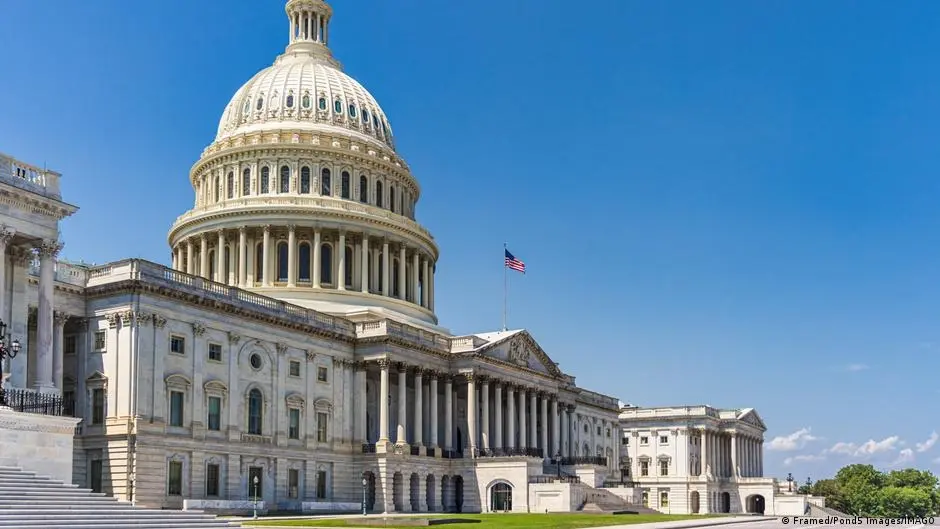
Women make up roughly 51% of the population of the United States, yet their presence in the halls of power remains far from equal. In the United States Congress, women account for only 28.4% of all lawmakers. While that figure highlights a persistent and wide demographic deficit, it also represents an all-time high in the nation’s history, with a record total of 152 women holding office across both chambers—the House of Representatives and the Senate.
A parallel dynamic is playing out across the executive leadership of the 50 US states. Fourteen governors—equating to 28%—are women, marking another historical milestone in American politics. Despite these slow and incremental gains, parity remains a distant prospect.
Political scientists and researchers emphasize that the persistent underrepresentation of women in national and state leadership is not an accident of voter preference, but the outcome of enduring institutional obstacles, financial imbalances, and political traditions.
"Some of them are structural: There are rules and processes in place in our political system that make it harder for any newcomers to break in," explains Kelly Dittmar, the director of research at the Center for American Women and Politics (CAWP) at Rutgers University. "Historically, women were newcomers."
The architecture of the American electoral system contributes significantly to this reality. In the US Senate, members serve staggered six-year terms, meaning that only about a third of the chamber faces election every two years. In the House of Representatives, members face election every two years; however, because there are no federal term limits, incumbents can run repeatedly and occupy their seats for decades. This high rate of incumbency means that open seats are scarce, restricting the opportunities for new candidates—including women—to enter the legislative arena.
Campaign finance poses another formidable hurdle. Running for national office in the United States requires substantial financial resources. Historically, female candidates have faced greater difficulty tapping into networks of wealthy donors, who, alongside traditional party gatekeepers and leaders, remain predominantly male. Dittmar points out that male political leaders are also far more prone to recruit men as prospective contenders. At the same time, persistent cultural biases continue to influence public perceptions, shaped by longstanding stereotypes and expectations regarding what roles women can and should undertake in public life.
The upcoming November elections will serve as a crucial barometer of whether female representation will expand or contract over the next two years. Voters will decide all 435 seats in the House of Representatives, 35 of the 100 seats in the Senate, and the governorships of 36 states.
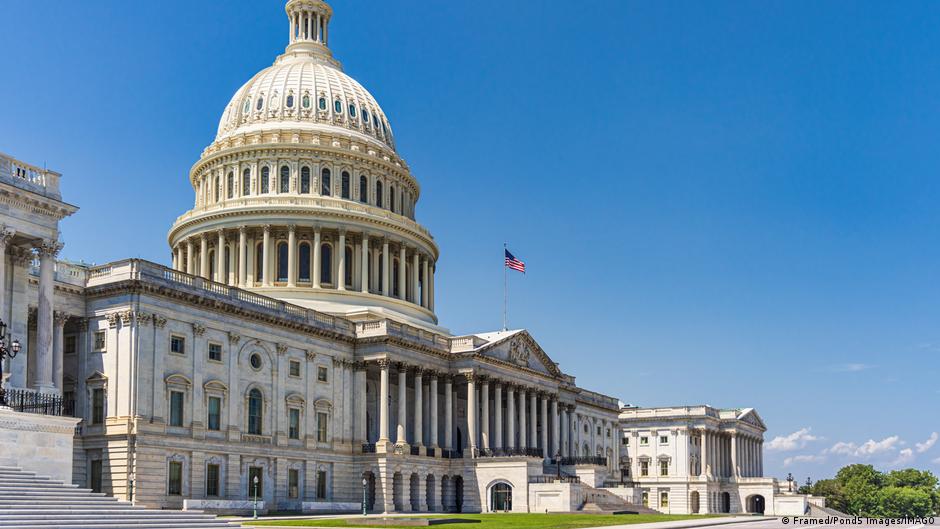
House of Representatives: Female Democrats Outnumber Female Republicans Three to One
Of the 435 voting members serving in the House of Representatives, 125 are women. However, this representation is marked by a deep partisan imbalance. Mirroring patterns found in both the Senate and state executive mansions, female lawmakers are far more heavily concentrated within the Democratic Party than within the Republican Party.
Currently, 95 female representatives serve as Democrats, compared to just 30 Republicans—a ratio of more than three to one.
According to Dittmar, this asymmetry reflects divergent institutional priorities and support mechanisms within the two primary parties. "There is a far less robust support infrastructure for women within the Republican Party," Dittmar observes. She notes that the specialized organizations dedicated to recruiting, mentoring, training, and financing female candidates operate almost exclusively on the Democratic side of the aisle or function as strictly non-partisan entities.
Furthermore, leadership motivations diverge. "A lot of the party leaders don’t see an electoral incentive or pressure" to recruit more women, Dittmar explains, contrasting this approach with Democratic voters and party officials, who place significant emphasis on diversity and value seeing women among their elected officials.
The power dynamic in the House also influences who wields legislative control. Republicans currently hold the majority in the chamber, giving them the authority to select the Speaker of the House, a constitutional post currently occupied by Mike Johnson. Throughout American history, only one woman has ever held the Speaker’s gavel: California Democrat Nancy Pelosi, who served as Speaker from 2007 to 2011 and returned to the position from 2019 to 2023.
US Senate: Even Higher Bar for Women
Securing a place in the upper chamber of the US Congress presents an even more difficult challenge for aspiring female candidates. Women make up 27% of the US Senate, holding 27 of the 100 seats. Like the House, female senators lean Democratic, with 16 Democrats and 11 Republicans.
Because each of the 50 states is allocated exactly two senators regardless of landmass or population, these lawmakers represent broad statewide constituencies rather than individual congressional districts. Consequently, they answer to substantially larger electorates than most members of the House.

"With the Senate, it’s an opportunity and timing issue," Dittmar notes. With six-year terms and only roughly one-third of the 100 seats up for election every two years, Senate turnover is exceptionally low. For women seeking to break into the chamber, opportunities to run for an open seat without taking on an entrenched incumbent are rare.
The financial scale required to run a Senate race adds another barrier. Running a statewide campaign demands millions of dollars, far exceeding the typical budget of a district-level House race. Studies show that female candidates generally possess less personal wealth than their male counterparts, putting them at an immediate disadvantage in campaigns where personal liquidity and donor networks are decisive.
Despite these hurdles, the November midterms present a potential historic milestone. In Minnesota, Democratic candidate Peggy Flanagan is campaigning for the Senate in a race that could make her the first Native American woman ever elected to the chamber. Flanagan is a member of the Ojibwe—also known as Chippewa—an Indigenous people whose ancestral lands encompass the Great Lakes region of the United States and Canada.
Flanagan currently serves as Minnesota’s lieutenant governor. Recent polling indicates her campaign is well-positioned, maintaining a narrow lead over her Republican opponent, Michele Tafoya, a former television sports reporter who later worked as an adviser to conservative political figures.
First Black Woman State Governor?
State gubernatorial races across 36 states could also reshape political history. Among the 14 women currently serving as state governors, 10 are Democrats and four are Republicans. Six of these incumbent women are standing for reelection, among them Arkansas Governor Sarah Huckabee Sanders, a Republican who previously served as White House press secretary during Donald Trump’s first presidential administration.
The upcoming elections could also produce the first Black woman governor in the history of the United States, an executive barrier that has never been broken.
Two races offer possible paths to that milestone. In Minnesota, Democratic Governor Tim Walz—who served as Kamala Harris’s vice-presidential running mate in the 2024 presidential election—is not seeking reelection. The contest to succeed him features a matchup between Democratic candidate Amy Klobuchar, who has represented Minnesota in the US Senate since 2007, and Republican candidate Lisa DeMuth, who is Black.

Dittmar views a DeMuth victory in Minnesota as unlikely, citing the state’s solid Democratic leanings and Klobuchar’s long-established statewide profile and familiarity among voters.
The southern state of Georgia presents a far more competitive landscape. There, Democratic candidate Keisha Lance Bottoms, who is Black, is running for governor in a contest that experts view as wide open.
"That race is considered a toss-up, 50-50," Dittmar states. In her assessment, Bottoms "absolutely has a chance to be the first Black woman governor."
The Georgia contest has drawn the direct attention of national political figures. Former President Barack Obama has emerged as Bottoms’s most prominent backer, while President Donald Trump has thrown his endorsement behind the Republican nominee, Rick Jackson, underscoring the high political stakes as voters prepare to cast their ballots.