
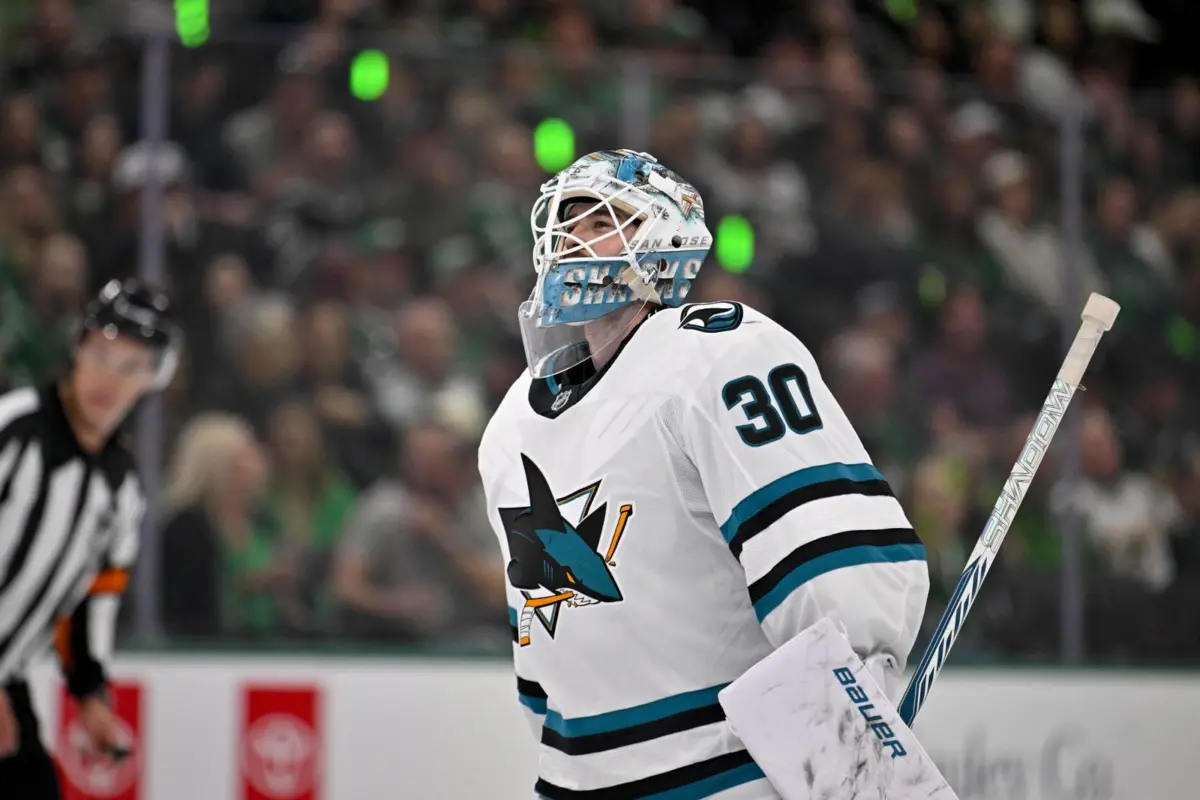
The San Jose Sharks enter the latest stretch of the NHL season boasting one of the most dynamic and envy-inducing groups of young talent in the entire league, headlined by generational superstar Macklin Celebrini. Yet, despite the undeniable promise humming through the SAP Center, the Sharks’ uneven start to the campaign serves as a stark reminder that an up-and-coming elite core cannot simply fast-track its way past the NHL’s steep developmental curve. As San Jose navigates the opening weeks of the schedule, the hockey world is left wondering what is truly fair to expect from a franchise caught between the high ambitions of tomorrow and the grinding realities of today.
The early returns on the ice paint a picture of a team still searching for its definitive identity. After stringing together some encouraging performances, the Sharks have dropped two of three games, stumbling against the high-octane firepower of the Edmonton Oilers and the relentless, gritty style of the Boston Bruins. While a 4-3-0 record might look respectable at a glance, a deeper dive into the box scores reveals a layer of volatility that has analysts and fans watching closely. Notably, San Jose has yet to secure a single victory in regulation time, having grinded out three wins in the extra frame alongside a shootout triumph. In a league where dominant teams assert control over 60 minutes, winning exclusively on the margins is a cause for cautious concern.
Equally telling—and perhaps more revealing of the team’s immediate competitive anxieties—is how head coach Ryan Warsofsky is deploying his roster. Navigating the delicate balance between developing future franchise cornerstones and icing a competitive lineup on a nightly basis, Warsofsky has not yet extended blanket trust to his influx of young talent. While Celebrini commands the ice as the undisputed focal point of the franchise, logging a team-best 22:02 of ice time per game, his youthful peers are experiencing a much more measured introduction to the professional ranks.
Ivar Stenberg, a highly touted selection from the 2006 draft, averages just 15:37 of ice time. Young star center Michael Misa is currently seeing only 13:31 per night, while 20-year-old winger Igor Chernyshov is hovering around 13:57. These figures highlight the cautious approach being taken by the coaching staff, even as fans clamor to see more of the organization’s future pillars.
Like virtually every professional coach skating under the daily, unrelenting pressure to secure victories and salvage standings points, Warsofsky is leaning heavily on his veteran contingent to shoulder the heavy lifting. The reliance on experience is evident when examining the team’s top-tier minute-munchers. Five of San Jose’s top nine players in average time on ice are battle-tested veterans. This group includes defensemen Jacob Trouba, who logs a demanding 21:46 per game, Darnell Nurse at 20:35, Michael Kesselring at 19:26, and Dmitry Orlov at 18:36, alongside forward Alexander Wennberg, who pulls a steady 20:05.
There is no denying that San Jose’s core is among the most exciting assemblies of talent in the modern NHL. The raw skill, hockey IQ, and offensive ceiling present in the Sharks’ pipeline are staggering. However, that young core is still in the nascent stages of finding its footing. Translating junior or amateur dominance into consistent, high-level execution at the NHL level requires a developmental runway. Graduation to the next tier of competitiveness is rarely a linear trajectory, and the Sharks are currently experiencing the dips and valleys inherent to that evolutionary process.

None of this is to suggest that the organization should lower its internal bar or abandon aspirations of securing a Stanley Cup playoff berth this season. Franchises with high-end talent always harbor ambitions of playing spring hockey. But keeping those expectations grounded means acknowledging that the road forward will inevitably feature bumps, bruises, and periods of regression. Every rebuilding team that eventually turns the corner must first weather the storm of inconsistency.
Macklin Celebrini, for his part, has proven that he belongs in a completely separate class of player. Operating at a magnificent 1.60 points-per-game pace with six assists and eight points through his first five contests, the superstar forward has picked up right where he left off. Yet, even a talent of Celebrini’s magnitude cannot single-handedly drag the San Jose Sharks to victory on a nightly basis. He will require meaningful, sustained support from a cast of youngsters that includes Will Smith, Sam Dickinson, Stenberg, Misa, and Chernyshov. On many nights, that necessary consistency from the supporting cast will simply be lacking as they adjust to the speed and physicality of the majors.
The structural flaws in the early-season stat sheets further illustrate a team caught in transition. It is somewhat of a letdown to see the Sharks currently operating with the sixth-worst offense in the league, averaging a meager 2.57 goals-for per game. Compounding matters is a leaky backend that ranks as the eighth-worst defense in the NHL, surrendering an average of 3.57 goals-against. When a club struggles to generate consistent offense while simultaneously giving up high danger chances at an alarming rate, it points directly to a squad still figuring out its tactical identity—a recipe for undeniably uneven play.
The modern NHL schedule is a taxing, 82-game marathon that is more punishing than ever before, presenting a monumental physical and mental challenge for players still adapting to the daily grind of professional sports. Only the truly elite, cream-of-the-crop hockey players are capable of transitioning seamlessly to the top of the professional food chain without missing a beat. That rare, transcendent capability is precisely what the hockey world is witnessing in a generational talent like Celebrini. But for virtually every other prospect, an intensive, sometimes painful acclimation process is mandatory.
Looking further down the road, a time will undoubtedly come—perhaps a couple of seasons from now—when Michael Misa has firmly entrenched himself as a central pillar in the team’s top-six forward group. The same expectations apply to Will Smith, Ivar Stenberg, and Igor Chernyshov as they mature into their respective ceilings. But right now, Ryan Warsofsky’s primary mandate is to guide the San Jose Sharks into the postseason in the here and now. Given those immediate competitive pressures, it is entirely logical to expect the coaching staff to continue relying heavily on the predictable presence of veterans to weather the storm.
Ultimately, the San Jose Sharks possess all the necessary ingredients to establish themselves as a legitimate playoff-caliber team. Yet, if the journey includes lateral steps, stalled momentum, or outright regressions along the way, it should be viewed simply as the mandatory cost of doing business. Transforming a franchise from one perpetually mired in a deep playoff drought into a legitimate championship contender is a complex undertaking, and the Sharks are currently paying that tuition on the ice every single week.