
When travel writers set off in search of fresh inspiration, they typically anticipate crossing borders, discovering hidden geographies, or stumbling upon exotic landscapes that completely upend their worldview. Yet, for one traveler returning from the historic canals of Venice, the most profound realization had nothing to do with finding something entirely new. Instead, the journey yielded a much quieter, more transformative insight: the true challenge of creative renewal lies not in discovering unfamiliar horizons, but in learning to view familiar, everyday things through an entirely transformed lens.
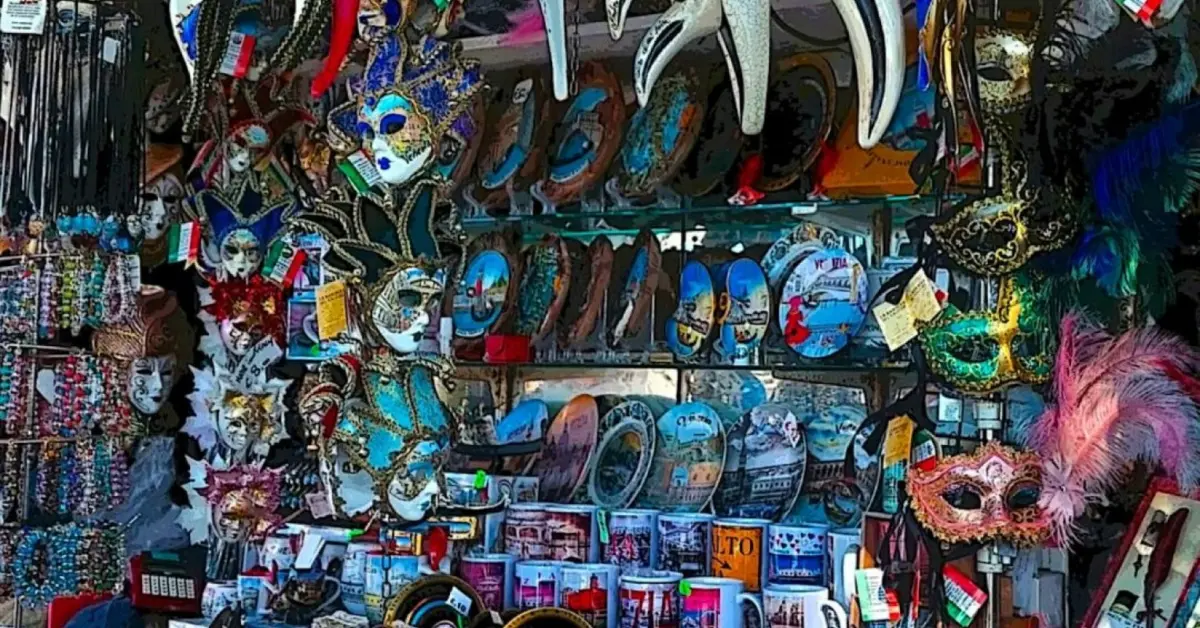
This realization took root during a summer visit to Italy’s floating city. Arriving on the very first day of the trip, the traveler exhibited a familiar defensive reflex honed by years of navigating heavily touristed destinations. Hurrying past the swarms of visitors clogging the narrow alleyways and bypassing the endless rows of gaudy souvenir stalls overflowing with plastic trinkets, the destination was a sanctuary of high culture: the Ca’ Pesaro, the International Gallery of Modern Art. The objective was clear and targeted—to experience the celebrated exhibition by artist Hernan Bas, a contemporary painter known for his intricate, narrative-driven works.
Heading straight into the gallery, the traveler carried a set of rigid, pre-existing assumptions about the medium of portraiture. For years, the genre had been dismissed as a traditional, perhaps even antiquated, artistic exercise that seemingly had little left to offer a modern observer. Portraiture felt like a dusty chapter in art history, constrained by the likenesses of historical figures or bourgeois subjects, far removed from the pulse of contemporary life.
Hernan Bas, however, systematically dismantled that perspective. Standing before the canvases, the traveler confronted a startling juxtaposition: Bas’s paintings depicted modern tourists posed directly in front of the very same cheap, mass-produced souvenirs that had just been so eagerly dismissed on the walk to the museum. For the artist, plastic gondolas, glowing knick-knacks, and neon souvenirs were not merely visual clutter or signs of vulgar commercialism. Instead, they served as vital, compelling subjects worthy of serious artistic exploration.
The brilliance of the exhibition lay in its synthesis of the unexpected. Bas did not invent an entirely novel artistic subject out of thin air. Rather, he executed a masterclass in recontextualization by combining two elements the traveler had previously written off as thoroughly uninspiring—traditional portraiture and the ubiquitous commercial detritus of global tourism. By placing these mundane objects at the center of high art, Bas forced a radical shift in perspective.
Leaving the gallery and stepping back out into the bustling Venetian streets, the perceptual landscape had fundamentally altered. The very souvenir stalls that had moments ago been dismissed as visual noise now appeared transformed, resembling miniature cultural museums cataloging human desire and mass aspiration. Those rows of plastic trinkets were no longer mere pieces of cheap plastic destined for the landfill; they stood as tangible markers of identity, physical placeholders for geography, physical manifestations of memory, and vehicles for modern nostalgia. What had been deliberately avoided and ignored only hours prior suddenly demanded closer examination.
First Glance vs. Second Glance
To understand why a simple exhibition could spark such a profound shift in perception, cognitive science and psychology offer valuable insights into how human beings process the visual world. The human brain does not operate as a neutral, objective video camera recording every detail of reality in real-time. Instead, it functions as an active, energy-conserving filter. Constantly sorting through a deluge of sensory information, the brain must make instantaneous decisions regarding what deserves conscious attention and what can be safely ignored. Without this filtering mechanism, daily survival would be impossible, as human cognition would quickly buckle under the sheer weight of sensory overload.
Psychologists frequently categorize this dual-processing reality through the framework of System 1 and System 2 thinking. System 1 operates automatically, rapidly, and largely outside of conscious awareness. It allows individuals to make split-second judgments, such as walking past a tourist kiosk in Venice and instantly labeling it as cheap, uninspired commercial clutter. This instantaneous dismissal is not born of sheer laziness or a lack of appreciation for culture; rather, it is an essential cognitive shortcut designed to conserve mental energy and prevent cognitive fatigue. However, the sheer speed and efficiency of System 1 come with a significant trade-off: it frequently traps observers on the surface of reality, blinding them to complexity and nuance.
In contrast, System 2 thinking represents the brain’s slower, more deliberate, and analytical mode of operation. It requires an intentional pause, demanding that the individual step off cognitive autopilot and dedicate genuine mental effort to the task at hand. Taking a second look at a familiar object or environment is System 2 thinking in action. It is the moment an observer stops, reflects, and asks a disarming question: "Wait, what am I actually seeing right now?" That single inquiry possesses the power to dismantle old assumptions and rewrite how the world is experienced.
For the Venetian traveler, this psychological shift bridged two distinct conceptual divides. Initially, the souvenir stalls were categorized as mere clutter to be avoided, but the encounter with Hernan Bas’s art transformed them into fascinating cultural artifacts reflecting the intersections of modern tourism, human memory, and personal identity. Simultaneously, portraiture was rescued from the category of an exhausted, irrelevant artistic medium and repositioned as a vibrant mirror reflecting contemporary desire and modern myth-making. This dynamic illustrates a broader truth about human innovation: true creativity rarely emerges from a vacuum; instead, it is born in the fertile space between the first look and the second.
Look Again
In contemporary professional and creative spheres, individuals frequently exhaust themselves searching far and wide for fresh inspiration. Modern culture is saturated with an insatiable appetite for the novel—people travel thousands of miles to exotic retreats, attend high-priced innovation conferences, and devour stacks of business and self-help literature in a relentless quest for the next big idea. The underlying assumption is always that breakthrough thinking requires finding something radically new, something that no one else has ever witnessed or conceived.
Yet, the experience in Venice suggests a counterintuitive reality: sometimes, the most profoundly creative act is not embarking on an endless search for external novelty, but rather pausing to take a second, deeper look at the exact things that are already right under one’s nose.
This principle invites individuals to re-examine the everyday routines that have become so familiar they are practically invisible. It encourages professionals to reconsider the product that the market has seemingly overlooked, the corporate rule that everyone follows blindly without question, the seemingly intractable problem that has already been prematurely labeled as impossible to solve, or the ordinary object that was long ago dismissed as boring, cheap, or utterly unimportant.
The first look provides a superficial answer, offering the brain a quick, efficient label to move on. The second look, however, introduces a question. True creative thinking begins the moment an individual develops genuine curiosity about that very question.
Hernan Bas did not alter the physical reality of the Venetian souvenir stalls, nor did he invent new materials or reinvent the streets of Italy. Instead, his work acted as a mirror, revealing to the observer that those stalls had never truly been looked at with an open mind in the first place. Ultimately, the most enduring creative habit may not be the relentless pursuit of the undiscovered, but rather the acquired discipline of learning to see the familiar world anew.