
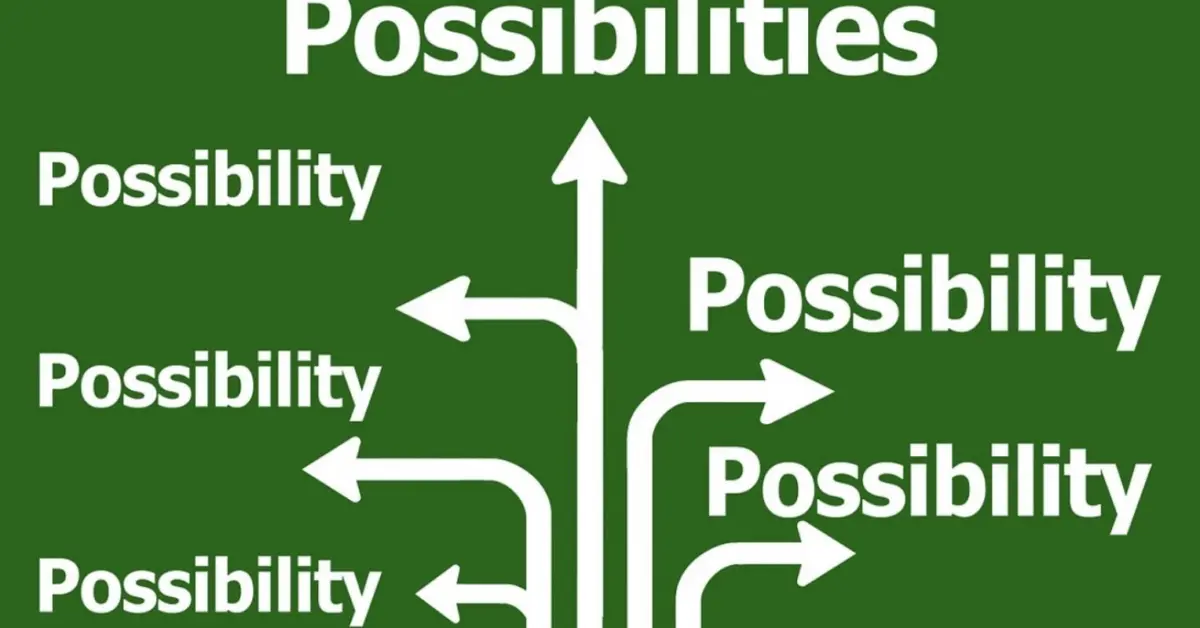
Every day, human beings navigate an invisible labyrinth of choices, making hundreds of small, seemingly insignificant decisions alongside larger, life-altering ones. This constant stream of deliberation dictates everything from how we manage our time to how we react under pressure. It involves deciding whether to start or complete a demanding task, whether to speak up or remain silent, whether to pause before reacting in frustration, or whether to avoid or confront a deeply rooted difficulty. We continuously choose how to posture ourselves emotionally—whether to lean toward positivity or negativity—and navigate ethical crossroads that test our moral integrity.
This continuous decision-making process is the backdrop of human existence. Yet, beneath the vast array of choices we make every day, there lies a foundational, recursive question: Will we continue engaging with the narrative unfolding right in front of us?
For those who choose to read on, psychological and philosophical frameworks suggest a profound reality: every single decision carries consequences, and each choice contributes directly to "who we are" and the trajectory of the lives we live. Humanity does not exist in a vacuum; our present moment—reading these very words—is the cumulative result of every choice made up to this second. Life continues to push forward through the decisions and actions that stem from those choices, operating on the principle that even a non-choice, or passive inaction, is still a choice in its own right, as noted by psychological researchers like Edward Deci and Richard Ryan, alongside contemporary theorists.
These ongoing daily decisions and their ensuing consequences continually shape human cognition and personal agency. Within psychological science, agency is closely associated with the self-reflective, conscious capacity that provides the cognitive machinery necessary to evaluate options, make choices, and appreciate their outcomes. Alongside this agency exists a persistent human hope that positive consequences will ultimately follow the decisions we implement, a concept extensively explored by social cognitive theorists such as Albert Bandura.
While circumstances and life outcomes undeniably exert an external impact on personal trajectories, psychological and existential research demonstrates that they do not definitively dictate human character. In neurobiological and existential terms, human consciousness and self-reflective cognitive capacities provide a mechanism for self-directed control and agency. This agency is actively expressed through deliberate decisions, actions, and self-initiated choices, which ultimately forge individual character rather than merely bending to external pressures.
The distinction between environmental determinism and personal agency lies at the heart of longstanding philosophical debates. While circumstances and outcomes undeniably shape our identities—a dynamic central to the traditional nature-nurture debate—they do not hold a monopoly on human destiny. Existential philosophers and neurobiologists alike argue that consciousness and self-reflection empower individuals with self-directed control. This capacity allows people to transcend purely reactive states, anchoring their identity in self-initiated actions rather than passive endurance.
This realization carries a striking implication: if individuals find themselves dissatisfied with their current actions, their general disposition, or who they have become as a result of past decisions, that trajectory can be altered in an instant.
The Power of Now
This immediate, instantaneous capacity for transformation is rooted in the remarkable mechanisms of brain plasticity, human consciousness, and the cognitive reality of free will. As René Descartes famously posited, "I think, therefore I am," linking conscious existence directly to cognitive activity. Modern neuroscience and philosophy affirm that individuals possess the ability to actively reshape their thinking, behavior, and overall life path in the present moment.
People are not bound to replicate their past. Psychological and neuroscientific literature emphasizes that individuals can instantly change what they think, do, say, learn, and choose. This transformation can be enacted as often as desired, whenever necessary, driven entirely by the self and for the self. As the underlying sentiment of personal agency suggests, individuals are fundamentally defined by their active thoughts, spoken words, ongoing learning, and deliberate choices.
This philosophy echoes historical wisdom. As author Charles Popplestone noted, individuals cannot always control external circumstances, but they maintain ultimate dominion over their own thoughts. Building on this internal locus of control, civil rights leader Mahatma Gandhi urged that humanity must actively become the change it wishes to see in the world.
In absolute and immutable terms, all decisions and choices shape personal identity and the overarching narrative of life. These choices also carry profound ethical and moral dimensions, revealing the depths of the self both to the individual and to society at large. Consequently, philosophical frameworks from thinkers like Immanuel Kant emphasize the imperative to choose wisely, recognizing that moral agency is a defining characteristic of human experience.
Choosing Wisely Is an Action
Choosing wisely is not merely an abstract philosophical ideal; it is an active, deliberate process. Consider the fundamental actions of stopping, looking, and listening before moving forward. At any given intersection of time and space, individuals encounter a landscape of unknown potential. While people can reasonably surmise and hope that positive choices will yield positive outcomes, guarantees do not exist.
Ultimately, once a choice is locked in, consequences—whether positive or negative—will inevitably follow, and individuals bear the responsibility for those decisions. Once those consequences unfold, they move beyond personal control. As the effects of past actions materialize, new decisions and choices must be made, often heavily influenced by the immediate fallout of previous actions. What happens next, within the fleeting and ethereal location of the "here and now," remains entirely up to the individual.
This continuous cycle brings to mind the time-tested adage regarding human behavioral development: watch your thoughts, for they become words; watch your words, for they become actions; watch your actions, for they become habits; watch your habits, for they become character; and watch your character, for it becomes your destiny.
Ultimately, individuals are the sum of their choices. As humanity navigates the complexities of modern existence, the path forward remains an open question, defined entirely by the agency of the individual mind.