
For long-time observers of modern sound, the United Kingdom has maintained a remarkably outsized influence on global popular culture. The rainy island nation in the North Atlantic has spent decades acting as an relentless incubator for groundbreaking sounds, continually innovating, iterating, and surprising international audiences with new musical movements. While listeners around the world readily consume British rock, pop, and electronic music, the underlying forces that make this relatively small island such an extraordinarily fertile ground for creative talent are deeply rooted in physical geography, urban density, domestic architecture, and targeted national infrastructure.
The economic footprint of this cultural export is staggering. Recent financial estimates indicate that music contributes approximately £8 billion annually to the British economy. When examining the broader ecosystem of music tourism, the numbers swell even further, with visitors and fans spending more than £11 billion every year to experience the venues, festivals, and historical sites that shaped their favorite artists. British authorities and municipal governments fully recognize the immense value of this cultural heritage and actively promote music tourism with immense vigor. In Liverpool alone, the enduring legacy of The Beatles has been transformed into a dedicated municipal heritage industry worth an estimated £120 million annually, illustrating how localized artistic history can become a perpetual driver of economic vitality.
To understand how a nation of its size consistently produces music that dominates global charts, one must look closely at the relationship between physical space and human behavior. As academic research into spatial geography demonstrates, geography is often destiny. The specific environment into which artists are born profoundly influences how their lives and creative outputs unfold. Experiencing these environments firsthand—walking down tightly packed residential streets, observing local neighborhoods, smelling the damp air, and standing under the dark night skies of industrial towns—offers an indispensable perspective on the origin of British rock and pop. Seeing and feeling the physical realities of these urban landscapes reveals that the living conditions in Britain actively generate the exact pressures and opportunities required for musical creativity to thrive.

A key factor in this creative engine is the extreme spatial concentration of the population. Approximately 60 million people live packed within a geographic footprint that could comfortably fit inside southern Ontario. This vast population is tightly connected by dense networks of railways, multi-lane highways, and extensive underground metro systems. To put this spatial reality into perspective for a North American audience, Cornwall would occupy the space around Windsor, while Greater London would sit directly over the Greater Toronto Area. Wales would stretch toward the Bruce Peninsula, while major northern hubs like Birmingham, Leeds, and Manchester would all fit snugly in the corridor between London and Barrie. Further north, the entire landscape of Glasgow, Edinburgh, and the Scottish Highlands could easily be accommodated within the Ottawa Valley.
Because these major urban centers are compressed into such a compact area, traveling between them is remarkably simple. Getting from one end of a major region to another is merely a matter of jumping on a passenger train for a couple of hours or piling equipment into a transit van and hitting the highway. For emerging musicians and underground bands, this geographical density makes touring exceptionally easy and affordable compared to the vast, isolated distances of North America. Acts do not need massive financial backing to play multiple distinct cities in a single week. Consequently, when a new sound or subculture emerges, the physical proximity of audience hubs allows new musical ideas and stylistic innovations to spread across the entire country at the speed of sound.
Yet, despite this close overall proximity, British urban geography is simultaneously characterized by fierce localized identities. Major cities are composed of tightly packed, distinct neighborhoods where residents maintain deep loyalty to their specific corner of town. London provides the clearest illustration of this hyper-local phenomenon. Within the metropolis, a district like Camden exists as its own distinct universe, maintaining an identity completely separate from Notting Hill. East London can feel culturally as distant from Shepherd’s Bush as an entirely different continent. Each of these individual neighborhoods operates as its own self-contained cultural petri dish, cultivating distinct musical styles, subgenres, and artistic attitudes.
These localized scenes allow young bands to build a dedicated local following before attempting to conquer the wider city. A new sound will develop within a specific neighborhood venue until it grows so compelling that fans from neighboring districts travel across town to check it out, or until the musicians build up the courage to book gigs outside their immediate zip code. Crucially, even after acts achieve national or international fame, they frequently retain strong links to the neighborhoods that birthed them, creating a rich legacy that transforms humble neighborhood spots into enduring shrines of popular culture.

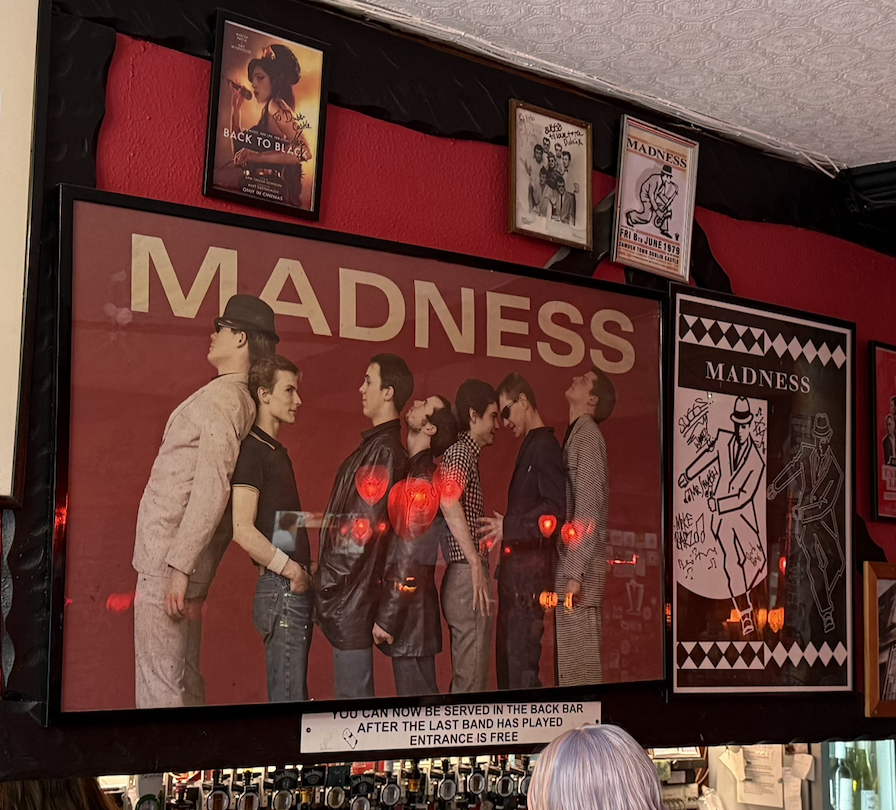
The physical architecture of the neighborhood pub plays an essential role in this cultural pipeline. In Camden, for instance, venues like The Dublin Castle remain monumental landmarks in British music history. This unassuming neighborhood bar, where legendary artist Amy Winehouse once pulled pints behind the counter, famously hosted early career-defining performances by the ska-pop band Madness. Over time, the establishment has evolved into a living monument to the group and the broader Camden sound, drawing music fans from across the globe into its compact room.
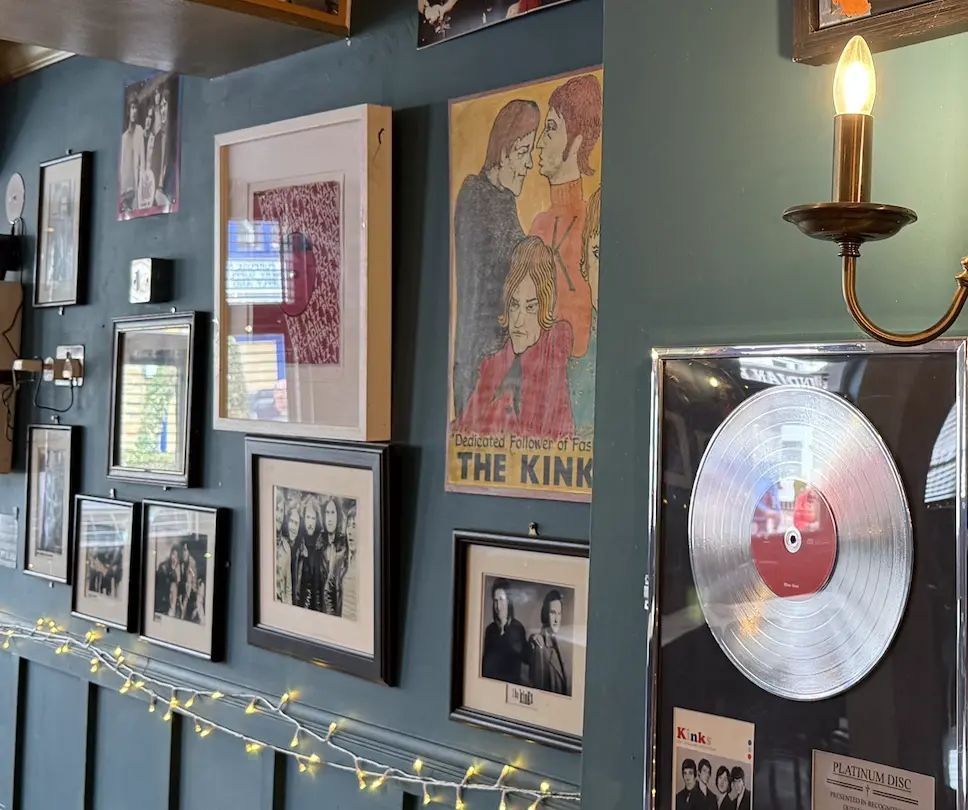
A similar dynamic exists in North London at The Clissold Arms, a traditional pub sitting directly across the street from the childhood home of Ray and Dave Davies, the founding brothers of The Kinks. The historic house sits less than 20 meters away from the pub’s front entrance, making the venue the literal "local" spot for the young musicians as they developed their craft. Today, the pub remains deeply tied to their legacy, featuring an entire room dedicated to celebrating the band’s contributions to rock history.
The drive that impels young people in Britain to form bands in such large numbers is intimately tied to domestic living conditions. While a passion for art and melody is universal, musical creation in the UK has historically served as a practical path toward personal escape and self-expression. Residential housing across British cities and working-class towns is notably compact, with large families frequently coexisting in miniscule flats or small terraced homes. In such cramped environments, personal space is at a premium. Heading out to a local music venue, a youth club, or a neighborhood pub offers young people an opportunity to claim physical and mental space that simply does not exist inside their homes.
This spatial dynamic can be observed in the early surroundings of iconic historical figures. The birthplace of George Harrison in Liverpool consists of a modest door located beneath a historical blue plaque on a narrow private road, where each upper window represents a separate, small residential flat. The boyhood home of Paul McCartney nearby is similarly small and constrained. These compact domestic environments naturally push residents out of the house and into the surrounding public sphere.

This spatial reality sets off a powerful social chain reaction. Small homes encourage youth to venture out into their communities; going out leads directly to mingling in local gathering spots; mingling fosters social networking; and networking inevitably turns into artistic collaboration. Furthermore, because domestic residences are far too small to accommodate loud drums or amplified guitars without disturbing tightly packed neighbors, bands are forced out of residential basements and into shared, public rehearsal spaces.
These multi-room rehearsal facilities act as intensive centers for cross-pollination. Multiple bands from different genres practice under the same roof, sharing equipment, listening to one another through thin walls, and hanging out in common areas. As young musicians refine their skills and begin performing at local venues, they repeatedly run into the same network of players, promoters, and dedicated fans. A strong sense of community rapport builds rapidly, ideas are continuously exchanged and adapted, and creative breakthroughs occur with remarkable frequency.
Once a musical act emerges from this local crucible, the British media ecosystem provides a concentrated national platform that is unique in the Western world. Unlike countries with highly fragmented regional radio markets, the UK possesses centralized national broadcasting networks. A single spin of a new song on a major national station like BBC Radio 1 can instantly broadcast an artist’s work to tens of millions of listeners across the nation simultaneously. A successful radio debut frequently leads to high-profile national television appearances, exposing the act to millions more within a matter of days. This centralized infrastructure forms one of the most effective star-making mechanisms on the planet, efficient at translating local neighborhood excitement into nationwide stardom and rapid global export.
This structural efficiency is further reinforced by deep cultural and educational foundations. British primary and secondary education traditionally places a heavy emphasis on literature, history, and classical arts. As a result, British songwriters frequently demonstrate a natural knack for incorporating high-level narrative themes, literary references, and complex musical arrangements into popular music. From Shakespearean drama to classical melodic structures, these elements are routinely woven into contemporary songs, creating pop and rock music that transcends local origins to resonate globally.
Finally, linguistic and geopolitical factors solidify Britain’s dominant position in the global music market. The British Isles represent the primary native English-speaking territory in Europe, concentrating domestic media attention heavily on homegrown, English-language music production. This concentrated focus, combined with the universal reach of the English language, allows British artists to seamlessly export their output across North America, Europe, and the rest of the world.
When observing the UK music scene up close, it becomes evident that the nation’s vast catalog of legendary songs is not merely the result of random artistic genius. Instead, it is the direct product of a unique physical, economic, and social ecosystem. High population density, affordable regional travel, fierce neighborhood identity, cramped housing that drives public socialization, centralized national media, and a rich literary culture all converge to turn the island into a permanent music factory. For any fan who takes the time to explore these streets, pubs, and historic venues in person, hearing those classic songs again will never be quite the same.