
Unmanned aerial vehicles have become an indispensable part of the modern traveler’s kit. Despite a web of evolving local restrictions, regulations, and airspace limitations across the globe, adventurous globetrotters routinely pack drones into their luggage to secure sweeping, cinematic aerial shots that capture the scale and beauty of their destinations. While the consumer drone market is populated by numerous established manufacturers, recent releases continue to push the boundaries of what is technically possible in a portable package.
Among the more innovative entrants to the market is the Antigravity A1, a device that officially debuted in late 2025 with the ambitious goal of rendering the traditional mechanical gimbal obsolete for a vast segment of content creators. By leveraging an advanced dual-lens 360-degree capture system, the A1 records everything in every direction simultaneously. The resulting workflow introduces a "fly now, frame later" experience that transforms the operational nature of operating an aircraft, shifting the user’s focus away from real-time framing and closer to the role of a virtual director navigating a pre-recorded digital environment.
Two Lenses and No Blind Spots
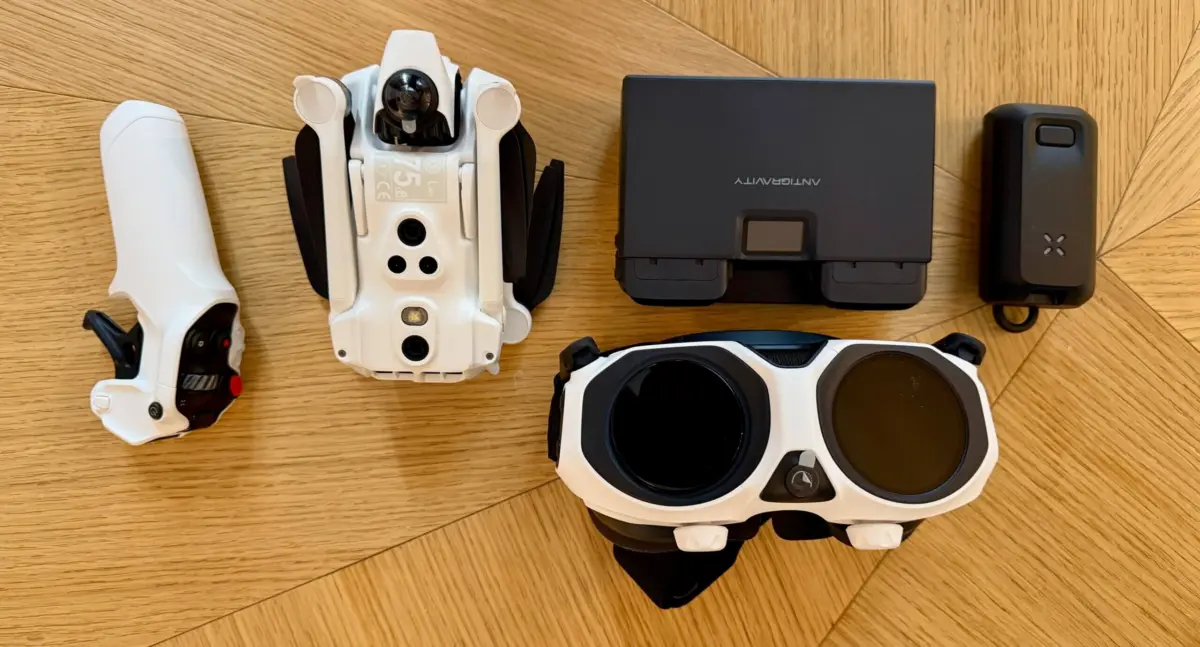
The defining characteristic that sets the Antigravity 360 system apart from traditional consumer hardware is its optical layout. The vast majority of standard drones utilize a single, forward-facing lens mounted on a motorized gimbal to stabilize footage in a specific direction. In contrast, the A1 integrates two ultra-wide-angle lenses positioned strategically on the top and bottom of the central fuselage. Each individual lens captures a 200-degree field of view. When these dual image streams are processed, they overlap to create a seamless 360-degree capture sphere.
A notable byproduct of this optical configuration is that the body of the drone itself is digitally edited out of the final exported footage during post-processing. This creates the striking visual illusion of an independent camera floating effortlessly in mid-air, entirely unanchored by any visible means of support.
Beneath these lenses lie 1/1.28-inch CMOS sensors. While these sensors are physically smaller than the single 1-inch sensors found on heavy-duty professional photography drones, they are substantially larger than the sensors typically packed into standard 360-degree action cameras. This dimensional advantage translates into noticeably improved low-light performance and a broader dynamic range, allowing the device to capture intricate details in both extreme highlights and deep shadows—a crucial capability when shooting under the harsh, contrasting light of a midday sun.
Regulatory compliance is another critical consideration for aerial photographers, as most aviation authorities worldwide require drones weighing 250 grams or more to be formally registered and subjected to significantly stricter flight rules. The engineering team behind the A1 clearly factored this regulatory threshold into their design, carefully calibrating the aircraft to weigh precisely 249 grams when equipped with its standard battery. By keeping the weight just under the critical threshold, the device avoids mandatory commercial registration classifications in many jurisdictions, easing the bureaucratic burden for traveling creators.
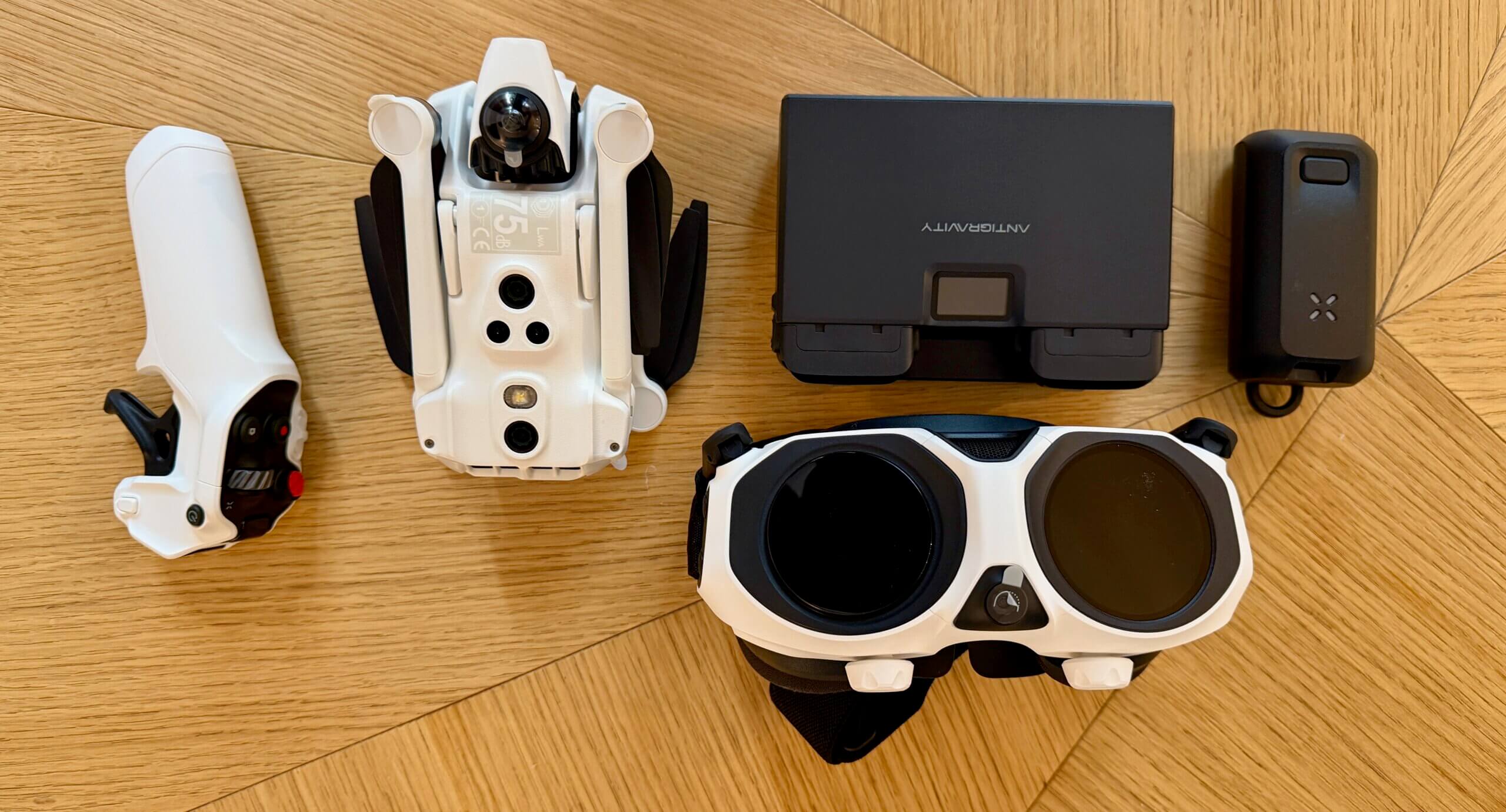
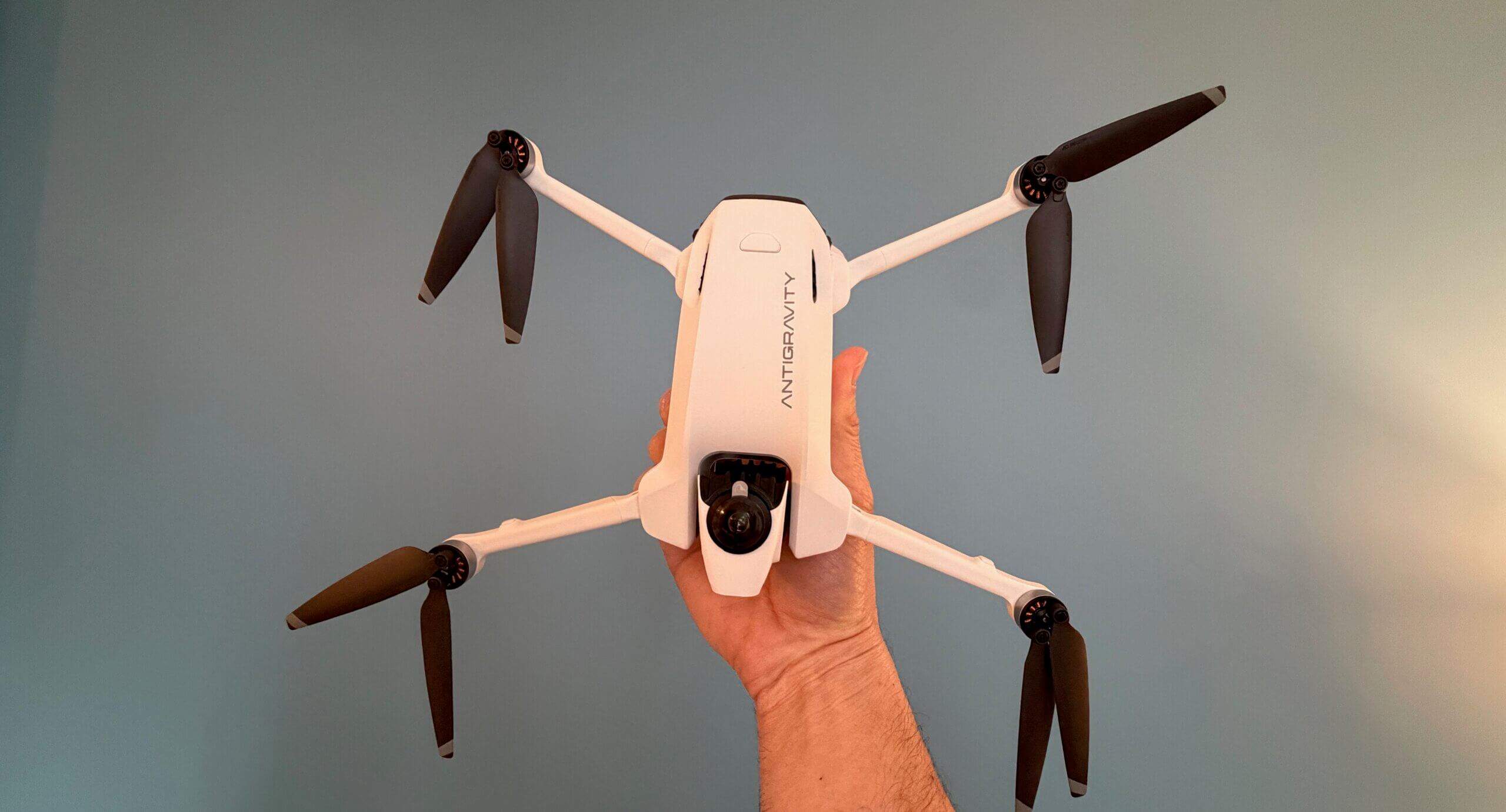
The physical build of the aircraft relies on a high-grade carbon-fiber-reinforced polymer, offering a superior strength-to-weight ratio compared to the standard ABS plastic frequently utilized in more budget-friendly models. Its folding mechanism provides a tactile, secure click, indicating a high degree of structural precision designed for long-term durability on the road. When completely folded, the drone adopts a compact profile roughly equivalent to the footprint of a large smartphone, albeit noticeably thicker.
The Immersive Flight Experience
Piloting the A1 departs significantly from conventional control schemes, largely due to the integration of specialized vision goggles. These sleek, lightweight headsets feature dual 4K micro-OLED displays boasting a rapid 120Hz refresh rate. Operating with virtually zero perceptible latency, the goggles include integrated head tracking. Because the aircraft records a continuous 360-degree sphere, the pilot is never restricted to viewing only the airspace directly ahead. Turning one’s head to the left causes the live feed to pan smoothly to the left, while looking downward reveals the terrain passing directly beneath the aircraft. This setup generates a profound sense of spatial presence that remains difficult to replicate with traditional fixed-camera setups.
Flight navigation is handled via a single-handed motion controller. Operators simply point the device in the desired direction of travel and pull a trigger to accelerate. Tilting the wrist allows the aircraft to bank, while raising the nose of the controller initiates a climb. This intuitive control ecosystem enables even inexperienced operators to navigate complex environments within minutes of their first flight. However, for seasoned FPV pilots who prefer the absolute precision of manual acrobatic flight maneuvers, the A1 also offers compatibility with a traditional "Mode 2" stick controller, though the fluidity of the motion-based alternative makes it an appealing primary choice for most users.
Camera Performance and Software Ecosystem
The marketing materials for the Antigravity 360 heavily emphasize its 8K resolution capabilities, though technical distinctions matter in panoramic capture. While a traditional camera dedicates its entire 8K pixel array to a standard 16:9 rectangular frame, a 360-degree system spreads those same pixels across the surface of an entire sphere. Consequently, when an editor "reframes" that 8K sphere into a conventional flat video file, the resulting image represents a cropped segment of the total visual data.
Color science represents a notable improvement over previous generations of panoramic hardware. The A1 includes a vibrant default color profile tailored for social-media-ready imagery straight out of the camera, alongside a 10-bit Log profile designed for professional post-production color grading suites where footage needs to match cinematic cinema cameras. Stabilization is managed by proprietary algorithms that effectively smooth out environmental turbulence, allowing the drone to maintain stability even in winds reaching 20 miles per hour.
Managing the high-volume footage is handled through the dedicated Antigravity Studio application. The software enables wireless file transfers at speeds up to 80MB/s, allowing users to reframe their video files simply by moving their mobile device and utilizing its internal gyroscope to direct the virtual camera angle in real time. Additionally, the application incorporates an AI-powered "Auto-Frame" feature capable of identifying subjects and automatically generating cuts that keep them centered. For solo creators traveling without a crew, this system functions as an automated camera assistant.
Battery Dynamics and Operational Profile
Battery endurance remains a universal limitation for compact aerial hardware. The standard intelligent flight battery on the A1 is rated for a theoretical maximum of 24 minutes in optimal conditions. In real-world travel scenarios involving moderate winds and continuous recording, users can reasonably expect an effective flight window of roughly 19 to 20 minutes.
Despite the seemingly modest duration, the operational output per minute is high. Because panoramic capture eliminates the need to fly multiple separate passes to secure different angles of the same subject, a single 20-minute flight can frequently yield as much usable material as multiple flights with a conventional camera drone. For creators requiring extended airtime, an optional higher-capacity battery is available, though it pushes the total weight of the aircraft past the 250-gram registration threshold and slightly alters the agile handling characteristics of the device.
Aerodynamically, the A1 functions in the style of a stable cinewhoop. It prioritizes smooth, predictable flight dynamics over aggressive racing speeds, topping out at approximately 36 miles per hour. While this is more than sufficient for tracking moving subjects like cyclists or automobiles, it is not built for high-speed drone racing. Practical safety features include a recovery function that allows the aircraft to flip itself upright using its propellers if it lands upside down after a minor mishap, minimizing retrieval efforts in difficult terrain.
The Antigravity 360 successfully bridges the gap between traditional aerial cinematography and immersive virtual reality capture. By removing the mechanical gimbal and alleviating the immediate pressure of precise real-time framing, the system shifts the pilot’s primary focus back toward visual storytelling. While sensor resolution and optical delicacy remain factors to consider, these compromises are balanced by the creative flexibility inherent in a full panoramic workflow. For creators seeking to expand their visual vocabulary beyond standard aerial perspectives, the hardware offers a distinct approach to capturing the world from above.