
Drones have undeniably transformed the landscape of modern travel videography. While operators often navigate a complex web of local regulations, airspace restrictions, and permitting requirements, travelers continue to pack them for road trips and expeditions to capture breathtaking, sweeping aerial perspectives. Yet, despite rapid technological advancements in recent years, the fundamental mechanics of drone videography have remained largely unchanged. Traditional setups rely heavily on a single forward-facing camera mounted on a motorized gimbal, forcing pilots to commit to a specific framing mid-flight.
That paradigm is beginning to shift. Released in late 2025, the Antigravity A1 represents a major departure from conventional design philosophy, attempting to render the traditional gimbal obsolete for a vast segment of content creators. By leveraging an advanced dual-lens 360-degree capture system, the A1 records everything in every direction simultaneously. The result is an innovative "fly now, frame later" experience that feels considerably less like piloting a traditional aircraft and much more like directing a virtual camera within a pre-recorded digital environment. Industry observers and creators who have tested early units point to it as a significant milestone in how aerial footage is captured, processed, and utilized.
Two Lenses Eliminate Blind Spots and Framing Constraints
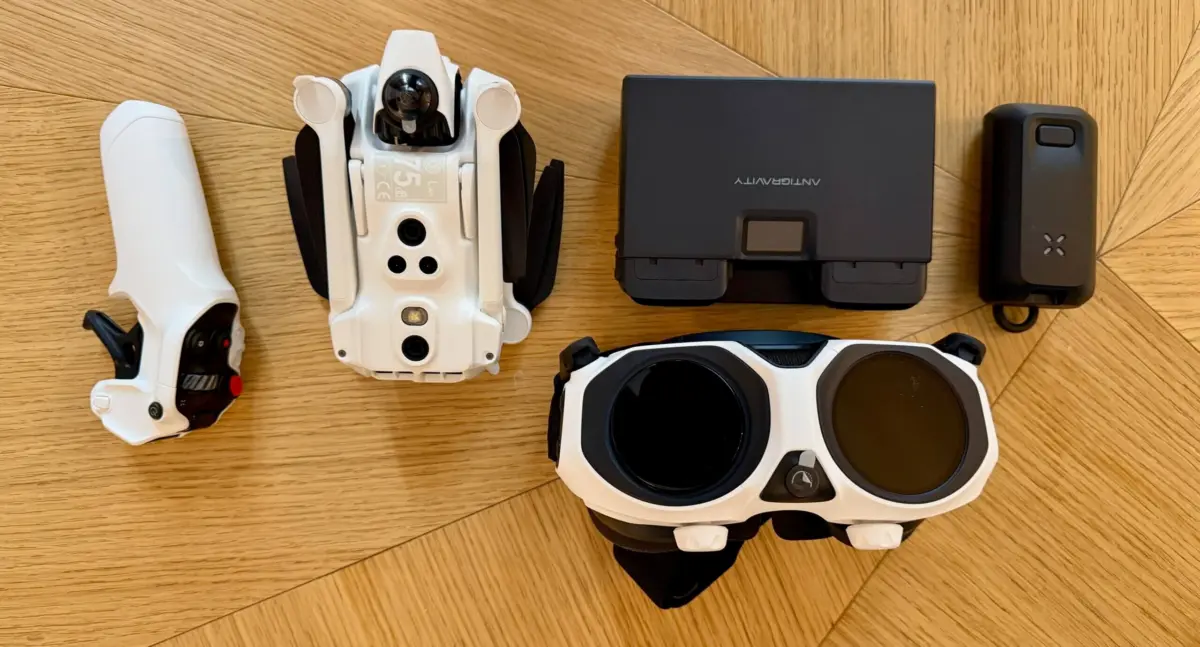
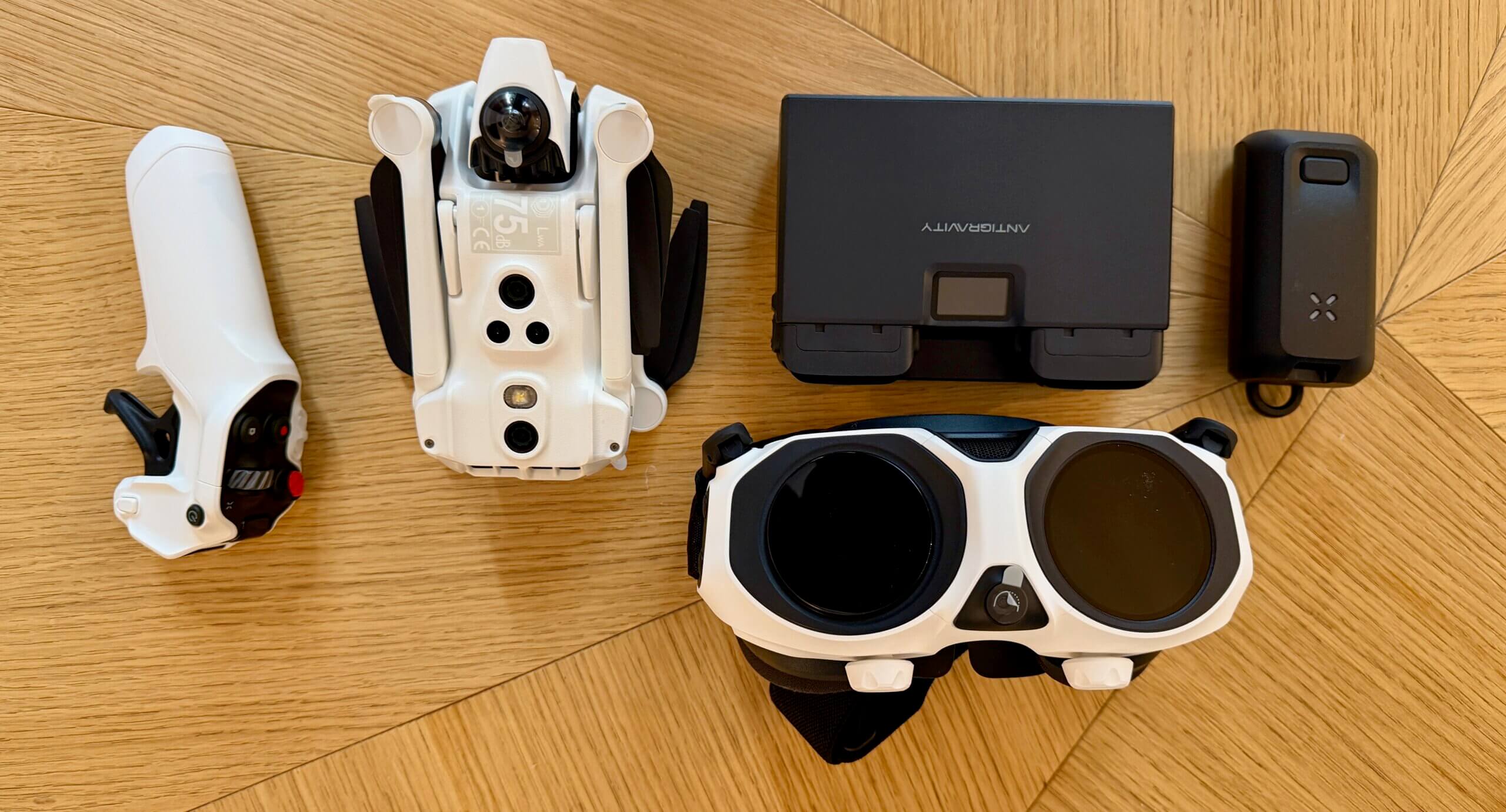
What fundamentally distinguishes the Antigravity A1 from standard consumer drones is its dual-lens optical architecture. While the vast majority of unmanned aerial vehicles on the market feature a single lens pointing forward from a mechanical stabilization mount, the A1 utilizes two ultra-wide-angle lenses positioned strategically on the top and bottom of the central fuselage. Each lens captures an expansive 200-degree field of view. When the onboard image processing units combine these feeds, they overlap seamlessly to generate a complete 360-degree sphere of captured data.
A particularly striking feature of this design is that in the final exported footage, the drone body itself is digitally erased from the frame. This creates the visual illusion of a camera floating independently in mid-air, completely untethered by any visible means of support.
Beneath these lenses lie 1/1.28-inch CMOS sensors. While these sensors are physically smaller than the premium 1-inch sensors found on high-end professional "Pro" photography drones, they are considerably larger than the sensors typically embedded in standard 360-degree action cameras. This scale provides a tangible advantage in low-light environments, improving overall performance and expanding the dynamic range. Consequently, the camera can capture delicate details in both highlights and deep shadows—areas that are frequently crushed or washed out under the harsh, direct contrast of a midday sun.
Regulatory compliance was clearly a major consideration during the engineering phase. In many jurisdictions worldwide, drones weighing 250 grams or more face mandatory registration requirements and significantly stricter operational oversight. Antigravity designed the A1 to hit a precise takeoff weight of 249 grams when equipped with its standard battery. By remaining just one gram under the regulatory threshold, the aircraft avoids mandatory commercial registration in key markets, streamlining the user experience for traveling creators.
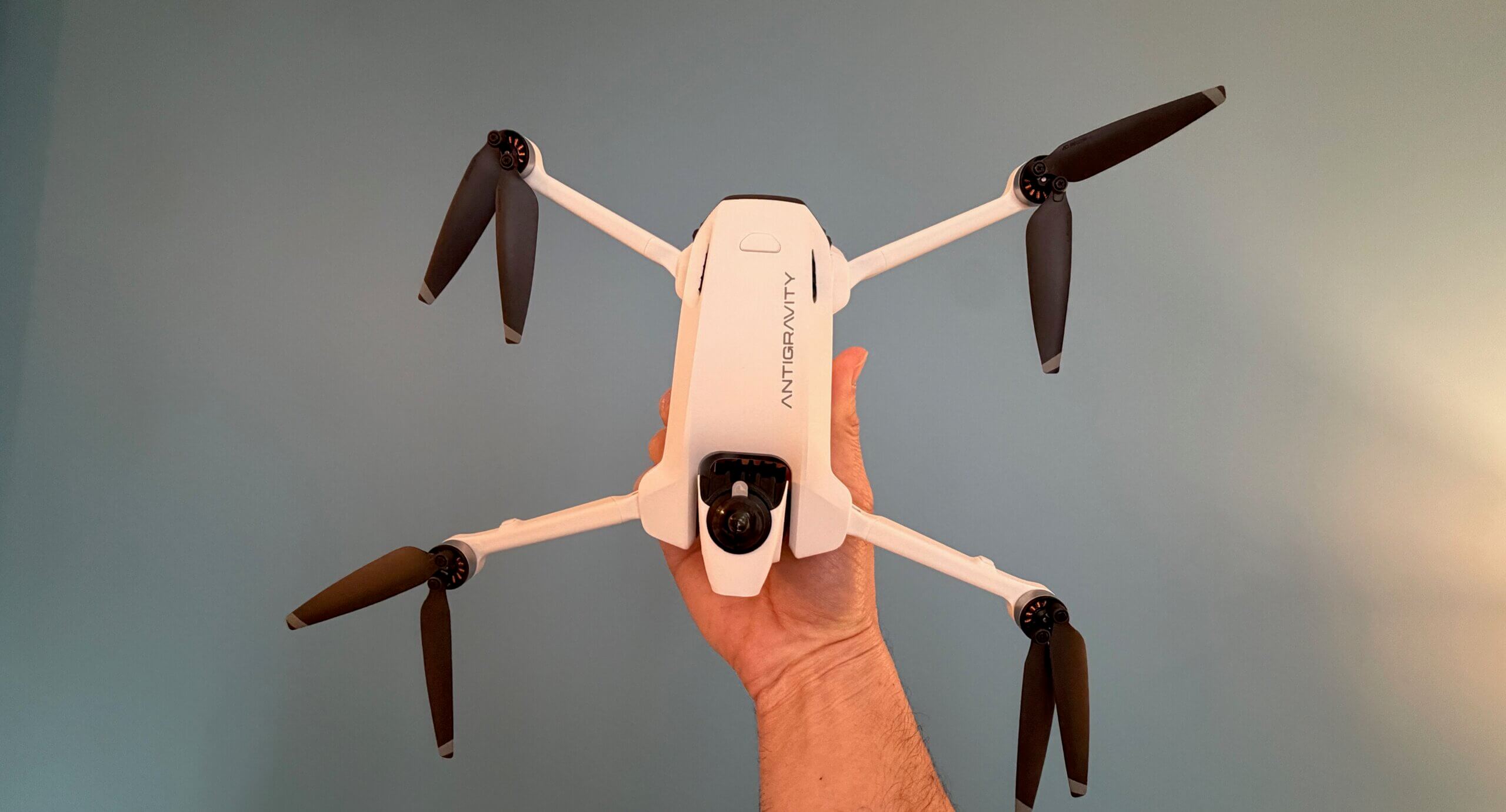
Despite its lightweight profile, the drone feels remarkably durable during handling. The chassis is constructed from a high-grade carbon-fiber-reinforced polymer, offering a superior strength-to-weight ratio compared to the standard acrylonitrile butadiene styrene (ABS) plastic commonly found in more budget-oriented models. The folding mechanism utilizes a tactile, precise locking system that clicks securely into place, suggesting long-term resilience against regular wear and tear. When fully folded for transport, the aircraft is roughly comparable in length and width to a large smartphone, though roughly three times as thick.
An Immersive Flight Experience Through Motion and Vision
The piloting experience of the Antigravity A1 diverges sharply from conventional setups, largely due to its companion hardware. The available vision goggles are sleek, lightweight, and equipped with dual 4K micro-OLED displays operating at a smooth 120Hz refresh rate. Signal latency is virtually non-existent, and the system incorporates responsive head-tracking technology. Because the drone is continuously recording a full 360-degree sphere, the pilot’s visual field is not restricted to what lies directly ahead of the aircraft. Turning one’s head to the left immediately pans the goggle feed to the left, while looking downward reveals the terrain passing directly beneath the hull. This dynamic viewpoint delivers a heightened sense of presence and spatial awareness that fixed-camera drones cannot replicate.
Control over the aircraft is handled via a single-handed motion controller. Pilots simply point the device in the desired direction of travel and pull a trigger to accelerate. Banking left or right is achieved by tilting the wrist, while raising the nose of the controller commands the drone to climb. This intuitive layout allows even novice operators to navigate complex environments safely within minutes of their first flight. However, for experienced FPV (First Person View) pilots who prefer the precise tactile feedback of manual acrobatic flight, the A1 also supports a traditional "Mode 2" stick controller. Nevertheless, the fluidity of the motion control scheme means most casual and semi-professional users are unlikely to feel the need to switch back.
Camera Resolution, Color Science, and Stabilization
Marketing materials for the Antigravity A1 prominently feature the term "8K Resolution," a specification that requires some contextual understanding when applied to 360-degree video. In a traditional 16:9 camera, 8K resolution concentrates every pixel into a standard rectangular frame. In contrast, 360-degree video spreads those exact same pixels across an entire spherical environment. When an editor "reframes" that 8K sphere into a standard flat video export, the resulting image represents a selected crop of the total recorded area.
Color science on the A1 shows noticeable refinement compared to earlier generations of 360-degree cameras. The system offers a "Vivid" profile tailored for creators seeking punchy, social-media-ready aesthetics straight out of the camera, alongside a 10-bit "Log" profile designed for professional editors requiring maximum dynamic range for color grading alongside other primary cinema cameras. Furthermore, stabilization is managed through proprietary algorithms that effectively neutralize external turbulence. Even when flying in sustained winds reaching 20 miles per hour, the resulting footage remains as level and steady as if the camera were mounted to a stationary tripod.
Streamlined Post-Production via Mobile Integration
Managing 360-degree footage has historically been a demanding computational task, but the "Antigravity Studio" application simplifies the workflow significantly. The app enables wireless footage downloads at speeds reaching up to 80MB/s, allowing creators to reframe their video files using a smartphone’s internal gyroscope. Users simply play back the recording and physically move their phone through space to direct and capture the scene in real time.
Additionally, the software features an automated framing tool driven by artificial intelligence. This function identifies key subjects within the 360-degree sphere and automatically generates editorial cuts that keep those subjects centered and in focus. For solo travelers and independent content creators, this capability effectively functions as a virtual camera crew that ensures critical moments are never missed during a shoot.
Flight Performance and Battery Dynamics
Power management remains a defining constraint across the entire consumer drone industry. The A1’s standard Intelligent Flight Battery offers a theoretical flight duration of 24 minutes under optimal laboratory conditions. In practical, real-world scenarios involving moderate wind resistance and continuous recording, operators should anticipate closer to 19 or 20 minutes of active airtime.
While a 20-minute window may sound brief, the operational output per minute is substantially higher than that of a traditional fixed-camera drone. Because pilots do not need to repeatedly fly the exact same flight path to capture multiple directional angles, a single 20-minute session can yield an equivalent volume of usable, multi-angle footage to multiple flights with a standard platform. For users requiring extended airtime, an optional "Pro Battery" is available. While this high-capacity option pushes the aircraft’s total weight past the 250-gram registration threshold, it extends maximum flight time to 39 minutes, though it introduces a slight reduction in overall aerial agility.
In terms of flight characteristics, the A1 aligns closely with a "cinewhoop" styling, prioritizing smooth, stable, and predictable handling over aggressive, high-speed maneuvers. It achieves a maximum horizontal speed of approximately 36 miles per hour, making it well-suited for tracking moving subjects like cyclists or automobiles, though it is not designed to compete with specialized racing drones. A particularly practical inclusion is "Turtle Mode," which allows the aircraft to autonomously flip itself upright using its propellers if it lands upside down after a minor crash, saving the operator from a frustrating recovery walk.
The Antigravity A1 bridges a longstanding gap between traditional aerial cinematography and the immersive capabilities of modern digital media tools. By removing the technical constraints of manual framing and gimbal operation, the platform allows creators to shift their primary focus back toward visual storytelling. While image sensors and delicate lens elements represent inherent compromises of the format, they are balanced by the creative flexibility the hardware affords, establishing the A1 as a noteworthy option for travelers looking to expand their production capabilities.