
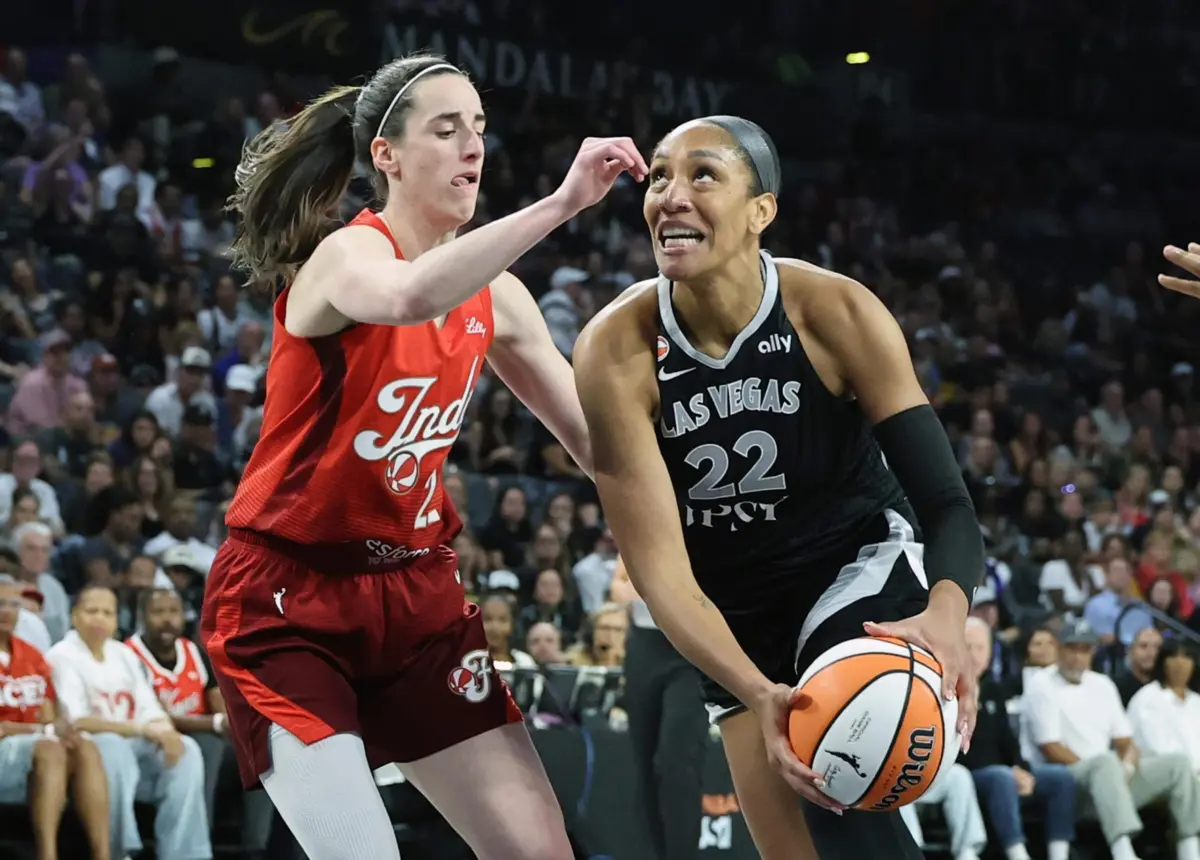
The Indiana Fever transformed into the most popular franchise in the Women’s National Basketball Association by an exponential factor the moment they drafted Caitlin Clark. Fever fans now pack every hostile road arena across the country, turning away games into electric spectacles while driving unprecedented television ratings every single time the team steps onto a national broadcast. Clark enters the conversation as the most celebrated and scrutinized basketball player of the modern era, yet her legions of devoted followers have remarkably never seen her capture a championship trophy at any level of her career.
Clark notoriously failed to secure a state championship during her high school standout years at Dowling Catholic, and she came agonizingly short of claiming a national championship during her legendary, record-shattering four-year tenure with the Iowa Hawkeyes in the collegiate ranks. Today, Clark’s ongoing pursuit of her first true professional ring stands as one of the most magnetic and widely discussed storylines in all of basketball, drawing intense global fascination from casual observers and die-hard analysts alike who remain deeply invested in the narrative arc of her basketball journey.
Another WNBA season unfortunately came to a close for Clark on Thursday night without a championship celebration, as the Las Vegas Aces defeated the Fever 94-83 in a decisive Game 3 to secure the opening-round playoff series. This marks the second consecutive postseason in which the Aces have decisively knocked the Fever out of championship contention. Las Vegas has firmly established itself as a modern-day basketball dynasty, capturing league titles in 2022, 2023, and 2025 under the guidance of a star-studded core spearheaded by superstar A’Ja Wilson, who currently stands on the brink of capturing a historic, record-setting fifth league Most Valuable Player award. The Aces represent the exact tier of excellence where the Fever ultimately aspire to position themselves, but Thursday’s result made it abundantly clear that Indiana remains a few crucial pieces away from reaching that elite echelon.
The Aces ultimately captured the series victory simply because they played better basketball across the board. It is an evaluation as straightforward as that, and it should not generate controversy when applied to a franchise as decorated as Las Vegas, particularly given that the Aces entered the postseason bracket as the No. 3 seed compared to Indiana’s status as the No. 6 seed. Yet, a vocal segment of the Fever’s massive fan base remains convinced that the team was unfairly undermined by league officiating, pointing to an alleged grand conspiracy designed to keep Clark from hoisting a championship trophy. The Fever organization itself inadvertently added fuel to that fire during postgame remarks by highlighting the glaring free-throw discrepancy from Game 3, which saw Las Vegas attempt 35 shots from the charity stripe compared to just 20 attempts for Indiana.
It is never the responsibility of game officials to artificially equalize free-throw totals by the final buzzer; their sole mandate is to officiate the contest fairly. The Aces naturally draw a higher volume of fouls because they possess a far more powerful and aggressive interior attack than the perimeter-heavy Fever. Drawing fouls is a byproduct of driving aggressively to the basket rather than relying on jump shots from the outside. Naturally, the free-throw disparity represented only a minor element of the broader fan frustration. Fever supporters also spent days demanding that A’Ja Wilson face a suspension for Game 3 after she walked near the spectator stands to confront an opposing Indiana fan during the closing moments of Game 2. While Wilson’s conduct was entirely unacceptable and should have resulted in an immediate game ejection according to the strict letter of the WNBA rulebook, advocating for a suspension ahead of a high-stakes playoff elimination game crosses into severe overreaction territory, sounding more like partisan sour grapes from disappointed supporters.
The Aces continue to thrive due to exceptional, battle-tested chemistry among their core trio of Wilson, Jackie Young, and veteran floor general Chelsea Gray. The depth of the Las Vegas roster has admittedly thinned out more than ever this season—particularly following NaLyssa Smith’s unfortunate season-ending injury—yet that attrition has hardly slowed them down. Head coach Becky Hammon remains an elite tactical mind who consistently extracts maximum performance from her rotation. It certainly helps her cause, of course, to possess three certified superstars, led by a player widely regarded as the best in the world and carrying an increasingly undeniable argument as the greatest player in the history of the sport. Unlike Clark, Wilson exerts dominance on both ends of the floor as a premier two-way force, creating an unavoidable matchup problem that Indiana has yet to solve.
The Fever shattered the WNBA single-season record for offensive efficiency this year, showcasing their breathtaking firepower. However, they simultaneously finished dead last among all playoff teams in defensive efficiency, ranking a lowly eighth across the league. Clark is not a reliable defensive presence, nor is her dynamic backcourt partner, Kelsey Mitchell. While both players perform at an MVP-caliber level on the offensive end of the floor, disciplined opponents routinely exploit their defensive vulnerabilities by hunting specific matchups. Mitchell is scheduled to enter unrestricted free agency this upcoming offseason, leaving the franchise facing a perilous scenario where losing her for nothing would deal a devastating blow. Unless the front office makes the bold, high-stakes decision to orchestrate a sign-and-trade deal to acquire much-needed frontcourt help in exchange for Mitchell, the Fever are simply going to have to live with the reality of fielding a defensively deficient backcourt, placing an immense burden on the rest of the roster to overcompensate.
What Indiana fundamentally requires is a significant upgrade at the power forward position. The Fever cycled through numerous options at the four spot this season, utilizing Monique Billings, Myisha Hines-Allen, and rookie Makayla Timpson in various stretches, but none proved capable of locking down the role. Indiana desperately needs a sturdy, defensive-minded frontcourt partner to pair alongside Aliyah Boston—who is not an elite rim protector herself—without sacrificing floor spacing on offense. Finding a player possessing that precise combination of defensive tenacity and offensive shooting gravity is extraordinarily difficult, as very few athletes on the planet share that specific skill set.
The reserve unit demands an upgrade as well. The team requires a true rim-protecting center capable of effectively spelling Boston when she needs rest. Evaluating whether it makes sense to shift Boston permanently to the four position and pair her alongside a shot-blocking five is a valid question, though such a move might slow down the team’s overall pace of play. Positive signs emerged from rookie Raven Johnson late in the campaign, making her continued development a priority for the coaching staff. Lexie Hull provided steady, dependable contributions throughout the year, and Sophie Cunningham chipped in valuable minutes before essentially disappearing during the playoffs, finishing with a dismal minus-39 plus-minus rating across the three games against Las Vegas. Cunningham possesses the classic 3-and-D skill set that the Fever require, but she remains a relatively limited player in broader tactical matchups.
The competitive margins at the pinnacle of the WNBA are razor-thin. The Fever currently operate as a finesse-oriented basketball team, yet they clearly require a more physical, smash-mouth component to contend for titles. While Clark, Mitchell, and Boston are exceptionally talented individual players, management must evaluate whether their skill sets fit tightly enough together to eventually capture a championship. The Aces routinely extract vastly superior defensive production from Wilson and Young than the Fever manage to secure from any of their three primary stars. Those competitive margins will only shrink further once Clark graduates from her rookie-scale deal and commands a maximum salary contract.
Examining Game 3 through a microscopic lens reveals why tensions remain high among fans, particularly regarding a controversial defensive foul whistled against Kelsey Mitchell during the final three minutes of regulation. While the frustration is understandable upon review, it remains a quintessential bang-bang play that illustrates precisely why professional basketball is among the most difficult sports in the world to officiate accurately. Whether Mitchell successfully stripped the ball cleanly from Chelsea Gray or whether contact occurred prior to the swipe remains open to interpretation, highlighting the human element inherent in high-speed playoff officiating.
Playoff basketball represents the sport at its absolute pinnacle, yet the intense environment is certainly not for the faint of heart. Both Clark and Mitchell struggled significantly with their shooting efficiency during Game 3, combining for a cold 13-of-41 shooting night from the field. Their current defensive limitations simply leave no margin for error when their jump shots fail to fall. That execution gap ultimately explains why the Fever suffered elimination, rather than ungrounded theories suggesting the league actively conspires against Clark. The Fever simply do not possess a roster complete enough to claim a championship just yet, finishing their campaign as the sixth seed in the playoff bracket. Indiana possesses the foundational talent to eventually secure Clark her first professional ring, but the front office still has several critical roster pieces left to acquire.