
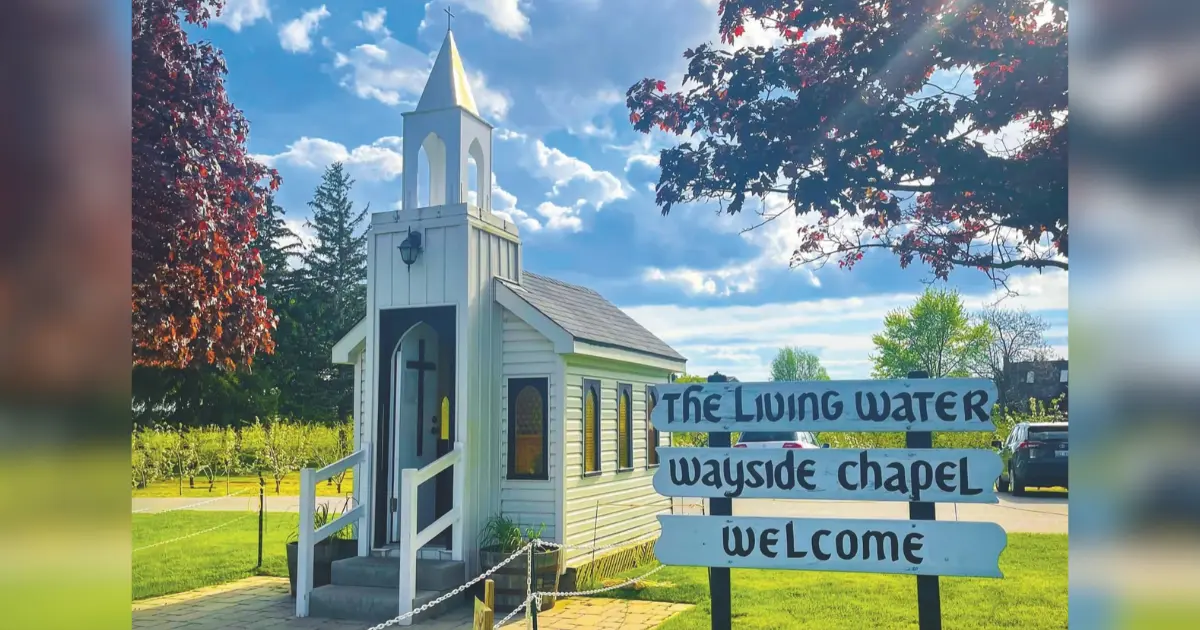
For some travelers making their way along the winding, picturesque stretches of Ontario’s Niagara River Parkway, the quaint white structure is little more than a roadside curiosity. It offers a rare and unique opportunity to step inside what is widely recognized as the smallest church in Canada, a building so diminutive that it immediately commands attention from passersby who spot it nestled against a backdrop of sweeping agricultural land.
For others, however, the destination is far more than a quirky landmark. It serves as a place of profound reverence and quiet reflection—a sanctuary where visitors can offer a silent prayer, express gratitude, or simply take a moment to appreciate the surrounding natural world.
Each year, an estimated 10,000 people make a purposeful pilgrimage to the Living Water Wayside Chapel in Niagara-on-the-Lake. For the majority of the year, specifically between the months of April and December, the front door of the tiny sanctuary remains unlocked and welcoming, inviting travelers from all walks of life to step across the threshold and experience its intimate interior.
Measuring a mere 72 square feet, the miniature chapel is so compact that it can barely accommodate a half-dozen people at any given time. Its origins date back to 1965, when it was originally constructed through the collaborative efforts of three Niagara-area Christian Reformed congregations. From the very beginning, its location was chosen to harmonize with the regional landscape. Surrounded by lush vineyards and expansive farm fields, and situated just a short distance from the flowing, dynamic currents of the Niagara River—the very waters that inspired its name—the chapel began welcoming its first visitors more than half a century ago.
Over the decades, the tiny house of worship has woven itself deeply into the cultural and spiritual fabric of the local community. It has served as the picturesque home for traditional Easter Sunday sunrise services for more than 50 years, drawing worshippers eager to celebrate the holiday in a uniquely intimate setting. More recently, the chapel’s calendar of community events expanded further when organizers introduced an annual Christmas carol singalong starting in 2022, proving that the space remains active and cherished even outside its peak spring-to-autumn visitor season.
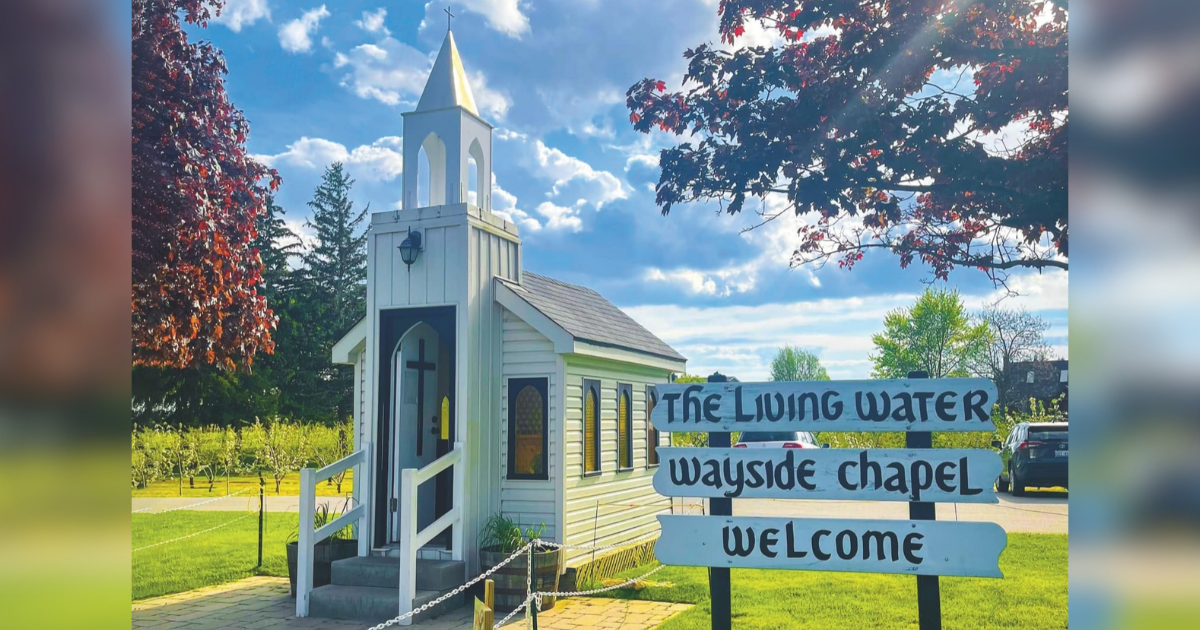
Maintaining a structure of this scale, particularly one exposed to the elements and welcoming thousands of visitors annually, requires dedicated stewardship. Rick Meloen, a community volunteer who has dedicated his time to maintaining the chapel and leading services there over the years, notes that the miniature church has experienced a nomadic history of sorts. Over the decades, it has been physically relocated a couple of times due to changing land use and development along the parkway.
However, for nearly 20 years now, the chapel has found a stable and permanent home near its original site. It currently rests on land graciously owned and stewarded by the Walkers, a prominent local farming family who operate a popular fruit market nearby, ensuring that the chapel remains tethered to the agricultural roots that have defined its surroundings since its inception.
Reflecting on the enduring legacy of the site, Meloen captures the subtle yet profound way the chapel resonates with those who discover it.
"The chapel passively, quietly, surprisingly has touched the lives of thousands of people," Meloen says, describing a dynamic where the building’s physical modesty contrasts sharply with its emotional and spiritual resonance. "For many, it is much more than a landmark. It is a sacred place of personal memories, devotional life and even journeys into faith."
While the presence of the Living Water Wayside Chapel along the busy parkway is undeniably subtle, requiring only a brief glance to miss if one is not paying attention, its impact on individuals can be immense. Day in and day out, dozens of travelers pull their vehicles off the road, step out into the fresh Niagara air, and pause to pay their respects, finding within the 72-square-foot sanctuary a rare moment of stillness in an increasingly hurried world. That steady stream of quiet visitors stands as a lasting testament to the fact that sacred spaces do not need to be grand in scale to leave a permanent mark on the human heart.