
When Cyed Adraincem apologizes for occasionally stumbling over his words, his fatigue is entirely understandable. He had been awake since 4 a.m., diligently washing the sidewalk directly in front of his forthcoming restaurant. “I wanted to beat all the foot traffic,” he explains, setting a tone of rigorous, hands-on dedication that defines his approach to launching his latest culinary venture.
Adraincem has channeled that same relentless work ethic into outfitting Hoy, an upcoming destination destined to bring vibrant Filipino street food to New York City within a space modeled after a bustling Manila night market. Although the restaurant has yet to officially open its doors to the general public, it has already captured widespread attention across social media and the local hospitality scene. The buzz is fueled by its loud, off-kilter aesthetic, clever pop-cultural touchpoints, and transparent, behind-the-scenes glimpses into its recipe development and research phases.
This profile marks the first installment of Getting on the Map, a new series presented by Apple Maps that explores how some of the most creative bars and restaurants in the industry are marketing themselves to stand out in an increasingly crowded hospitality landscape. The series examines the strategies behind building a brand long before the first plate leaves the kitchen.
Defining the Concept: Filipino Street Food Meets American Diner Energy
For Adraincem, Hoy is an exercise in cultural representation and culinary accessibility. He is attempting to introduce Filipino cuisine to a much broader audience in New York City, a metropolis where he feels the cuisine remains underrepresented relative to its incredible depth and flavor profiles.
The menu is designed to be approachable and direct, featuring street-food staples such as barbecue skewers, lumpia, and a rotation of distinct sandwiches. It is a purposefully simple, traditional menu executed with professional culinary techniques honed over years of industry experience. According to Adraincem, the current New York dining public is actively seeking options that are more casual and affordable rather than formal or pretentious. Diners simply want to enjoy great food and a solid drink without the barriers of fine dining.

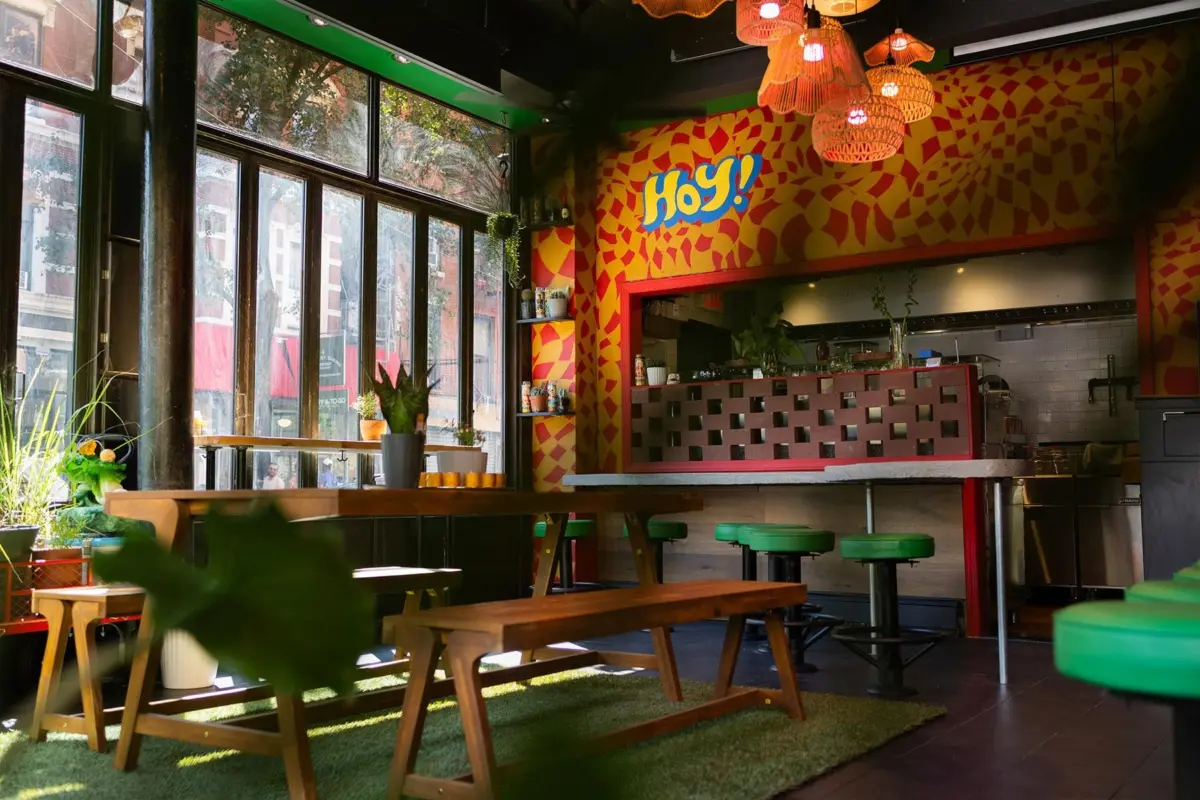
The physical space itself draws direct inspiration from American diners—a format Adraincem deeply admires—blended with his seven years of professional experience working behind cocktail bars. This unusual mashup mirrors the chaotic, high-energy atmosphere of a Manila night market. Because the restaurant relies on counter service, the layout is entirely front-facing with an open kitchen, ensuring that the dynamic energy flows continuously throughout the room. Staff and guests will communicate openly across the counter, creating an immersive, street-market affair right in the heart of the city.
Crafting a Unique Visual Identity and Branding Strategy
The distinctive branding and visual identity for Hoy were developed by Kristofferson San Pablo, a well-known Los Angeles-based artist and designer who also happens to be Adraincem’s cousin. Together, they formulated a design philosophy rooted in the intense, kinetic fun of a Manila night market, utilizing a vibrant palette of colors and visually stimulating elements that avoid crossing into sensory overload.
The intricate pattern adorning the walls is drawn directly from one of the oldest textile traditions in the Philippines, offering a subtle yet striking nod to cultural heritage. Shelves throughout the dining room are stocked with snacks designed to mimic a traditional sari-sari store—ubiquitous neighborhood convenience shops in the Philippines that often operate straight out of the owner’s home, providing everyday essentials to the community. Alongside these snacks sit old cookbooks passed down from Adraincem’s parents, serving as the foundational baseline for the kitchen’s menu development, accompanied by volumes from local culinary favorites.
Crucially, the team made a conscious effort to steer clear of predictable Filipino design tropes, such as the prominent imagery of the sun and stars from the national flag or traditional barong tagalog garments. Instead, they leaned into eccentric cultural artifacts like the traditional wooden "barrel man" novelty souvenir, water buffalo (carabao), and imagery celebrating everyday agricultural life.
The barrel man, in particular, offers a dual purpose: it represents authentic Filipino novelty culture while serving as an interactive educational tool for patrons unfamiliar with the artifact. Originally created as accessible souvenirs for low-income artisans to generate income, these figures reflect a humorous, gag-gift sensibility deeply embedded in Filipino social interactions. Furthermore, the restaurant incorporates artwork curated from various independent creators across New York City and Los Angeles, prioritizing local pieces made with community in mind.

All-In on Merchandise and Pop-Culture Commentary
Even before welcoming its first regular diners, Hoy has generated viral moments by blending its design language with timely pop culture references, such as a New York Knicks-themed choking sign that quickly circulated online. This rapid-response creative process relies heavily on the synergy between Adraincem and San Pablo. Because San Pablo’s artistic style naturally leans into pop-culture commentary, ideas proposed by Adraincem are frequently met with immediate execution, keeping the brand relevant to current cultural conversations.
In addition to its physical environment, Hoy is launching a comprehensive merchandise line spanning t-shirts, hats, and tote bags, with potential expansions into custom barrel-man key chains and house slippers. While many hospitality ventures launch with a minimal aesthetic and introduce merchandise slowly as they grow, Adraincem decided to go all-in from day one. Drawing on his 17 years in the restaurant industry—including seven years in cocktail bars—he observed how popular bar and restaurant apparel flew off shelves, with hospitality workers proudly representing their favorite industry spots. Seeing patrons proudly sport branded gear from Kikkoman jackets to restaurant tees convinced him that merchandise is not only a vital marketing tool to spread awareness, but also a meaningful secondary revenue stream.
Navigating Construction Hurdles Through Community Residencies
Furnishing and outfitting the restaurant has been an exercise in rigorous legwork. Operating during a challenging economic climate for independent hospitality ventures requires extensive price comparisons across major retailers like Home Depot, Amazon, and The Container Store. The interior is also deeply personal, populated by knickknacks and art contributed by friends and family. To further evoke the tropical environment of the Philippines, the team integrated ample vegetation, constructing a makeshift pond out of a large planter pot and cultivating a garden featuring lemongrass, calamansi trees, and labuyo chiles, all thriving in the natural light of the corner storefront.
However, the path to a full opening has encountered administrative roadblocks. Current delays with New York City’s Department of Buildings regarding gas line permits mean the kitchen cannot yet cook on-site. Rather than remaining dark while awaiting clearance, Adraincem pivoted to engage the local community immediately. The space is currently operating through a series of culinary residencies, hosting Queens-based Filipino pastry vendor Arellano Pandesal while Hoy’s team manages the beverage program. Plans are also underway to launch a community marketplace featuring local vendors, friends, and family, ensuring that the space remains active, welcoming, and deeply connected to its neighborhood while final regulatory hurdles are cleared.