
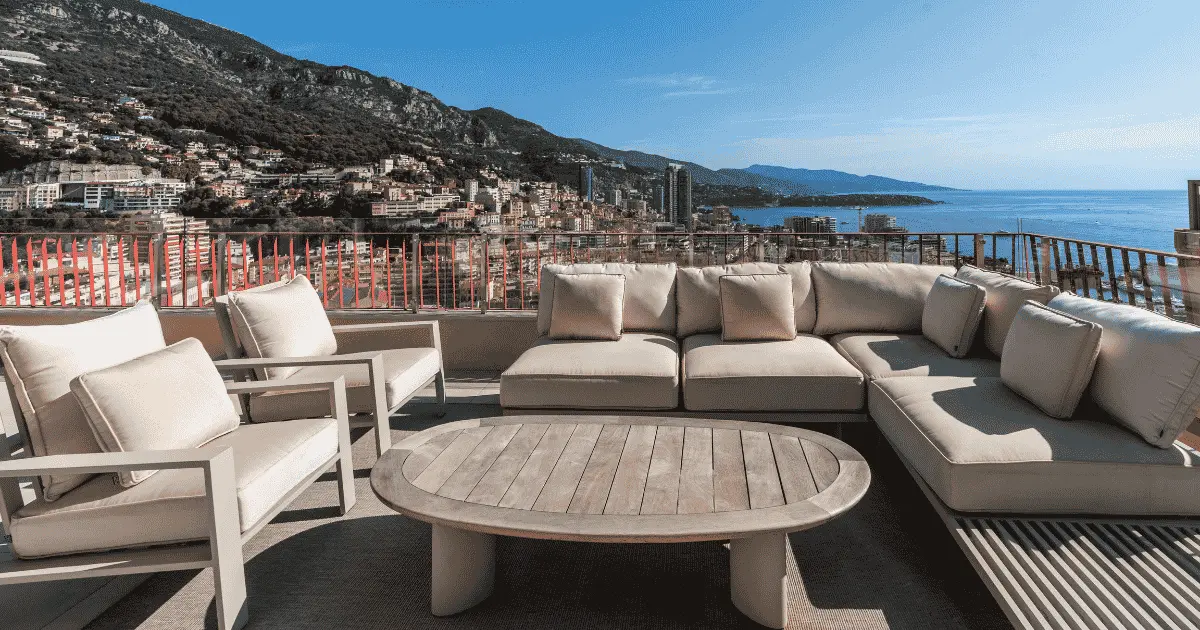
In the tiny Principality of Monaco, the world’s leading refuge for the mega-rich, you can bump shoulders with more millionaires and billionaires per capita than anywhere else on the planet. They reportedly make up about 40 per cent of the population of this European sovereign city-state on the French Riviera, drawn there by its exclusivity, political stability, world-class health care, and status as a tax haven.
Data from wealth analysts puts the average net worth of Monaco residents at between $10 million and $20 million CAD, placing it firmly in the top tier globally per capita. Although regular people live there too, glamorous Monaco is like something out of a James Bond movie—a couple of which were filmed there. Flush with luxury superyachts and opulent casinos, it is home to the annual Monaco Grand Prix, as well as many Formula One drivers and other global celebrities.
The narrow streets are a hotspot for exotic-car fender-benders. Imagine being the driver of the Bentley Azure who famously caused a million-dollar, five-car pileup with other luxury vehicles. Photos of the scene went viral, becoming viral “only in Monaco” memes that cemented the principality’s reputation as a playground for the absurdly wealthy.
The World’s Priciest Real Estate
The residential real estate market in Monaco—made up largely of luxury apartments, with villas being exceedingly rare—tops global lists as being among the most costly anywhere on earth. Depending on the size and location, super-prime properties can command hundreds of millions of dollars. Monaco is home to the world’s most expensive apartment: the five-floor Tour Odeon “Sky Penthouse,” which is valued at more than $400 million CAD.
Space is severely limited in postage-stamp-sized Monaco, one of the most densely populated municipalities anywhere. It punches far above its scale for a microstate that, at barely two square kilometres in area, is half the size of New York City’s Central Park. It stands as the second-smallest country in the world, larger only than Vatican City, yet it remains a place of extraordinary global superlatives.
Exacting Clients and Fierce Competition
“Daily life here feels peaceful and highly privileged,” says Deborah Dwek, CEO of Monte-Carlo Sotheby’s International Realty. Clients have “high expectations in terms of discretion, service quality, and responsiveness,” she notes, adding that they are often financially sophisticated and deeply selective.
If you are thinking that is simply a polite way of saying they can be demanding, you are likely right. By most accounts, it is a remarkably tough environment for new real estate agents trying to establish themselves.
“We get to work with truly remarkable people,” says Ilona Blanchi with Miells-Christie’s in Monaco. “Personalized service is a must in a market as unique as ours… You have to be extremely well-connected.” In such an environment, the competition among professionals is exceptionally intense.
Currently, it is a diverging market, with the mini-state’s handful of roomier new developments trading at a significant premium, Blanchi adds.
New Builds Command a Premium
New-build projects are setting records at more than $55 million CAD per unit on average—a staggering figure that is somewhat inflated by the surge in apex buildings—while resale property is lagging far behind at roughly a sixth of that price, according to recent figures released by the Monaco statistics office.
The real estate sector in Monaco is highly specialized and remains strong, driven by the extreme scarcity of developable land, says Blanchi. Demand far exceeds available supply, which naturally keeps prices elevated. Mainstream housing that serves the local working population tends to be located outside the principality in neighboring French towns.
Because it is a major target for money laundering, the industry is rigorously monitored. Real estate transactions involve strict government regulations, which have been recently ramped up to enhance transparency. There is abundant red tape surrounding compliance procedures for both clients and agents, with some reports suggesting that prospective buyers are becoming frustrated and looking toward more flexible international markets.
There is no Multiple Listing Service (MLS) in Monaco, although agents can collaborate through an internal database where a good portion of available listings are shared. Private networks and discreet off-market exchanges are common practice. Commission fees are paid by both the buyer and the seller. Furthermore, agents must meet strict entry conditions and frequently work alongside salaried negotiators.
An Oversupply of Brokerages
With more than 160 licensed brokerages operating in a tiny territory that historically sees between 400 and 500 annual sales, the industry leans toward being over-represented, even though many agencies are small, according to the government. As a result, the creation of new brokerages is now increasingly restricted and reserved primarily for Monegasque nationals.
Monaco is divided into about 10 distinct neighborhoods. The most prestigious remains the long-established Carré d’Or, which overlooks the manicured gardens of the Casino de Monte-Carlo. Also highly sought-after are new landmark developments like the Mareterra district, built entirely on land reclaimed from the Mediterranean Sea, Blanchi notes.
The rental market has been buoyant as well, notes James Davies, a partner within the international division of property consultancy Knight Frank. He explains this is due in part to the fact that a local address is needed to secure official residency, meaning most people generally rent a home before buying one, despite rents tending to be sky-high.
It may seem that agents in Monaco are sitting on a gold mine professionally. However, “they often need to guide wealthy buyers through a landscape where desired homes may simply not exist,” especially when it comes to large apartments, says Davies. “The downsides lie in the constant pressure to deliver results with very limited inventory,” as well as the administrative burden that comes with “heavy regulatory requirements, increasingly complex anti-money laundering obligations, and extended administrative timelines for international clients.”
What Wealthy Buyers Should Know
Wealthy international buyers, including those from Canada, considering a move to the principality need to bear in mind that while Monaco levies no income tax, capital gains tax, or property tax, it does not maintain a tax treaty with Canada. This makes it crucial to formally sever residential ties with Canada to avoid being taxed on worldwide income. Financial and administrative hurdles ensure that the approval process to become a resident of Monaco is far from straightforward.
As for acquiring citizenship, that status is extremely rare. It requires personal approval from the principality’s Prince Albert II himself, the head of the long-ruling and occasionally scandal-prone Grimaldi dynasty, who are ranked among the richest royals in the world. While the House of Grimaldi can take credit for keeping Monaco wealthy and safe, its members have at times been described by observers as one of Europe’s most high-profile royal families.
As the local saying goes, it could only happen in Monaco.