
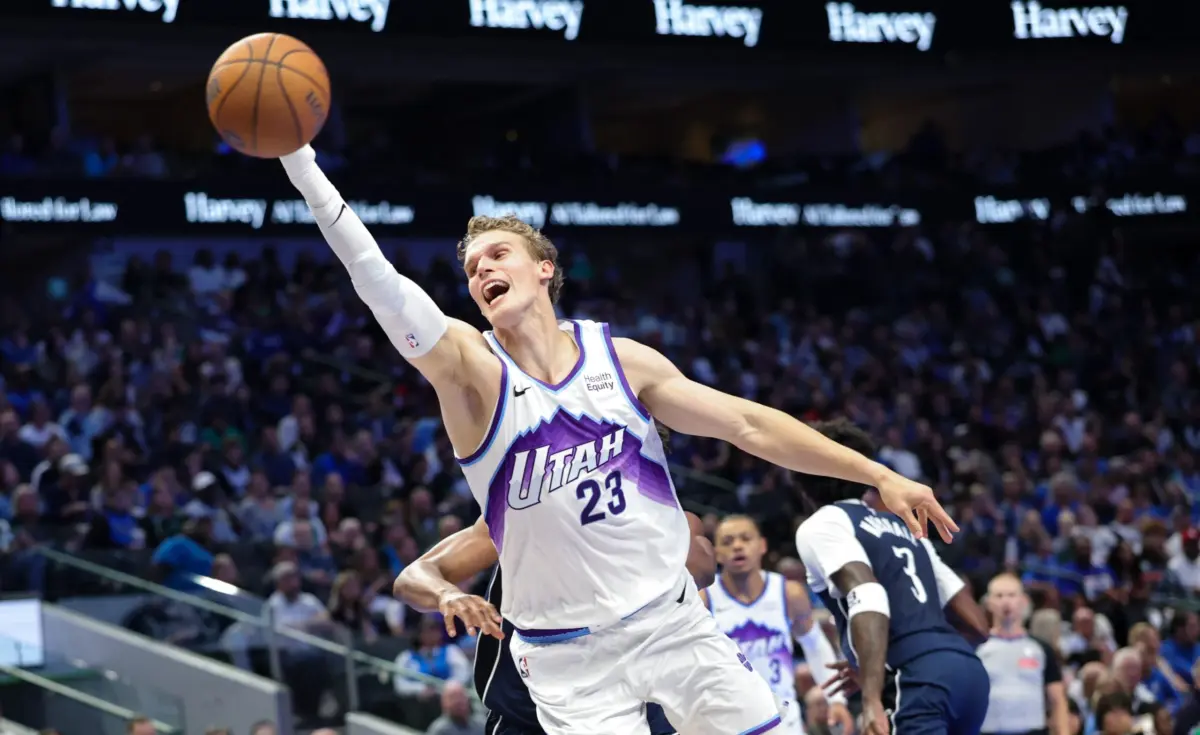
Since arriving in Salt Lake City as the centerpiece of the blockbuster trade that sent Donovan Mitchell to the Cleveland Cavaliers, Lauri Markkanen has blossomed into a bona fide NBA star. The Finnish forward embraced a fresh start in Utah, showcasing an elite offensive skill set that earned him an All-Star nod and the NBA’s Most Improved Player award during his breakout first season with the franchise.
Despite his individual growth and stellar statistics, that initial surge has not translated into sustained team success for the Jazz. The high-water mark of the Markkanen era in Utah remains that very first campaign, which ended with a modest 37-45 record. Fast forward to the present day, and the front office has accumulated an intriguing assortment of young talent and draft capital around their star forward, but the results on the court have completely stalled. The Jazz have stumbled out of the gate to an abysmal 1-10 record, once again anchoring themselves to the bottom tier of a brutal Western Conference.
To be fair, Markkanen is not entirely without fault when evaluating the trajectory of the franchise. Durability has become a persistent concern. The most games Markkanen has managed to play in a single season since joining the Jazz is 66, and that participation number has steadily declined with each consecutive year. His recurring health struggles have robbed Utah of its primary offensive engine for stretches at a time. Furthermore, basketball purists and front-office evaluators have begun to question whether his specific skill set is robust enough to carry the weight as the definitive number-one option on a championship-caliber team. While he is an elite floor-spacer and secondary creator, league observers increasingly note that his ideal championship ceiling might be found as a hyper-efficient third option on a true contender.
The most baffling element of the situation, however, is why Markkanen remains on the Jazz roster at all. Throughout his tenure in Utah—even amid nagging injuries—he has consistently flashed jaw-dropping offensive upside. Last season alone, he flirted with historic efficiency, averaging nearly 27 points per game while shooting near the coveted 50/40/90 splits from the field, three-point range, and free-throw line. A player of that caliber, possessing elite size, shooting gravity, and scoring versatility, should command an enormous, franchise-altering haul on the NBA trade market. Yet, Utah’s CEO of basketball operations, Danny Ainge, has continually held off on pulling the trigger, reportedly holding out for a staggering package of draft picks and young assets that exceeds what opposing front offices are currently willing to pay.
Now, that cautious strategy faces its ultimate stress test. Markkanen is expected to miss at least the next month of action after suffering a fractured hand during recent competition. The pressing question echoing through league circles is whether a substantial market will even exist for a high-profile player nursing another significant injury. Unlike Major League Baseball or the NFL, the NBA operates under a hyper-aggressive transaction landscape where desperate organizations—convinced that a single missing piece can push them over the top—are often willing to mortgage their entire future and empty their draft asset cupboards for an influx of star power.
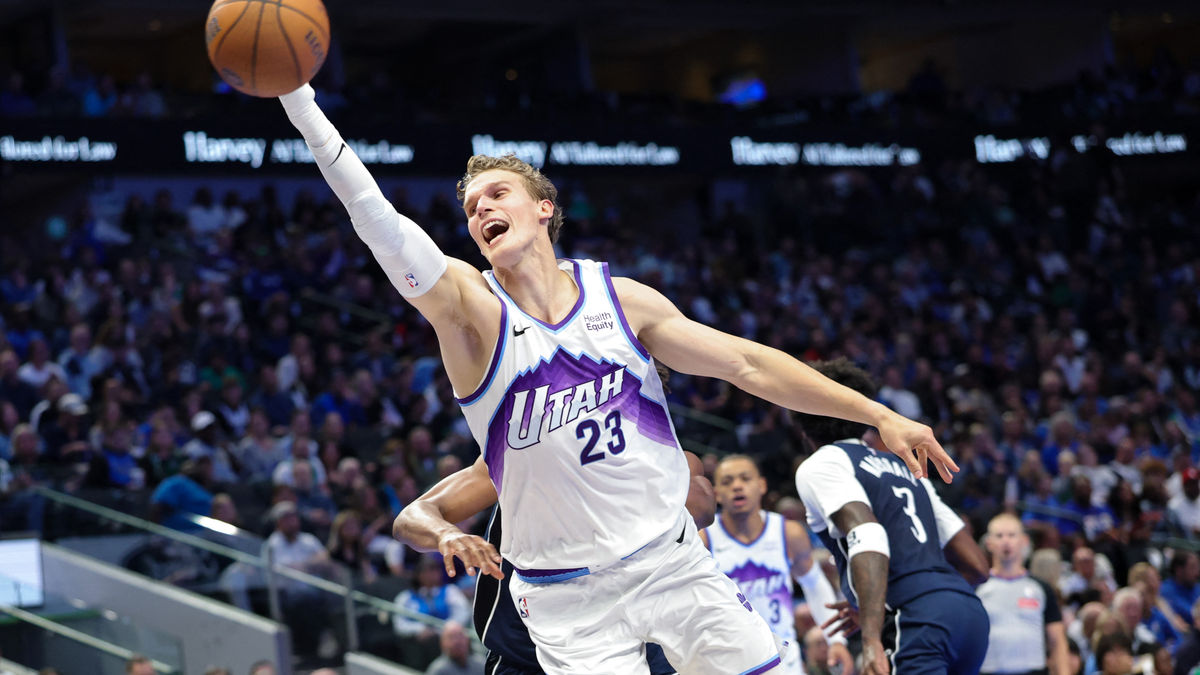
Unfortunately, as evaluators survey the current landscape, it is fair to wonder how many championship-contending or playoff-bound teams realistically view Markkanen as that missing final puzzle piece. In the Eastern Conference, the field of interested suitors appears remarkably thin. Perhaps the most intriguing landing spot could be the Detroit Pistons. Outside of star guard Cade Cunningham, Detroit has labored to find a consistent secondary perimeter scorer who can shoulder the offensive burden. The Pistons currently linger in the lower half of the league in overall scoring efficiency, even as veteran shooter Duncan Robinson enjoys one of the finest shooting stretches of his career, averaging a career-high 18.6 points per game while connecting on nearly 46 percent of his attempts from beyond the arc.
More importantly, Detroit has wrestled with rotational questions regarding young center Jalen Duren’s fit and limitations during high-stakes postseason environments. Shifting toward a dynamic closing frontcourt combination featuring players like Paul Reed and Markkanen could offer a viable tactical solution for the Pistons, elevating their offensive spacing without severely compromising their defensive integrity.
Out West, the competitive calculus looks even bleaker for potential buyers. The Victor Wembanyama era has officially commenced in San Antonio, instantly raising the bar for every front office in the conference. Organizations now realize they must assemble a roster capable of matching a generational San Antonio Spurs team that has already tasted the intensity of high-stakes postseason basketball. A franchise like the Memphis Grizzlies—which has steadily exceeded expectations in the early going and boasts a treasure chest of future draft capital—could theoretically enter the conversation. Even so, internal discussions in Memphis might conclude that pushing all their chips into the center of the table right now is a year too early.
Another organization that occasionally surfaces in hypothetical trade chatter is the Los Angeles Lakers. With Luka Doncic orchestrating the offense and once again playing like the most dangerous offensive force on the planet, the Lakers could theoretically justify pursuing a forward upgrade to maximize their championship window. However, with wing Zaire Williams currently shooting a sizzling 45 percent from three-point range on nearly five attempts per night, Los Angeles may feel deeply reluctant to surrender valuable assets if they perceive the asking price from Utah to be far too steep.
Ultimately, the overarching sentiment surrounding the franchise is that the Utah Jazz have held onto their most valuable trade asset for far too long, allowing market conditions and recurring injuries to erode his maximum trade value. As Markkanen begins his recovery from a fractured hand, the hope remains that he can return to the floor quickly and regain his elite rhythm. Otherwise, the organization risks watching another prime stretch of an extraordinary talent’s career get completely wasted on the ledger of a Western Conference bottom-feeder.