
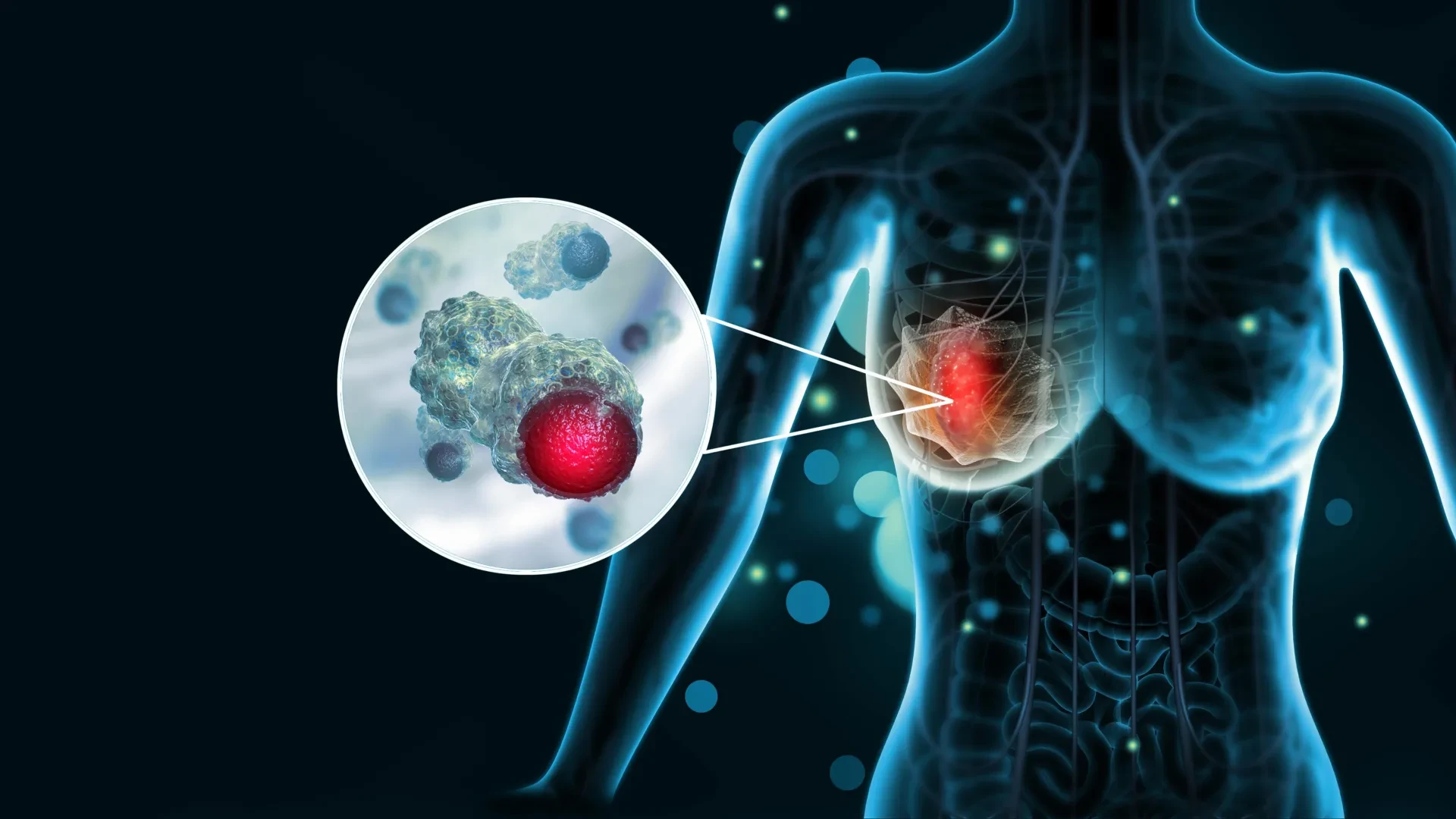
Women who carry higher blood levels of two widely prevalent industrial compounds may face a substantially increased risk of developing a particularly aggressive and difficult-to-treat form of breast cancer, according to a major new research study published by scientists at the National Institutes of Health (NIH), an agency operating under the U.S. Department of Health and Human Services (HHS).
The study uncovered a striking statistical connection between estrogen receptor-negative, or ER-negative, breast cancer and two specific chemicals: perfluorooctanoic acid (PFOA) and perfluorooctanesulfonic acid (PFOS). The findings indicate that women with greater concentrations of these enduring synthetic substances circulating in their bloodstreams were significantly more likely to develop this specific, hard-to-manage subtype of the disease. However, when looking at breast cancer risk overall—including more common, hormone-responsive tumors—the researchers did not find a clear, definitive link with either chemical.
Both PFOA and PFOS belong to an expansive, synthetic family of chemical compounds known technically as per- and polyfluoroalkyl substances, which are more commonly referred to in public discourse as "forever chemicals." These substances have been utilized for decades in a vast array of everyday consumer products, ranging from non-stick cookware and stain-resistant fabrics to waterproof apparel and specialized industrial firefighting foams. They earned their moniker because their chemical structures are exceptionally resistant to degradation, allowing them to persist in the natural environment for generations without breaking down. Furthermore, once these compounds enter the human body, they can bioaccumulate and remain lodged within internal tissues for years, raising ongoing public health questions about their long-term toxicological profiles.
"Women deserve clear answers about how chemicals in their environment may affect their health," said HHS Secretary Robert F. Kennedy, Jr., addressing the implications of the new findings. "This NIH study links two forever chemicals to a higher risk of ER-negative breast cancer and demands further investigation. Under President Trump’s leadership, we will pursue the evidence, confront environmental health risks, and give women the information they need to protect their health."
Why This Aggressive Breast Cancer Is Concerning
To understand the weight of the new findings, medical researchers emphasize the distinct clinical challenges posed by ER-negative breast cancer. This particular form of the disease differs fundamentally from more common presentations because its tumor cells lack the specific cellular receptors that normally allow the hormone estrogen to stimulate and drive cancer growth. Because standard hormonal therapies that target estrogen receptors are ineffective against these tumors, ER-negative cancers are frequently much more aggressive in their clinical behavior and generally carry poorer prognoses and survival outcomes compared to tumors that respond positively to hormonal interventions.
Despite the clinical severity and aggressive nature of ER-negative breast cancer, the medical research community still possesses relatively little definitive information regarding what environmental, genetic, or lifestyle factors elevate an individual’s susceptibility to developing it. The newly published findings suggest that chronic or elevated exposure to certain persistent environmental chemicals could represent a previously underappreciated contributing factor in the etiology of these aggressive tumors.
"Our findings, which we confirmed using a meta-analysis of prior research, indicate that certain legacy PFAS, including PFOA and PFOS, are associated with a higher risk of ER-negative breast cancer, a more aggressive tumor type with few known risk factors," explained NIH Stadtman Investigator Alexandra White, Ph.D., who served as the lead author of the study.
The comprehensive research paper detailing these discoveries was published in the Journal of Clinical Oncology, a leading peer-reviewed publication in the field of cancer research.
Higher Forever Chemical Levels Linked to Greater Cancer Risk
To rigorously investigate the possible biological connection between industrial chemical exposure and breast cancer subtypes, NIH scientists and their multi-institutional collaborators undertook a meticulous epidemiological analysis. They examined biological blood samples that had been systematically collected from research participants years before any of those individuals ever received a cancer diagnosis. By measuring the precise concentrations of 17 different individual PFAS chemicals present in those historical samples, the researchers were able to draw a direct line of comparison between a participant’s earlier internal exposure levels and their subsequent long-term health outcomes.
The empirical results revealed substantial and alarming differences specifically regarding PFOA and PFOS. Women falling into the highest quartile of PFOA exposure exhibited a 67% higher rate of developing ER-negative breast cancer when compared directly against women in the lowest exposure group. The statistical association proved even more pronounced in the case of PFOS, where the cohort with the highest exposure levels showed a staggering 93% higher rate of the disease—nearly double the incidence rate observed among those with the lowest exposure levels.
Epidemiologists note that these percentages represent relative statistical differences between the measured cohorts rather than the absolute, individual probability that any single woman will develop breast cancer during her lifetime. Furthermore, the observational nature of the research establishes a compelling statistical association rather than definitive, experimental proof that the chemicals directly initiate or cause the disease on a cellular level.
The underlying data utilized for this rigorous analysis were drawn primarily from the Sister Study, a landmark, nationwide prospective research project overseen by the National Institute of Environmental Health Sciences (NIEHS), which is a constituent part of the NIH. Conducted between 2003 and 2009, the Sister Study successfully enrolled 50,884 women ranging in age from 35 to 74 from communities across all fifty states and Puerto Rico.
At the time of their initial enrollment, all participating women were entirely free of a breast cancer diagnosis, although each shared a critical familial risk factor: every participant had a full or half-sister who had previously been diagnosed with the disease. For the specific parameters of the recent PFAS investigation, researchers analyzed detailed health and chemical biomarker information drawn from a subset of 1,609 women who subsequently went on to develop breast cancer over the tracking period, alongside a carefully matched control comparison group of 2,269 women who remained healthy.
Could Reducing PFAS Exposure Lower Cancer Risk?
Given that synthetic PFAS compounds are notorious for remaining chemically stable in both the external environment and human tissues for exceptionally long periods, questions naturally arise regarding whether ordinary individuals can take meaningful steps to protect themselves. However, researchers emphasize that personal exposure is not entirely static or unmanageable, and the new insights could eventually pave the way toward innovative preventative strategies.
"These findings matter for women’s health broadly," said the study’s first author, Che-Jung Chang, Ph.D., who previously worked as an NIH research fellow and currently serves as a researcher at DLH, a scientific research organization. "Although PFAS are persistent in the environment and in our bodies, exposure to them is still potentially modifiable, meaning people can take steps to reduce their exposure, and these findings could open new avenues for prevention."
Beyond quantifying the statistical risk, the research team is deeply interested in unraveling the precise biological pathways through which these synthetic compounds might influence tumor initiation or progression. Because the strongest statistical associations appeared specifically in tumors that lack estrogen receptors, the findings strongly imply that PFAS chemicals may exert their influence through biological mechanisms that are entirely unrelated to normal hormonal signaling pathways.
Potential hypotheses being explored by toxicologists include alterations in baseline gene activity, epigenetic modifications, or significant disruptions within the human immune system. Nevertheless, because the current epidemiological study did not directly investigate these intricate cellular mechanisms, their precise involvement remains an area requiring future laboratory study.
Newer Forever Chemicals Raise Unanswered Questions
Although legacy compounds like PFOA and PFOS have largely been phased out of active manufacturing processes in the United States and replaced with alternative industrial formulations, measurable baseline amounts of both substances continue to be detected in the bloodstreams of the vast majority of the general population. Their chemical persistence ensures that legacy exposure remains an active and pressing public health concern for decades to come.
In light of these discoveries, the study’s authors argue that subsequent scientific investigations should direct targeted attention toward specific populations with documented histories of elevated PFAS exposure, as well as demographic groups that historically experience disproportionately higher rates of aggressive ER-negative breast cancer. Such targeted research will be vital to verify the consistency of the observed associations and to determine whether certain vulnerable communities face disproportionate health risks.
Furthermore, public health advocates and toxicologists emphasize that the scientific community must urgently evaluate whether the newer generations of chemical compounds introduced as direct industrial replacements for PFOA and PFOS carry similar or distinct toxicological concerns.
"More research is needed, particularly evaluating the risk of breast cancer associated with newer replacement PFAS chemicals," White concluded.
The published findings significantly add to the mounting body of scientific literature questioning the long-term human health consequences of persistent environmental contaminants, underscoring the critical need to fully understand how everyday chemical exposures contribute to aggressive forms of malignancies like breast cancer.
The research described in the study received financial support and backing through dedicated grants awarded by the NIEHS, specifically under award identifiers Z01ES044005, Z1AES103332, and R01ES032831.