
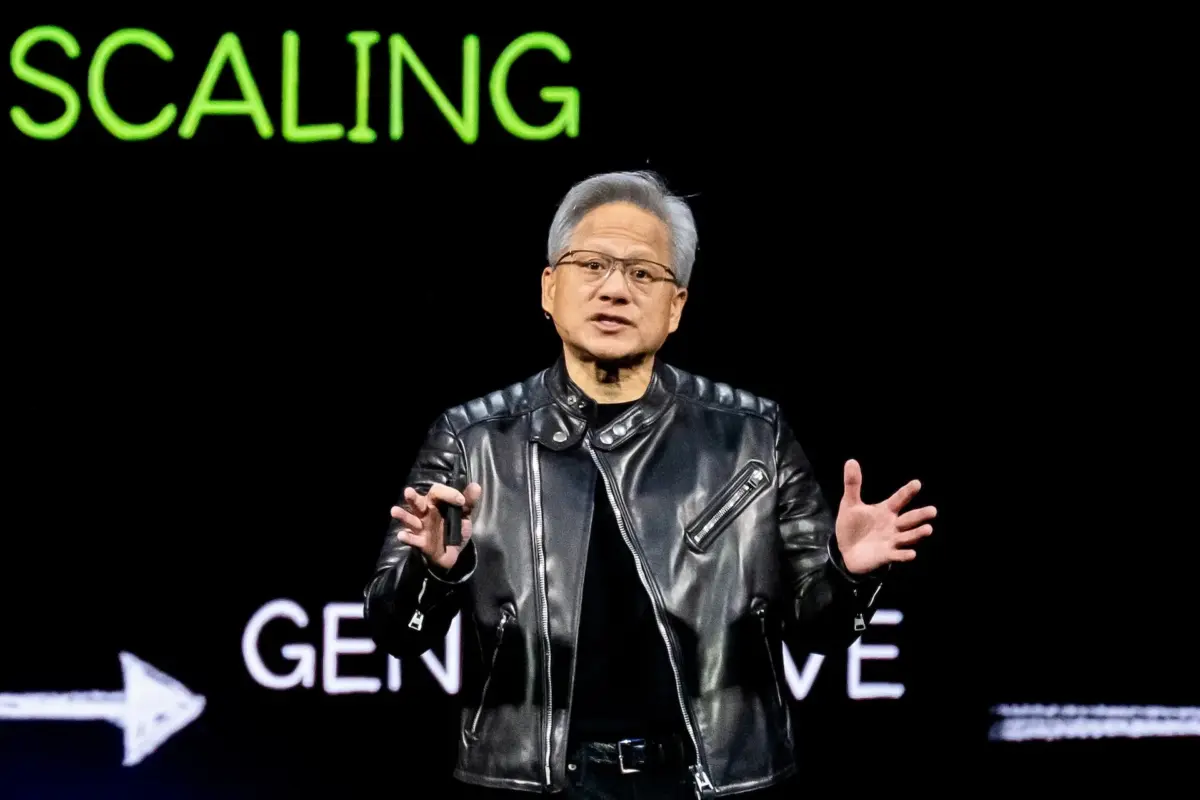
Washington — Congressional Democrats launched a formal inquiry on Thursday into how the Trump administration handled Nvidia’s lucrative and politically fraught chip sales to China. The investigation opened on the same day the semiconductor giant announced the ousting of its longtime leader, Jensen Huang, who stepped down as CEO and agreed to testify before a separate set of Republican-led congressional committees.
The cascading developments mark a dramatic turning point for one of the world’s most valuable technology companies, throwing its executive leadership, geopolitical strategy, and regulatory compliance into sudden turmoil. Huang’s removal from the company he founded followed his public confession to an extramarital affair amid escalating reports of a romantic relationship with a woman accused of operating as a Chinese spy. Subsequent reports have further damaged the executive’s standing, indicating he was also involved in additional affairs with Nvidia employees.
The alleged Chinese spy at the center of the scandal, Alice Huang, served as an executive for Megaspeed, a Singapore-based customer of Nvidia. U.S. officials have increasingly scrutinized Megaspeed, suspecting the firm of acting as a front or conduit to route advanced, restricted Nvidia microchips into mainland China in circumvention of federal export controls.
The new Democratic inquiry is being spearheaded by Representative Richard Neal of Massachusetts, the top Democrat on the House Ways and Means Committee, and Senator Ron Wyden of Oregon, the top Democrat on the Senate Finance Committee. Because Democrats currently hold minority status in both chambers of Congress, they lack subpoena power and cannot legally compel answers or document production on their own. Nevertheless, the lawmakers wield significant oversight platforms to raise probing questions and demand accountability from executive branch agencies.
In a sharply worded letter directed to Commerce Secretary Howard Lutnick, the Democratic lawmakers urged the Department of Commerce to immediately preserve all records concerning an arrangement they describe as both highly questionable and potentially unconstitutional.
According to the lawmakers’ characterization of the arrangement, the policy framework was structured in a specific sequence. President Donald Trump reportedly agreed to authorize the export of Nvidia’s advanced H200 chips to China under the condition that the components—manufactured in Taiwan—were first shipped physically to the United States. Upon their arrival on U.S. soil, the Trump administration levied a tariff on the shipments. The letter argues that this mechanism effectively allowed the administration to take a direct financial cut of Nvidia’s commercial sales to China through what they contend is an unconstitutional export tax system. Following this financial transaction, the Department of Commerce, operating under Lutnick’s leadership, issued the necessary export licenses.
This revenue-sharing arrangement between the federal government and the semiconductor industry was not entirely secret. In August 2025, public reporting by the Associated Press revealed that both Nvidia and Advanced Micro Devices (AMD) had agreed to remit 15% of their revenue generated from chip sales to China directly to the U.S. government. The unusual pact was forged as a condition for securing official export licenses from the administration.
However, the congressional inquiry spearheaded by Wyden and Neal digs deeper into administrative enforcement and potential national security compromises. The letter questions why Secretary Lutnick permitted Megaspeed to continue purchasing advanced chips even after U.S. intelligence agencies reportedly briefed the department on their suspicions regarding Alice Huang and her relationship with Jensen Huang. Furthermore, the lawmakers are demanding answers as to why the Commerce Department reportedly
greenlit chip purchases for other Asian corporate entities that allegedly maintained no physical presence at their officially listed business addresses. Consequently, the scope of the congressional investigation extends directly to the administration’s regulatory enforcement, casting a wide net beyond Nvidia and its former chief executive.
The inquiry also raises questions regarding the timing and motivation behind corporate donations made by Nvidia toward presidential projects. The letter notes that the controversial chip export deal was formally approved only after the administration became aware of Jensen Huang’s compromised personal position involving the alleged foreign spy. It also highlights that the approval followed a $26 million financial donation from Nvidia toward Trump-associated projects, including funding for a new White House ballroom. The lawmakers’ inquiries suggest an examination into whether the administration leveraged its knowledge of the executive’s personal indiscretions to secure substantial financial contributions from the tech giant.
The intersection of executive pressure and corporate compliance was further underscored during a television interview. In a "60 Minutes" segment featuring President Trump that aired on Sunday, the president recounted how he and his administration had explicitly threatened an unnamed artificial intelligence executive with potential imprisonment, claiming that the executive "totally changed" their posture following the threat.
The Ways and Means and Finance Committee inquiry represents the second major congressional investigation opened into Nvidia’s China sales and its interactions with the White House since public disclosures regarding the alleged spy affair emerged. Concurrently, a separate, Republican-led coalition of congressional leaders—comprising members from the House Select Committee on the Chinese Communist Party, the House Committee on Foreign Affairs, and the House Intelligence Committee—has pursued its own aggressive oversight track.
That Republican-led group previously demanded that Jensen Huang appear before them for a closed-door deposition, threatening to issue a formal congressional subpoena if he failed to comply voluntarily. Following his abrupt resignation from Nvidia, Huang agreed to testify before those congressional committees, setting the stage for high-stakes, private legislative scrutiny on Capitol Hill.