
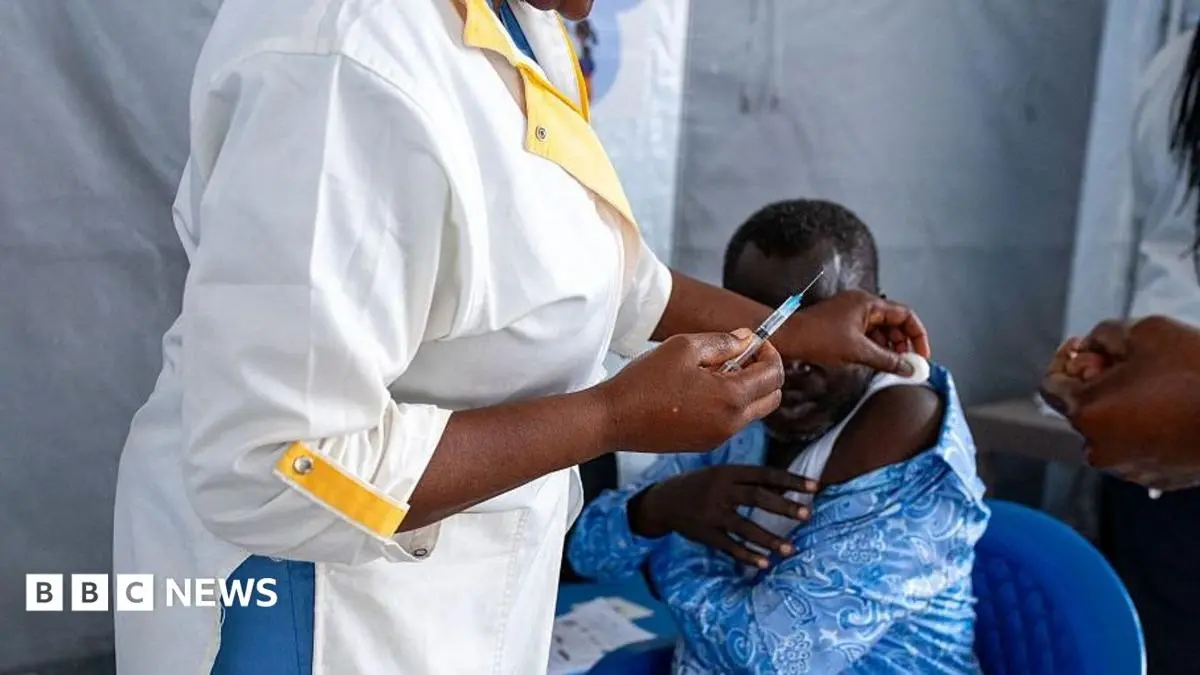
Hundreds of millions of dollars allocated to combat a deadly Ebola epidemic in the Democratic Republic of Congo are failing to reach the front lines of the crisis, leaving frontline health workers unpaid, under-equipped, and struggling to contain a disease that remains dangerously out of control, international medical charity Médecins Sans Frontières has warned.
In a damning new assessment released six months into the official response, Médecins Sans Frontières, known internationally as MSF, cautioned that severe financial, logistical, and operational dysfunctions are actively undermining efforts to stop the virus. Despite massive international and national financial commitments designed to halt the spread of the pathogen, the organization reported that the personnel tasked with directly managing the crisis are being forced to work without basic training, without wages, and without essential medical and sanitary supplies.
The operational breakdowns on the ground have reached a point where fundamental emergency services are collapsing under the strain. According to the MSF report, there have been recorded instances where emergency vehicles and ambulances dispatched to transport contagious patients or respond to urgent calls have literally run out of fuel, stranding medical crews and leaving communities without emergency intervention.
The scale of the ongoing health catastrophe in the Democratic Republic of Congo is unprecedented in recent years. Since the current outbreak was officially declared in May, more than 5,400 people have lost their lives to the disease, while confirmed infections have surpassed 11,000. These grim figures solidify the current crisis as the second-most deadly Ebola outbreak ever recorded in history, trailing only the massive West African outbreak that devastated the region a decade ago.
Despite the historical severity of the epidemic, epidemiologists warn that the official numbers may reflect only a fraction of the true toll. According to British epidemiologist Neil Ferguson, whose findings were reported by the Reuters news agency, more than half of all Ebola cases in the country are currently going undetected by health authorities and monitoring systems. This massive gap in surveillance means that the virus is continuously spreading unmonitored through local communities, leading experts to project that the outbreak is likely to persist for at least another full year.
The inability to accurately track and contain the virus stems from a fundamental failure in core public health strategies, specifically contact tracing and active community surveillance. Contact tracing—the painstaking process of identifying every individual who has come into contact with an infected person and placing them into supervised isolation—is widely recognized by public health experts as one of the most critical mechanisms for breaking chains of viral transmission.
However, MSF reported that despite significant financial resources officially allocated to fund these vital monitoring activities, the reality on the ground is deeply problematic. The medical charity revealed that surveillance teams that are officially registered and funded on paper are frequently nowhere to be seen on the ground when medical interventions are desperately needed.
This breakdown in community-level monitoring has led to tragic outcomes for infected individuals and their families. MSF highlighted that two-thirds of all recorded Ebola deaths are currently occurring within local communities rather than inside designated medical treatment centers or specialized isolation facilities. When patients die in their homes without professional medical care or safe burial procedures, the risk of secondary transmission to family members and neighbors increases exponentially, further fueling the epidemic.
The logistical deficiencies extending across treatment centers and health clinics have also created dangerous conditions for patients seeking care. MSF reported that numerous health facilities in affected regions suffer from critical shortages of basic infection prevention and control necessities, including reliable access to clean water, chlorine for decontamination, and structured triage systems to screen arriving individuals.
Without proper triage and sanitation infrastructure, health centers that are supposed to serve as safe havens for care are instead turning into engine rooms for viral spread. MSF warned that the absence of basic hygienic supplies has transformed several local medical facilities into new centers of viral transmission rather than places of care that contribute to containing the disease, putting both vulnerable patients and healthcare personnel at extreme risk.
These operational failures are occurring against a backdrop of deep financial opacity surrounding the international response effort. MSF’s warnings echo serious financial concerns raised last month by the Africa Centres for Disease Control and Prevention (Africa CDC). The continental health body disclosed that an astounding $700 million out of a total $962 million disbursed to various implementing organizations involved in the Ebola response remained completely unaccounted for.
Addressing the unaccounted funds last month, Africa CDC Director General Jean Kaseya noted that it was too early to formally characterize the missing funds as outright embezzlement. However, he forcefully described the situation as a major failure of transparency and financial reporting, emphasizing that implementing agencies must be held accountable for explaining how hundreds of millions of dollars in aid money have been utilized.
The government of the Democratic Republic of Congo has voiced similar frustrations over the lack of transparency from external aid organizations operating within its borders. Congolese Health Minister Samuel-Roger Kamba confirmed that the health ministry requires all implementing aid agencies to provide comprehensive details regarding their operational activities, financial distributions, and ground presence so that national authorities can provide effective oversight.
Despite this explicit requirement, Minister Kamba revealed that only 22 percent of the aid agencies active in the response have complied with the government’s request for information. Taking to the social media platform X, the Health Minister demanded an immediate end to parallel operational structures and opaque financial practices among aid groups.
"Our requirement is clear: transparency must be total. The response relies on a single plan, a single budget, and a single coordination," Health Minister Samuel-Roger Kamba stated on X, emphasizing that the national strategy cannot succeed if international partners operate outside a centralized oversight mechanism.
The BBC has formally reached out to the Congolese government for further comment regarding the operational deficiencies and oversight challenges highlighted in the MSF report.
In its published report, MSF pulled no punches regarding the stark contrast between the vast sums of money designated for the international emergency response and the desperate conditions experienced by workers on the front lines of the epidemic. The charity noted that despite the massive financial packages committed by global donors, many frontline responders are left attempting to contain one of the world’s deadliest pathogens with empty hands and empty pockets.
This sentiment was reinforced by MSF leadership, who expressed frustration over the systemic gridlock paralyzing response efforts across multiple provinces. MSF President Javid Abdelmoneim delivered a sharp critique of the institutional inertia that has plagued the intervention since its inception.
"Our teams are often left speechless by the dysfunctions they witness in many areas. Six months into the response, this situation is simply unacceptable," Abdelmoneim stated, emphasizing that the persistence of fundamental operational errors half a year into an epidemic points to a severe structural failure within the coordination hierarchy.
The charity also identified severe geographic imbalances in how resources and medical personnel are being deployed across the country. MSF criticized what it described as an excessive concentration of financial and logistical efforts in certain high-profile areas, executed at the direct expense of other regions where the medical needs are far more urgent and deteriorating rapidly.
Specifically, MSF observed that the response in North Kivu province has been dramatically too slow to match the pace of viral transmission, while the situation in Haut-Uélé province has been dramatically overlooked by primary response networks. In both provinces, MSF field teams documented that local health workers were inadequately resourced to manage active cases effectively, lacking even the rudimentary equipment necessary to protect themselves or isolate infected patients.
To prevent the epidemic from spiraling further, MSF has called on both the government of the Democratic Republic of Congo and international United Nations agencies overseeing the relief effort to immediately strengthen oversight and financial accountability mechanisms across all operational sectors.
The charity emphasized that restoring integrity to the Ebola response requires ensuring that money already disbursed is effectively utilized where it is needed most. According to MSF, achieving this goal means ensuring response personnel are properly trained, paid, equipped, and supported, while aggressively directing financial and physical resources toward the geographical areas where public health needs are demonstrably the greatest.