
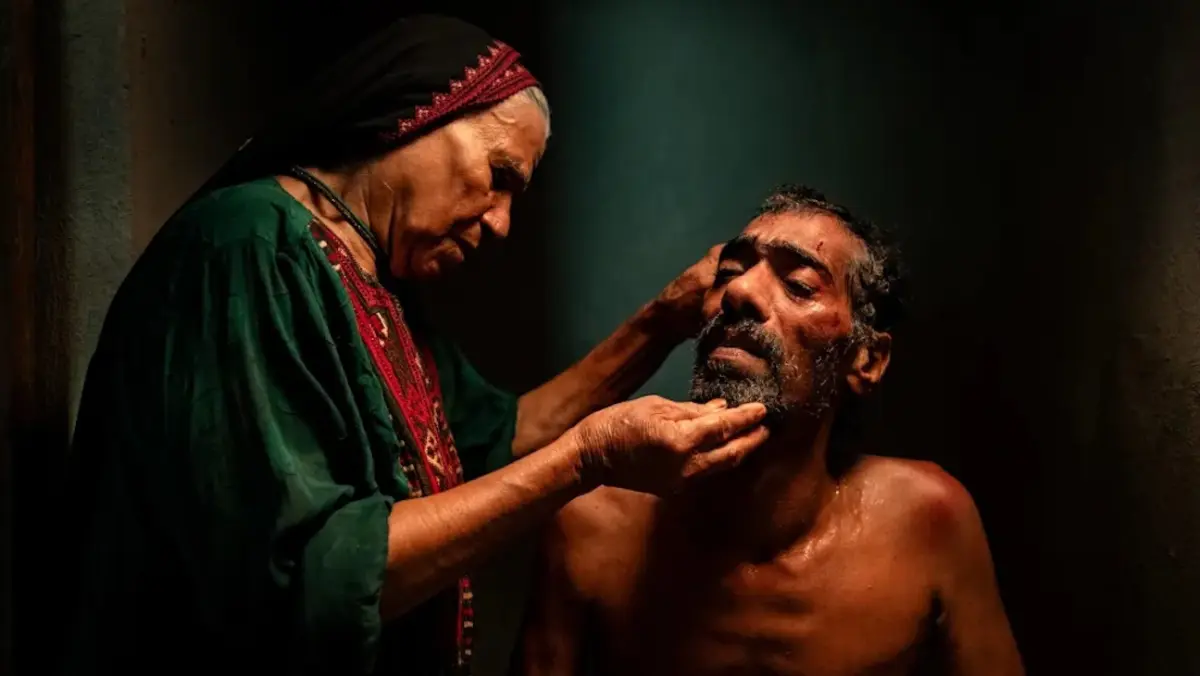
Renowned Iranian director Majid Majidi has added another prestigious accolade to his illustrious career, taking home the best film prize at the Busan International Film Festival for his compelling drama, Midday Meal. The victory not only cements the movie’s status as a critical darling on the international film circuit but also grants the production a valuable, direct route into the Academy Awards’ best international feature race.
The unanimous decision was reached by Busan’s seven-member main competition jury, which was led by legendary Chinese filmmaker Zhang Yimou. Anticipation surrounding Majidi’s latest feature had been steadily building on the ground throughout the festival week in South Korea, with many industry insiders and critics accurately predicting that the powerful drama would walk away with the festival’s highest honor.
Accepting the award at the Busan Cinema Center, Majidi dedicated his victory to the resilience of the Iranian people. He used a significant portion of his acceptance speech to address the heavy civilian toll and ongoing hardships resulting from the U.S.-led war and political pressures facing his homeland.
"I would like to dedicate this prize to the brave heroes of Iran — the people of Iran, who have stood firm through all these years and are still resisting oppression," Majidi said to the audience.
He further elaborated on the devastating human cost of the conflict, pointing to a tragic event early in the hostilities. "On the very first day of this war in Iran, a school in Minab was hit, and 120 innocent students were killed. Even now, some of the bodies have not been found," he stated. "What crime have our people committed? There is nothing except that our people want to be independent. They will stand firm until the end."
Concluding his impassioned speech, the director shared a message of global harmony: "I wish for a world where there is no more war, full of peace, love and brotherhood. I’m praying for that future."
Midday Meal dazzled festival attendees and critics alike with its resonant, parable-like storytelling and assured visual direction. The narrative centers on Davoud Soulan, played by nonprofessional actor Mohammad Rahimi, who works as a contract teacher in a remote, impoverished village located in southeastern region of Iran. Soulan’s hopes of securing a stable, permanent government job are suddenly thrown into jeopardy when a wealthy local benefactor passes away. With that death, the free school lunches that had been keeping his impoverished pupils attending classes vanish overnight.
Determined to save both his school and his precarious future, Soulan finds himself pushed toward increasingly desperate actions, including dangerous cross-border fuel smuggling. The storyline places his innate natural decency in stark, agonizing conflict with his modest personal ambitions.
The film serves as a natural continuation of Majidi’s long-standing thematic focus on the moral pressures, dignity, and resilience of individuals living on the margins of society. This artistic preoccupation has previously yielded celebrated, festival-winning works such as The Color of Paradise in 1999 and Baran in 2001. True to his grounded style, Majidi populated Midday Meal with an entirely nonprofessional cast, discovering local talent through street casting across the region. Their raw performances play out against the stark, otherworldly geological backdrop of Iran’s striking Martian Mountains.
Earlier in the festival, Majidi discussed the personal turmoil that preceded his journey to South Korea. At a well-attended press conference, he revealed that he had very nearly declined the festival’s invitation. He admitted to feeling deeply depressed and exhausted by the dire, turbulent situation unfolding at home. However, he ultimately decided to make the trip, realizing it offered a vital platform to convey "some kind of small message from my people to the people of other nations and other places."
Beyond the prestige of the trophy, Majidi’s victory delivers an instantaneous jolt of Oscars momentum to Midday Meal. The Busan International Film Festival introduced its competitive main section just last year, bringing its organizational and awards structure into closer alignment with Europe’s most prominent cinema events. Under specific regulations established by the Academy of Motion Picture Arts and Sciences, the top winner from Busan’s main competition is granted eligibility to be submitted directly for international feature film consideration without needing approval from its home country’s official Oscar selection committee. This places Busan alongside prestigious events like Cannes, Venice, Berlin, Sundance, and Toronto on the Academy’s recognized list.
The automatic pathway is particularly advantageous given the complex landscape of international submissions. Iran has already designated Babak Khajehpasha’s Land of Angels—a drama centered on children enduring the harrowing realities of war in Gaza—as its official entry for the 99th Academy Awards. With its Busan victory, Midday Meal now holds an open, alternative route into the competitive race.
Majidi is no stranger to the Academy Awards history books. He previously made milestone cinematic history with his 1997 masterpiece Children of Heaven, which secured the distinction of becoming the first Iranian film ever nominated in the international category, which was known at the time as best foreign-language film.
The main competition jury, helmed by Zhang Yimou, evaluated a total of 13 diverse titles. Zhang was joined on the distinguished panel by fellow Chinese director Bi Gan, South Korean actress Moon Choi, Japanese filmmaker Kei Ishikawa, South Korean director July Jung, Vietnamese producer Tran Thi Bich Ngoc, and Kazakh actress Samal Yeslyamova.
Alongside Majidi’s top win, the jury distributed several other major honors. Indonesian director Eddie Cahyono was awarded the special jury prize for Ibuku. The emotional drama stars veteran screen actress Christine Hakim as a widow whose late husband leaves behind crushing gambling debts, forcing her into the agonizing position of arranging a marriage for her only daughter.
The best director honor went to Taiwan’s Lee Yun Chan for To Be Ordinary, a poignant narrative exploring how a devastating accident tests the strained relationships within a family. The win marks a celebrated return to the Busan spotlight for Lee, whose debut feature, The Shoe Fairy, previously screened within the festival’s competitive New Currents section back in 2005.
The two best actor honors were awarded to prominent Chinese star Zhou Xun and Japanese newcomer Kashun Himeno. Zhou was recognized for her compelling work in Gu You’s The First Taste of Loneliness, a film following three generations of women as they navigate grief following the death of the family patriarch. That same film also picked up the artistic contribution award, which recognized the intricate sound design work of Li Danfeng. Himeno claimed her acting prize for her remarkable screen debut in Shuichi Okita’s Satoko Always. In the film, she portrays the youngest of three women who share an identical name but exist at different stages of life, each turning to the written word to process their lived experiences.
In the New Currents section, dedicated to emerging cinematic voices, India’s Shashank Walia claimed the top New Currents Award for Birds in the Dark. Backed by filmmaker Hansal Mehta, the black-and-white Punjabi-language drama examines the complex intersections of caste, labor, and love in rural Punjab. The film had already found success earlier in the week, collecting the Songwon Vision Audience Award for an Asian title. A New Currents special mention was also presented to South Korean director Lim Hayeon for her debut feature, Beach Fictions, which follows a young woman whose retreat to a seaside town leads to mysterious encounters with a novelist, a magician, and a fortune teller.
Festival organizers reported robust public engagement for the 31st edition of the event, which ran from October 6 to 15. Total attendance surpassed 200,000 moviegoers, marking the festival’s largest crowd since 2015. Additional festival programs and special events drew another 77,000 participants. Organizers attributed the notable growth to strategic adjustments in the opening schedule and an expanded, diverse screening lineup. Meanwhile, the concurrent Asian Contents & Film Market, running from October 10 to 13, drew 30,484 industry participants and 339 companies hailing from 32 different countries.
The festival also played host to numerous global cinematic luminaries. Alfonso Cuarón made his historic first visit to South Korea during the event, joining an impressive roster of international guests that included Charlotte Gainsbourg, Maggie Gyllenhaal, Fan Bingbing, Hirokazu Koreeda, Lee Chang-dong, Na Hong-jin, Lav Diaz, and anime veteran Rintaro. Additionally, Michelle Yeoh was honored with the Asian Filmmaker of the Year award during the opening ceremony, while veteran Hong Kong director Ann Hui accepted the festival’s Camellia Award.
Busan International Film Festival Winners:
Best film: Midday Meal — Majid Majidi
Special jury prize: Ibuku — Eddie Cahyono
Best director: Lee Yun Chan — To Be Ordinary
Best actor: Zhou Xun — The First Taste of Loneliness
Best actor: Kashun Himeno — Satoko Always
Artistic contribution: Li Danfeng (Sound) — The First Taste of Loneliness
New Currents:
New Currents Award: Birds in the Dark — Shashank Walia
Special mention: Beach Fictions — Lim Hayeon