
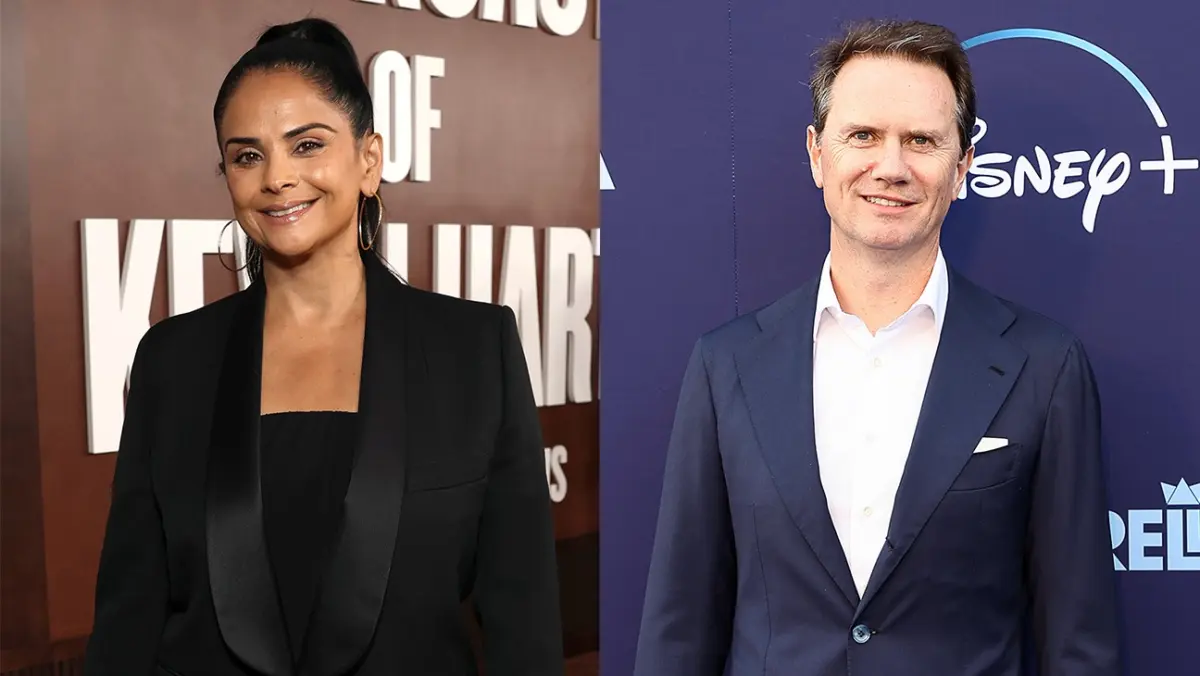
Netflix has announced a major leadership restructuring at the highest levels of its content division, parting ways with Chief Content Officer Bela Bajaria and appointing veteran media executive Peter Rice as her successor. The high-profile executive shuffle arrives during a turbulent week for the streaming giant, which has eliminated approximately 1,000 jobs—representing roughly six percent of its global workforce—and shown the door to several other prominent creative executives across its film and television departments.
Rumors of Bajaria’s departure had been circulating throughout Hollywood in recent days, culminating in the official confirmation that she is out at the company she helped shape over the past decade. Bajaria initially joined Netflix ten years ago as a vice president, arriving just months after her departure from NBCUniversal, where she had served as the president of Universal Television. Her tenure at Netflix was marked by a steady rise through the corporate ranks; she ascended to oversee all of the company’s vast television operations four years after joining and ultimately achieved the role of chief content officer in 2023. During her time at the helm, she presided over a massive expansion of the company’s unscripted programming slate, alongside strategic pushes into live events and sports entertainment.
To fill the critical CCO vacancy, Netflix has turned to Peter Rice, one of the most experienced and well-regarded studio executives in the modern entertainment industry. Rice built a legendary reputation during his long tenure at 20th Century Fox, staying with the studio through its high-profile acquisition by The Walt Disney Company. At Disney, Rice eventually rose to oversee all of the conglomerate’s entertainment operations before his unexpected ouster by then-Chief Executive Officer Bob Chapek in 2022. Most recently, Rice lent his expertise to the LA28 Olympics organizing committee, joining the group last year to manage content strategy and production for the upcoming Olympic Games.
The transition at the top coincides with a broader, painful corporate contraction at Netflix. The company has historically maintained a unique corporate culture that largely avoided broad, sweeping layoffs, preferring instead to empower individual teams to make localized staffing and operational changes as business needs dictated. Prior to this week, Netflix had not executed company-wide layoffs in four years. This philosophy of continuous, high-performance evaluation was deeply embedded by company founder Reed Hastings, who famously ousted his co-founder Marc Randolph and consistently encouraged senior leaders to make swift personnel changes if they believed it would yield a better outcome for the organization.
Hastings famously rejected the notion that a major corporation should operate like a family, preferring instead to compare Netflix’s high-stakes corporate environment to a championship sports team. In an interview on a Semafor podcast held in August, Hastings elaborated on this management philosophy. He noted that framing the company like a competitive sports team—where the ultimate goal is winning the championship against fierce industry rivals—makes it far easier for employees and observers to understand why coaches must occasionally make decisive changes to the roster.
In statements accompanying the executive transition, Netflix leadership emphasized both gratitude for Bajaria’s past contributions and high expectations for Rice’s future stewardship. Co-Chief Executive Officer Ted Sarandos praised Bajaria for her instrumental role in driving the platform’s explosion in unscripted programming and its ambitious diversification into live events and sports. Turning his attention to the incoming content chief, Sarandos expressed confidence that Rice would help the company continue to scale its operations globally and deliver members an even greater volume of the stories they love.
For his part, Peter Rice expressed enthusiasm about stepping into the role at a pivotal moment for the entertainment landscape, remarking that Netflix has fundamentally changed the way stories are made, shared, and experienced around the world.
However, the leadership change is only one part of a wider bloodbath at the streaming titan. In addition to the broader workforce reduction affecting roughly 1,000 employees, top-tier executive exits over recent days have cut deep into Netflix’s creative ranks. Departures include film vice president Doug Belgrad, as well as a slate of prominent television executives including Lisa Lang McMullen, James Oh, Carolina Garcia, and Andrew McQuinn.
The sweeping layoffs and executive restructuring come as Netflix leadership actively seeks a strategic reset in the face of slowing viewership growth. While the streaming pioneer remains exceptionally profitable and continues to see its core business expand at a rapid clip, the steadiness of its viewership metrics has shown signs of friction. Addressing these realities publicly, Sarandos lamented at the Bloomberg Screentime summit on September 30 that overall, the platform is not growing as fast as he wants it to, emphasizing that management is actively working on accelerating that momentum.
In response to these growth pressures, Netflix has spent the last few years aggressively diversifying its content strategy. Beyond its traditional heavy investments in original scripted and unscripted film and television series, the company has pushed hard into live sports, live entertainment specials, video podcasts, and creator-driven content. These strategic bets are designed to broaden the platform’s appeal, capture different segments of consumer attention, and maintain engagement growth in an increasingly crowded and competitive streaming market. With Peter Rice now stepping into the chief content officer role, the company is banking on his deep industry expertise to steer this next phase of creative evolution and commercial expansion.