
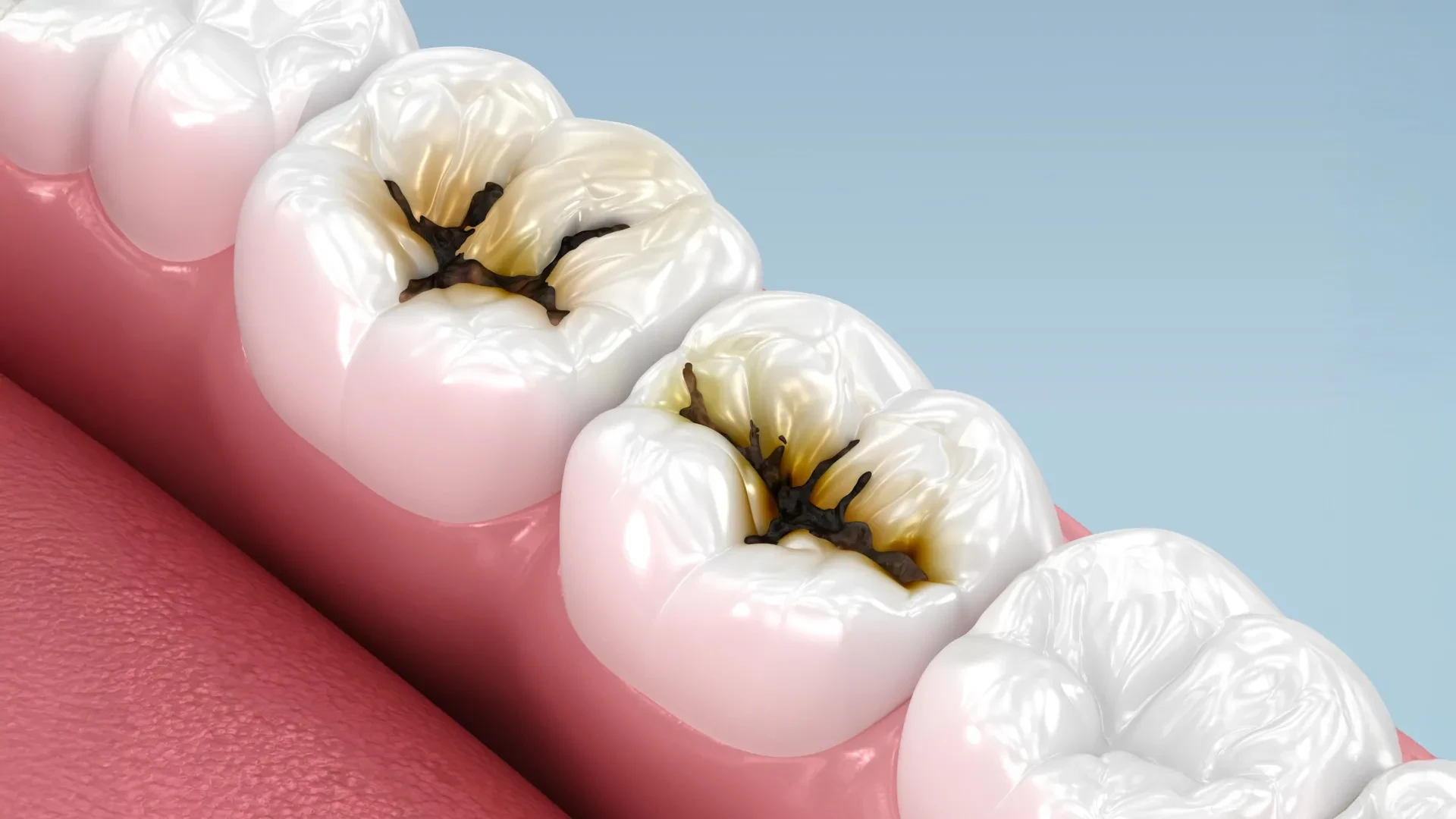
A cavity doesn’t always have to mean drilling, injections, or an uncomfortable, anxiety-filled visit to the dentist. A major clinical trial has now confirmed that a simple, inexpensive liquid can successfully stop tooth decay in young children, potentially preventing painful infections, missed school days, and the need for invasive dental surgery.
The innovative treatment, known as silver diamine fluoride (SDF), takes only seconds to apply to each affected tooth. Rather than drilling away damaged tooth material and placing a traditional filling, a dentist uses a tiny sponge-tipped applicator to paint the liquid directly onto the cavity. The entire process requires no drilling, no injections, and no sedation, marking a dramatic shift in how early childhood dental issues can be managed.
The findings could have enormous implications for pediatric healthcare. Every year, thousands of young children in the United States visit emergency departments because of untreated cavities. Emergency physicians generally cannot provide the complex dental procedures needed to address the underlying problem, leaving some children with ongoing pain, chronic infections, and restless nights. Others ultimately need to undergo dental surgery performed under general anesthesia, rendering them completely unconscious during the procedure.
Now, a team of researchers led by the University of Michigan has produced compelling evidence that a much simpler, non-invasive approach can stop many cavities from getting worse before they reach a crisis point.
Major Clinical Trial Confirms Silver Diamine Fluoride Works
Published in JAMA Pediatrics, the rigorous Phase III clinical trial included 830 children younger than 6 years old. Participants for the study were carefully recruited through dental clinics, pediatric medical practices, and Head Start and Early Head Start programs located across Michigan, New York, and Iowa.
Head Start and Early Head Start are federally supported programs that provide comprehensive early childhood education, health, nutrition, and parent involvement services to low-income and eligible families. By partnering with these community networks, the researchers were able to reach young children who might otherwise experience barriers to consistent dental care.
The results of the clinical trial showed that a solution containing 38% silver diamine fluoride successfully stopped decay in more than half of the affected baby teeth when the treatment was provided at regular six-month intervals.
Dentists refer to this process as arresting tooth decay, meaning that the damaged area stops deteriorating and the progression of the cavity is halted. Unlike a traditional filling, the treatment does not mechanically replace lost tooth structure or rebuild the shape of the tooth. Instead, it alters the environment of the cavity to help prevent existing decay from advancing further into the tooth.
SDF works through the combined biochemical effects of silver and fluoride. The silver component helps combat and neutralize the bacteria associated with tooth decay, while the fluoride component helps strengthen the remaining mineral structure of the teeth so they can better resist further damage from acids and plaque.
"This is a very effective and safe treatment — even in children as young as 1," said Margherita Fontana, a professor of dentistry at the University of Michigan School of Dentistry and the lead investigator of the study.
A Simple Treatment Could Help Millions Avoid Dental Pain
Tooth decay is widely recognized as the most chronic disease among children, affecting more than 40% of American children by the time they reach early school age. Although cavities may initially cause few noticeable symptoms in their earliest stages, untreated decay can eventually lead to severe, throbbing toothaches, localized infections, difficulties eating and sleeping, missed school days, and a cycle of repeated emergency medical and dental appointments.
For young children, conventional dental treatment can also be particularly challenging to execute. Some patients are simply too young or unable to remain still throughout a lengthy procedure, while others experience significant fear, behavioral challenges, or dental anxiety.
SDF offers a practical alternative for many of these patients because it can be applied quickly and quietly, without the heavy equipment, loud drilling noises, and invasive procedures required for a traditional filling.
Fontana noted that the clinical benefits could eventually extend well beyond young children. Older adults, individuals with developmental or physical disabilities, individuals suffering from severe dental anxiety, and patients who generally have difficulty obtaining conventional dental care could also benefit immensely from this low-impact intervention.
There is, however, one important tradeoff that patients and families must consider. Silver diamine fluoride permanently turns the decayed portion of a treated tooth a dark, noticeable color, which can be particularly striking on visible front teeth. The discoloration is primarily cosmetic and indicates that the silver has reacted with the decayed tissue, but it may influence whether patients and families choose the treatment for aesthetic reasons.
Even so, for many people, avoiding intense pain, drilling, and more invasive surgical procedures may far outweigh that visible drawback, especially for baby teeth that will eventually fall out naturally.
Why This Decades-Old Treatment Could Soon Reach More Patients
Silver diamine fluoride is not a newly invented substance or an unproven experimental chemical. Dentists have successfully used SDF to manage and arrest cavities in numerous countries around the world for decades.
In the United States, the Food and Drug Administration (FDA) approved SDF as a medical device for treating tooth sensitivity back in 2014. Since then, dentists have also used it off-label to stop cavities, meaning they apply an authorized product for a purpose beyond its original approved indication.
What has been missing until now is large-scale, rigorous clinical evidence from diverse U.S. populations establishing its absolute safety and effectiveness specifically for treating active tooth decay—a critical step toward obtaining full FDA approval for that specific clinical use.
The University of Michigan trial was meticulously designed to help fill that exact data gap and provide regulatory bodies with the evidence they require.
"If we want more children and families to benefit from this treatment, we need rigorous evidence showing both that it works and that it’s safe. From a public health perspective, if we want broader implementation across the United States, including in medical settings, we need carefully collected data in U.S. populations, and we now have that," Fontana said.
The major investigation officially began in 2018 and continued moving forward despite the unprecedented disruptions caused by the COVID-19 pandemic, which tested the resilience of the research team and participants alike.
The researchers believe that stronger, peer-reviewed clinical evidence could make SDF vastly more available, including in pediatric medical settings where young children often receive routine care years before their very first dental appointment.
"In medicine, clinicians want high-quality evidence before changing practice," Fontana said. "It is important to have data they can refer to because young children often see pediatricians years before they ever visit a dentist, [and] broader acceptance could allow many more cavities to be treated while a referral to a dental home is successful, and before they become painful, infected or require surgery."
A dental home refers to an ongoing, continuous relationship with a dental care provider who can deliver comprehensive preventive care, timely treatment, and necessary follow-up services tailored to the patient’s developmental needs.
Expanding access to SDF could allow more children to receive early intervention before relatively manageable cavities develop into serious, systemic dental problems requiring extensive medical intervention.
FDA Approval Could Expand Access to Cavity Treatment
The landmark trial brought together a collaborative network of researchers from the University of Michigan, New York University, the University of Iowa, and Indiana University. The National Institute of Dental and Craniofacial Research, a division of the National Institutes of Health, provided more than $12 million in funding to support the multi-site study.
The specific product tested during the trial was Advantage Arrest 38% SDF, which was supplied by Elevate Oral Care.
The findings provide robust clinical trial evidence that the manufacturer and other stakeholders can now use in a formal application seeking FDA approval of SDF as a drug specifically indicated for arresting dental caries, the formal medical term for tooth decay.
Amr Moursi, a professor of pediatric dentistry at the New York University College of Dentistry and a co-principal investigator on the project, emphasized the potential importance of that regulatory change for the broader healthcare system.
"Our results support FDA approval of SDF for managing arrest of tooth decay in young children. Removing SDF from off-label status would be an important innovation which could lead to increased utilization by providers, enhanced payments by insurers and more consistent product quality," Moursi said.
For some children, receiving another simple application of SDF every few months could be completely sufficient to keep a cavity under control until the affected baby tooth naturally falls out to make way for permanent adult teeth.
Adults could also benefit significantly from the approach, either by using SDF to manage decay over a longer period or as a safe, temporary solution until a permanent filling or another restorative dental procedure becomes financially affordable or practically feasible.
While the treatment is not suitable for every single type of cavity, and stopping existing decay does not necessarily eliminate the need for all future dental work, the findings suggest that a procedure requiring only seconds to perform could help a vast number of patients avoid more complicated and distressing treatments.
"For almost anyone, this can arrest the decay and stop the infection and the pain it causes," Fontana said. "This could benefit many people."