
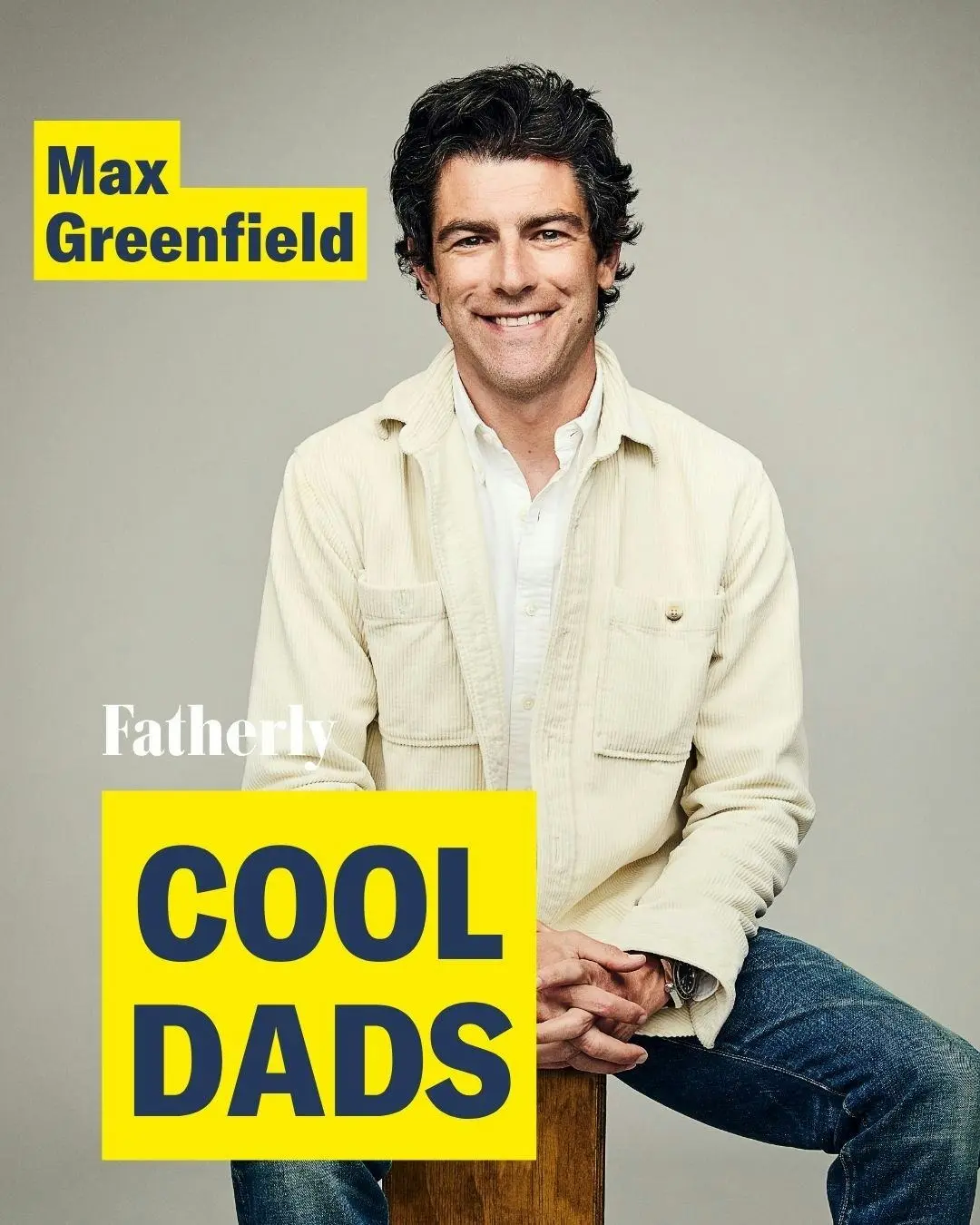
The first thing audiences might notice about the father figure in Netflix’s upcoming emotional teen drama Don’t Say Good Luck is that his hair looks immaculately styled. Yet, that polished appearance is merely the surface of the deeply aspirational yet grounded cues radiating from the character brought to life by actor Max Greenfield. In this compelling family drama that skillfully balances humor with tear-jerking emotional beats, Greenfield portrays a modern father attempting to gracefully juggle a demanding career, elementary-school-aged twins, a complex teenager experiencing big emotions, and the devastating blow of his wife’s cancer diagnosis.
While the character occasionally finds himself thrown completely off-kilter by the relentless curveballs life hurls his way throughout the film, he never once bumbles his way through the chaos. In virtually every scene, he manages to discover meaningful pathways to remain a fully present, emotionally available parent and a supportive partner, establishing a refreshing portrait of modern fatherhood on screen.
Reflecting on his experience stepping into the role, Greenfield admits that understanding the emotional core of the character came remarkably naturally to him. Speaking about his connection to the project, he notes that so much of himself is infused into that movie, explaining that he felt an immediate, profound closeness to the work and the themes being explored. Part of this deep resonance likely stems from his real-life family dynamics; Greenfield’s own daughter is currently a high schooler, shares mutual friends with the film’s lead young actress, Sunny Sandler, and has navigated the theatrical and social landscapes of high school life in a way that closely mirrored the world depicted on set.
The project offered a unique blend of professional challenge and personal familiarity for the actor. Knowing that Sunny Sandler was headlining the film, and having heard industry rumors that her family’s sets are famously positive, collaborative, and among the best in the business, Greenfield was eager to contribute to a welcoming environment. Having never worked on a Sandler production before, his primary goal was to ensure that his young co-star experienced a supportive, comfortable atmosphere akin to what he would want for his own children.
Recalling his mindset during production, Greenfield shares that while he occasionally questioned whether his acting performance would hit all the right notes, he felt absolute confidence in his ability to embody the role of the father. He knew instinctively how to navigate the social nuances of interacting with a teenager like Sunny, keeping the environment light, encouraging, and emotionally safe. Furthermore, working alongside the two young boys who portray the twins in the film brought an organic, unscripted energy to the set. Greenfield observed that the young actors were hardly acting at all, but rather naturally running around and being themselves. Drawing from his real-life experience coaching his son’s basketball team—an endeavor that required wrangling a large group of energetic kids, keeping them focused, and getting them involved—Greenfield found himself ideally prepared for the onset antics of the twin actors, which ultimately made filming significantly more fun and authentic.
That palpable sense of realism is something Greenfield believes anchors the entire narrative of Don’t Say Good Luck. Everything on set felt reflective of his actual day-to-day existence. Sharing scenes with Sunny allowed him to naturally tap into the complex dynamics of a father-daughter relationship, while interacting with the young boys felt entirely intuitive, mirroring the familiar rhythms of his household.
Among the film’s most powerful moments is a deeply dramatic, emotionally raw scene later in the story where the lead character and her father share a moment of profound vulnerability inside a parked car. When the daughter asks her father if he is okay, and he turns the question back to her, both ultimately confess that they are not. The scene resonates deeply with anyone who has navigated family illness, striking a chord of raw honesty. Greenfield reveals that crafting that specific sequence involved extensive conversations with director and writer Julia Hart, alongside co-writers Laura Hankin and Jordan Horowitz. The creative team maintained an open dialogue and remained remarkably generous regarding Greenfield’s creative input, recognizing that the scene served as the pivotal emotional linchpin for the father-daughter relationship.
After reviewing how the narrative unfolded up to that point, the team collaborated by exchanging multiple drafts of the scene back and forth until they collectively landed on the exact right emotional pitch. The objective was to honor everything that had been built up in the narrative prior to that moment while setting the stage for what was to follow, all without resorting to an artificial Hollywood fix. Greenfield notes that shooting the scene was an intensely heavy, unforgettable experience that demanded total emotional honesty from the actors involved.
Outside of his dramatic work in the film, Greenfield’s character also runs a local bagel shop, a detail that naturally invites conversations about real-world culinary preferences. When asked about his personal bagel order, the actor embraces his Los Angeles lifestyle with a touch of humor, offering two distinct favorites. His first choice is a classic everything bagel loaded simply with cream cheese, onion, tomato, and lox—a combination he describes as a timeless, infallible choice. His second option leans toward a lighter profile, featuring a light cream cheese spread or a quality hummus paired with fresh, crisp vegetables dressed with the right vinaigrette, salt, and pepper. Greenfield also shares a recent local culinary adventure, admitting that he and his daughter finally braved the notoriously long, mile-long line at Courage Bagels in Los Angeles. After hesitating to wait, they ultimately gave in, ordered a specialty vegetable bagel creation, and found the hyped-up local delicacy to be completely unbelievable.
Beyond the emotional beats and culinary trivia, Don’t Say Good Luck tackles a universal parenting dilemma: the delicate art of disclosure. The film explores the fine line between what parents choose to tell their children, what they conceal to protect them from harsh realities, and the moments when those protective instincts ultimately backfire. When asked how he approaches this challenge in his personal life, Greenfield emphasizes the importance of creating a safe, open environment where his children feel entirely comfortable bringing difficult topics to him on their own terms.
According to Greenfield, the key is to ease children into complex discussions based on the specific questions they ask, allowing the conversation to remain an ongoing, evolving dialogue rather than a single, intimidating lecture. By fostering this continuous exchange over time, he has observed that his children develop a remarkable comfort level with information that might otherwise seem confusing or frightening, simply because they are permitted to process it at their own individual pace.
Reflecting on how his parenting outlook has shifted as his children have grown out of the baby and elementary stages and into the realms of being a 16-year-old and an 11-year-old, Greenfield admits to a candid realization: he is making significantly more mistakes. The boundary between exercising necessary responsibility and knowing what to let go of grows thinner with each passing day. He acknowledges the constant internal struggle of identifying which boundaries he feels compelled to control purely to make himself feel safer amidst the unpredictable and often frightening nature of raising older kids, noting that operating from a place of fear-based parenting is never a healthy zone.
Now that his daughter has earned her driver’s license, Greenfield faces a brand-new tier of parental anxiety. He humorously recounts conversations with his wife where they ponder logistical realities, such as whether their daughter will simply drive herself to volleyball practice now that she is legally permitted to do so. Stripping away the parental panic reveals a logical progression: she practiced, worked hard, passed the legal test, and earned the right to drive. Yet, the emotional shift from the manageable worries of early childhood to the terrifying independence of adolescence is profound.
Green Greenfield shares that sitting in the passenger seat while his daughter navigates the road provided a surprising perspective on anxiety. In those high-stakes moments, he realizes that the everyday worries he harbors about the future, work, and general life stressors pale in comparison. Sitting beside a newly licensed teenage driver represents tangible, real-world fear—the kind of appropriate, heavy apprehension that reminds him what genuine anxiety feels like. Recognizing that distinction has helped him reframe his mental landscape, allowing him to dismiss lesser worries as transient noise while acknowledging that he now knows the true difference between everyday stress and genuine, appropriate parental concern.