
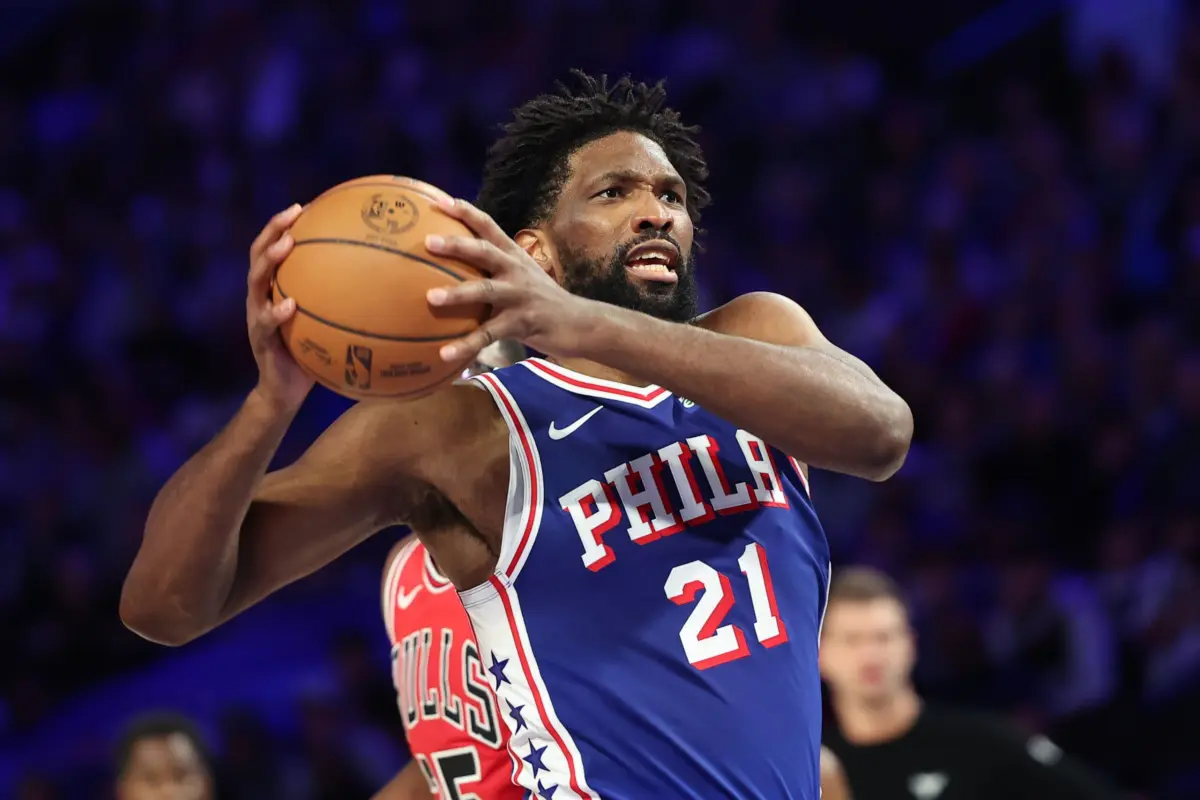
On a quiet Friday night in Philadelphia, Joel Embiid etched his name into the box score in a way he hasn’t in nearly seven years. For just the second time in his storied career, the Philadelphia 76ers star center went an entire game without making a single field goal. While every elite athlete experiences a cold night over the course of a gruelling 82-game NBA schedule, this performance was merely a glaring symptom of a much deeper, more concerning trend that has enveloped the early weeks of the 2026-27 season.
Embiid’s recent struggles extend far beyond a single off-night. He currently sits at a dismal 0-for-17 from beyond the arc over his last six games, contributing to an alarming career-low 38 percent shooting mark from the field overall this season. When the 76ers made blockbuster offseason moves to bring in elite talent alongside Jaylen Brown and LeBron James, many analysts and fans anticipated a natural transition period. Integrating multiple superstars requires chemistry, patience, and adjustments to offensive hierarchies. However, as the weeks progress, it is becoming increasingly difficult to dismiss these performances as mere growing pains or a simple lack of offensive rhythm. Watching Embiid labor on the floor forces a sobering question: Does the former MVP’s body simply have much left in the tank?
It is impossible to discuss Joel Embiid’s trajectory without acknowledging the heavy toll that years of grueling injuries have exacted on his physical frame. Over the course of his career, Embiid has endured three confirmed surgeries on his left knee alone, and he continues to manage persistent cartilage issues stemming from his last major procedure in 2025. These recurring setbacks have constantly threatened to derail his prime years, transforming every season into a delicate balancing act of load management, rehabilitation, and sheer resilience.
This delicate reality stood in stark contrast to the optimism projected during the offseason. When actively recruiting LeBron James to Philadelphia during the summer, Embiid boldly claimed that he was feeling healthier than ever heading into a new campaign, projecting confidence that his body was finally ready to withstand the rigors of a championship run. Yet, that optimistic narrative has not translated to what is unfolding on the hardwood.
The drop-off has been particularly glaring on the defensive end of the floor. Following a strong opening night performance against the New York Knicks, Embiid’s defensive impact has experienced a steep and sudden decline. In that season opener, he looked every bit the dominant anchor the Sixers needed, executing drop coverage brilliantly, disrupting Jalen Brunson’s drives into the lane, and providing elite vertical contests on lob threats.
Unfortunately, that early brilliance has vanished over the subsequent nine games. Whether Embiid is quietly playing through an undisclosed injury or has simply lost a step physically, he has looked thoroughly lost in pick-and-roll coverage. The defensive lapses culminated in a difficult matchup against Evan Mobley and the Cleveland Cavaliers, where Mobley repeatedly exploited Embiid’s positioning. Throughout the night, Mobley placed the Sixers center in impossible predicaments, forcing him to scramble and cover rim-rolling threats on lobs while simultaneously trying to contest perimeter three-pointers—a physical requirement that highlighted a noticeable loss of lateral quickness and recovery speed.
A player of Embiid’s offensive caliber can typically absorb defensive struggles if he continues to dominate on the other end of the floor, providing the immense gravity that bends opposing defenses. Tragically, that offensive safety net has been missing. Against Cleveland, Embiid was routinely pushed off his preferred real estate on the blocks during switches involving James Harden, and he allowed defenders like Mobley to sag off him significantly, leading to inefficient, forced shots from behind the arc that yielded empty possessions for Philadelphia.
Despite these mounting concerns from their centerpiece, the Philadelphia 76ers have managed to maintain a surprisingly strong record through the first ten games of the season, largely due to the brilliance of Tyrese Maxey. Maxey has firmly established himself as a top-10 offensive threat in basketball, playing at an elite level that has successfully masked several glaring roster weaknesses.
Even with Maxey’s stellar play, the underlying metrics paint a precarious picture for a team with championship aspirations. Philadelphia currently ranks 20th in the NBA in three-point percentage at a meager 33.3 percent and sits 24th in scoring, averaging 109.4 points a night. Yet, despite these offensive limitations, the team boasts one of the best records in the league through the early stretch of the season, fueled in large part by perimeter defense that has dramatically exceeded pre-season expectations.
However, basketball observers remain skeptical about whether this level of perimeter pressure can be sustained across a grueling 82-game schedule. Compounding the issue is Philadelphia’s well-documented depth problem at the center position entering the year. With backup big man Adem Bona currently sidelined due to injury, the pressure on Embiid to anchor both ends of the floor has only intensified. If Embiid’s alarming statistical regression and visible physical struggles are fundamentally tied to lingering health concerns, the front office may be forced to explore roster enhancements well before the trade deadline to ensure the team can sustain its elite status when the postseason arrives.