
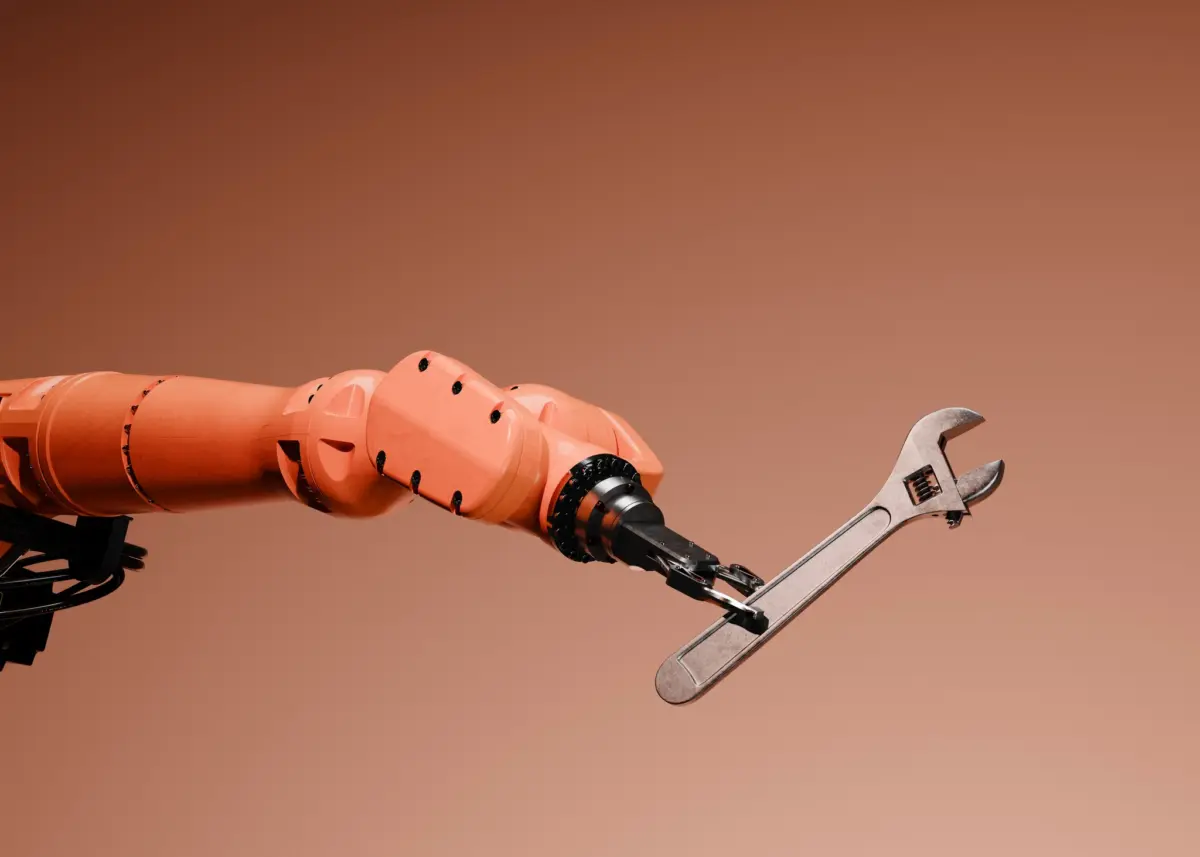
The race to teach robots how to seamlessly navigate and interact with the physical world has achieved a major financial milestone. Mecka AI, an innovative startup specializing in the collection and analysis of human motion data for training humanoid and general-purpose robots, announced on October 7, 2026, that it has successfully raised a $60 million Series B funding round. The high-profile investment was led by prominent venture capital firm Sequoia, with significant participation from industry heavyweights including Nvidia and Microsoft’s venture fund, M12, alongside other strategic backers.
This substantial infusion of capital aligns closely with previous reports by TechCrunch, which indicated that the young startup was rapidly closing in on a new funding milestone that valued the enterprise at approximately $500 million. Founded in 2024, Mecka AI has quickly emerged as a critical player in the burgeoning robotics sector, positioning itself to solve what many consider to be the most significant bottleneck in modern artificial intelligence and automation: the scarcity of high-quality, real-world physical training data.
To understand the core mission of Mecka AI, one must look at the blueprint laid down by the data-labeling and data-generation powerhouses that fueled the generative AI boom. Companies like Scale AI, Mercor, and Surge revolutionized the large language model (LLM) landscape by supplying the massive amounts of human-generated text and information that LLMs require to learn language, reasoning, and context. Mecka AI intends to replicate that exact model for the physical domain of robotics.
Rather than relying purely on simulated environments or synthetic data—which often fail to capture the chaotic, unpredictable nature of the real world—Mecka AI captures the nuances of actual human movement. The startup accomplishes this by paying everyday people to record themselves performing routine, everyday tasks. Whether a participant is brewing a cup of coffee, cleaning a kitchen, assembling furniture, or fixing a car, they record their actions while wearing specialized body sensors and utilizing standard smartphones to capture precise spatial and kinetic data.
This human-centric approach to data acquisition allows Mecka AI to build vast datasets that map out how human beings fluidly solve physical problems, adapt to unexpected obstacles, and apply fine motor skills. Humanoid robots and other advanced mechanical systems can then ingest this data, effectively learning how to move and interact with their environments by observing human behavior.

The investment from giants like Sequoia, Nvidia, and Microsoft’s M12 underscores the immense commercial interest and strategic importance of physical AI training data. Nvidia, a dominant force in providing the advanced hardware and software ecosystems required to train complex artificial intelligence models, has a vested interest in ensuring that robotics developers have access to top-tier datasets to accelerate their products’ time-to-market. Similarly, Microsoft’s backing via M12 highlights the growing convergence between advanced software, cloud computing, and physical automation.
Mecka AI is far from alone in recognizing the immense market opportunity surrounding real-world training data for robotics, though it stands out for the speed and scale of its growth. The competitive landscape is heating up rapidly as venture capitalists and technology conglomerates pour billions of dollars into the sector. For instance, another prominent startup in the space, XDOF, recently found itself in high-stakes talks to raise its own Series B funding round at a staggering $1.2 billion valuation, according to previous reports by TechCrunch, despite having spent just three months out of stealth mode at the time.
At the same time, established players that initially built their reputations and business models around human-generated data for large language models are aggressively expanding their operations into the robotics arena. Major data platforms, including Scale AI and Micro1, have increasingly turned their attention toward physical data collection. Scale AI, which has formed deep partnerships with major artificial intelligence developers, and Micro1, a notable competitor that previously secured its own funding at a $500 million valuation, are both positioning themselves to capture a share of the burgeoning robotics training market.
This convergence suggests that the race for data is no longer confined to the digital realm of text, code, and images. As robotics companies race to build commercially viable humanoid robots capable of working in warehouses, factories, and potentially homes, the demand for rich, nuanced human movement datasets is expected to skyrocket. Startups that can reliably capture, clean, and deliver this data at scale are finding themselves in an extraordinarily powerful position within the broader technology ecosystem.
With $60 million in fresh capital now secured, Mecka AI is well-positioned to expand its data collection operations, scale its analysis infrastructure, and deepen its partnerships with the robotics developers who are building the machines of the future. As the industry looks toward a horizon where humanoid robots transition from experimental prototypes to functional, everyday tools, the human motion data captured by companies like Mecka AI will serve as the foundational bedrock upon which the next generation of physical intelligence is built.