
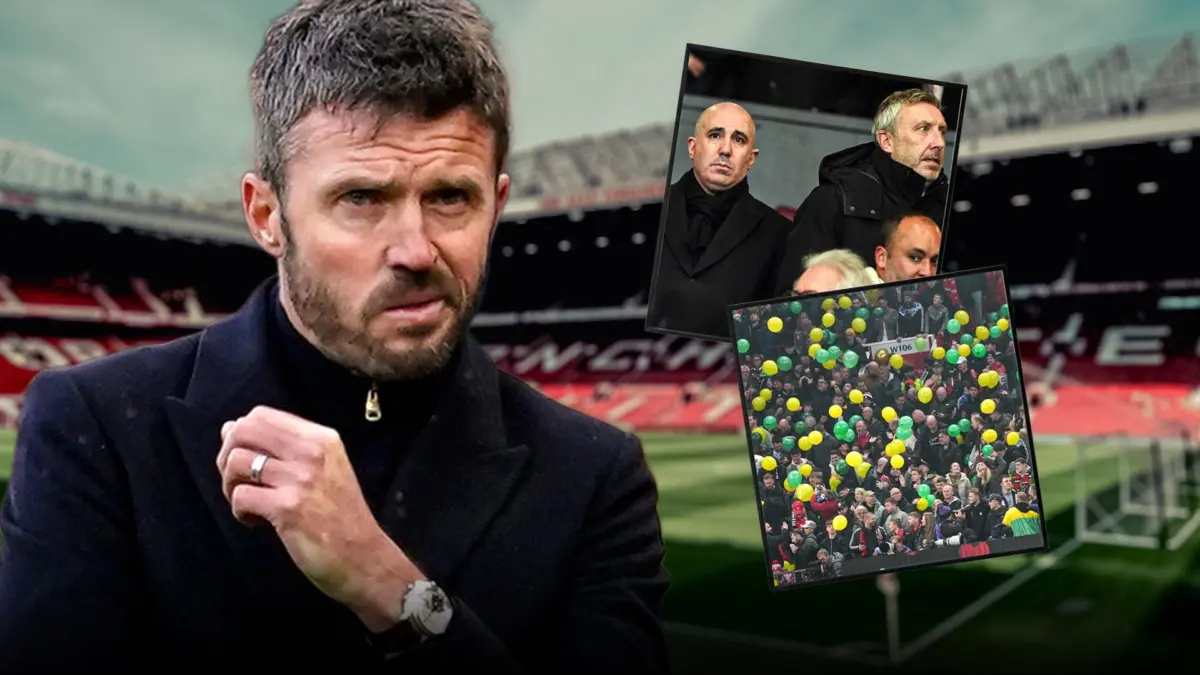
The future of Michael Carrick as Manchester United manager remains shrouded in uncertainty following a dramatic and chaotic 4-4 draw with Aston Villa at Old Trafford. As the Premier League enters a pivotal international break that could determine the course of the remainder of the season, the club’s hierarchy faces mounting pressure to make a definitive call on the direction of the team. With United currently languishing in the relegation zone, the upcoming fortnight offers a crucial window for introspection, evaluation, and potential structural change behind the scenes.
Do Man Utd bosses know where to go with Carrick?
It remains entirely unclear whether Manchester United’s decision-makers have a definitive plan for how to proceed from this juncture. Club officials are expected to take time to reflect and carefully deliberate, continuing an assessment process that has quietly persisted behind closed doors for several weeks. While the board has spent considerable time weighing Carrick’s long-term viability and the possibility of a managerial change, no final verdict has been reached.
The overarching narrative of the season has been nothing short of disastrous. Securing just one victory in their opening 11 matches, Manchester United are enduring their worst-ever start to a Premier League campaign. They currently find themselves embroiled in a relegation battle, having conceded a staggering 30 goals across all competitions this season—the second-highest total among teams in Europe’s top five leagues.
The central dilemma for the board is whether recent resilience—exemplified by back-to-back late comebacks, including a wild 3-2 victory over Roma and the thrilling 4-4 stalemate with Aston Villa—demonstrates sufficient player backing to justify keeping Carrick in his post.
Only a fortnight ago, following a chastening 3-0 home defeat to Bournemouth, prevailing sentiment inside the club suggested that Carrick’s tenure had reached its natural end. Yet, the hierarchy refrained from issuing a public vote of confidence, choosing instead to maintain the status quo. Sources close to Old Trafford indicate that the leadership intended to push through to the current international break before conducting a comprehensive reassessment.
Carrick undoubtedly remains in an extremely vulnerable position. With no fixtures scheduled for the next two weeks, the board has been afforded the time and space required to implement a change, conduct thorough due diligence, and initiate discreet dialogues with prospective alternative candidates. Nevertheless, the preferred and ideal scenario for the Manchester United hierarchy would be for Carrick to steady the ship and retain his position until the conclusion of the campaign.
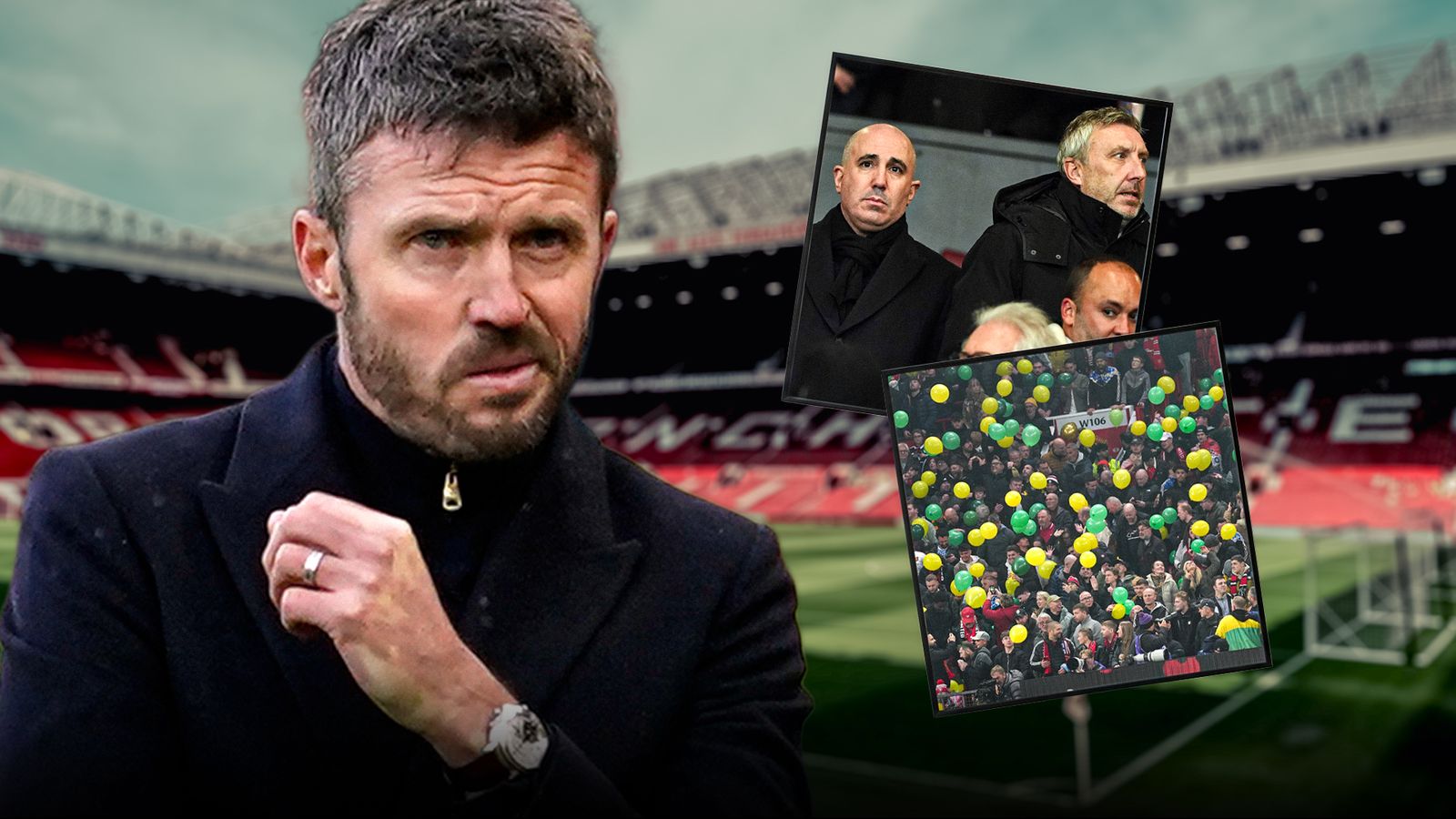
Who are the targets if Carrick is sacked?
Should the club ultimately decide to dismiss Carrick, the board is determined to avoid appointing another interim manager. Leadership is acutely aware of the potential trap of falling into a cyclical pattern: appointing an interim boss who performs brilliantly, galvanizing the fanbase to demand a permanent appointment, and ultimately resetting the entire rebuilding process from square one.
Consequently, the club’s overarching ambition is to secure a long-term strategy anchored by a permanent head coach. While the exact successor has not been definitively chosen if Carrick departs, executive targets include prominent names such as Julian Nagelsmann, Newcastle United’s Eddie Howe, and Brighton’s Fabian Hurzeler, who has drawn widespread acclaim for his work on the south coast. However, the club is not exclusively committed to any single candidate at this stage.
Unai Emery had previously ranked prominently on internal shortlists, a factor that prompted a swift and assertive public relations response from Aston Villa chairman Nassef Sawiris, who reaffirmed Emery’s long-term commitment through a contract extension tying him to Villa Park until 2029. Consequently, prising Emery away from Aston Villa appears highly improbable for the foreseeable future.
Where has it gone wrong for Carrick?
The primary source of Manchester United’s struggles this season lies squarely in their defensive frailties. Conceding 30 goals at this stage of the campaign is an alarming statistic, and shipping four goals at home to an Aston Villa side that had previously failed to win at Old Trafford for over a century highlights the depth of the defensive crisis.
Last season, Manchester United significantly overperformed by securing a third-place finish and qualification for the UEFA Champions League. Conversely, this campaign has seen them drastically underperform relative to the quality of the squad at their disposal. The true level of the team likely rests somewhere between these two extremes. Carrick’s tremendous success in his initial period at the helm understandably elevated expectations that the club would build upon those foundations and progress further.
Paradoxically, the team continues to create scoring opportunities and find the back of the net, registering seven goals across their last two fixtures alone. Yet, their porous defense—having conceded six goals in that same two-game span—remains a glaring liability that threatens to derail their entire season.
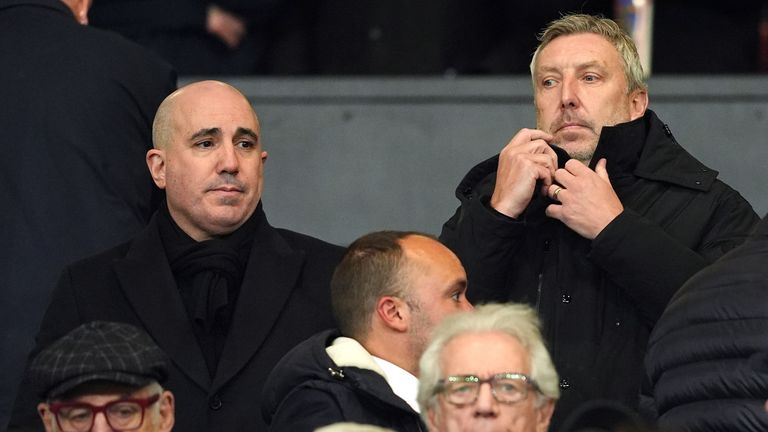
What’s the sentiment around supporters?
The atmosphere inside and around Old Trafford has grown uniquely fractured and unpredictable. Weeks ago, defender Lisandro Martinez openly criticized the club’s board over perceived shortcomings in recruitment and ambition, only to be warmly applauded by supporters during the subsequent fixture. Conversely, club captain Bruno Fernandes faced boos from sections of the home crowd after publicly criticizing the coaching staff and tactical approach following a European defeat to Como.
Despite presiding over a dismal run of results, Carrick continues to enjoy a degree of genuine affection from the fanbase, with supporters chanting his name following the Bournemouth defeat and again after the dramatic comeback against Aston Villa.
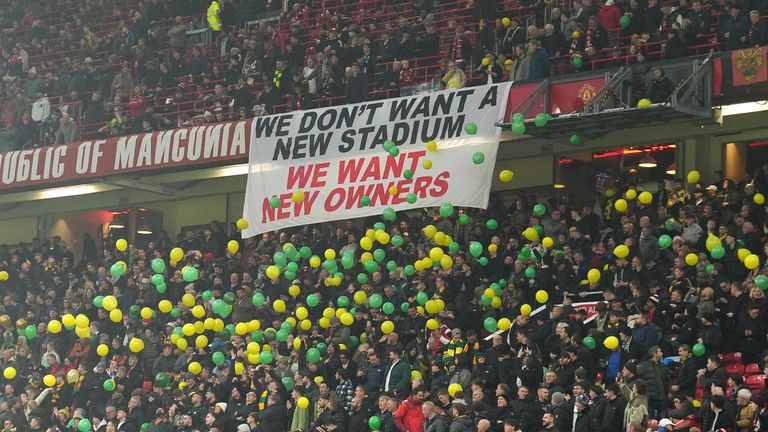
However, fan discontent regarding the broader ownership under the Glazers remains palpable. Before the Villa fixture, demonstrations saw green and yellow balloons released in the Stretford End alongside banners demanding a change in ownership. The overarching mood among supporters is one of profound uncertainty—frequently torn over whom to support or criticize—a sentiment that mirrors the confusion currently gripping the boardroom.
Are there any plans for the January window?
Squad deficiencies have been laid bare this season, most notably at left-back, where five different players have been deployed with limited success following Luke Shaw’s persistent injury problems. Although left-back was a priority area during the summer transfer window, the club opted to reinforce the midfield instead. It is widely anticipated that United will revisit the position in January, with potential renewed interest in Manchester City’s Rayan Ait-Nouri, who has experienced limited playing time under Enzo Maresca.
The club was also active in scouting attacking reinforcements, though it remains to be seen whether financial parameters in the January window will permit significant spending across multiple positions. Any major arrivals will likely depend on outgoings, although the squad features few obvious candidates for departure beyond fringe players like Harry Amass. Joshua Zirkzee, a player whose future has occasionally been questioned, underlined his utility from the bench by netting a crucial goal during the comeback against Villa.
Can Carrick survive the pressure?
Observers outside Old Trafford frequently draw comparisons between Manchester United’s plight and the turbulent managerial landscapes at other Premier League clubs, pondering why under-pressure head coaches elsewhere find themselves dismissed while Carrick retains his position despite occupying a similar spot in the relegation zone.
While no single factor provides a complete answer, Carrick’s deep historical connection to the fanbase sets him apart from managers at other clubs. Furthermore, his measured media handling and professionalism in navigating relentless external pressure are valued assets within the organization. These intangible qualities form part of a complex calculus that the board must weigh against the immediate necessity of reversing results.
Is relegation a real possibility?
The stark reality facing Manchester United is reflected in the cold mathematics of the league table. The last time the team won a league match, the academic calendar was still in the summer holidays and the transfer window remained open.
Clubs positioned directly below them have accumulated victories at twice the rate, leaving United with a meager return of roughly 0.8 points per game. Projected across a 38-game season, that points accumulation equates to roughly 30 points—a tally that traditionally guarantees relegation.
While some within football circles dismiss the notion of a genuine drop as unthinkable, history serves as a warning; the last time Manchester United suffered relegation from the top flight, they actually began the campaign with a superior record to their current predicament. Without significant and immediate changes on and off the pitch, business as usual at Old Trafford risks leading the club toward an unprecedented disaster.