
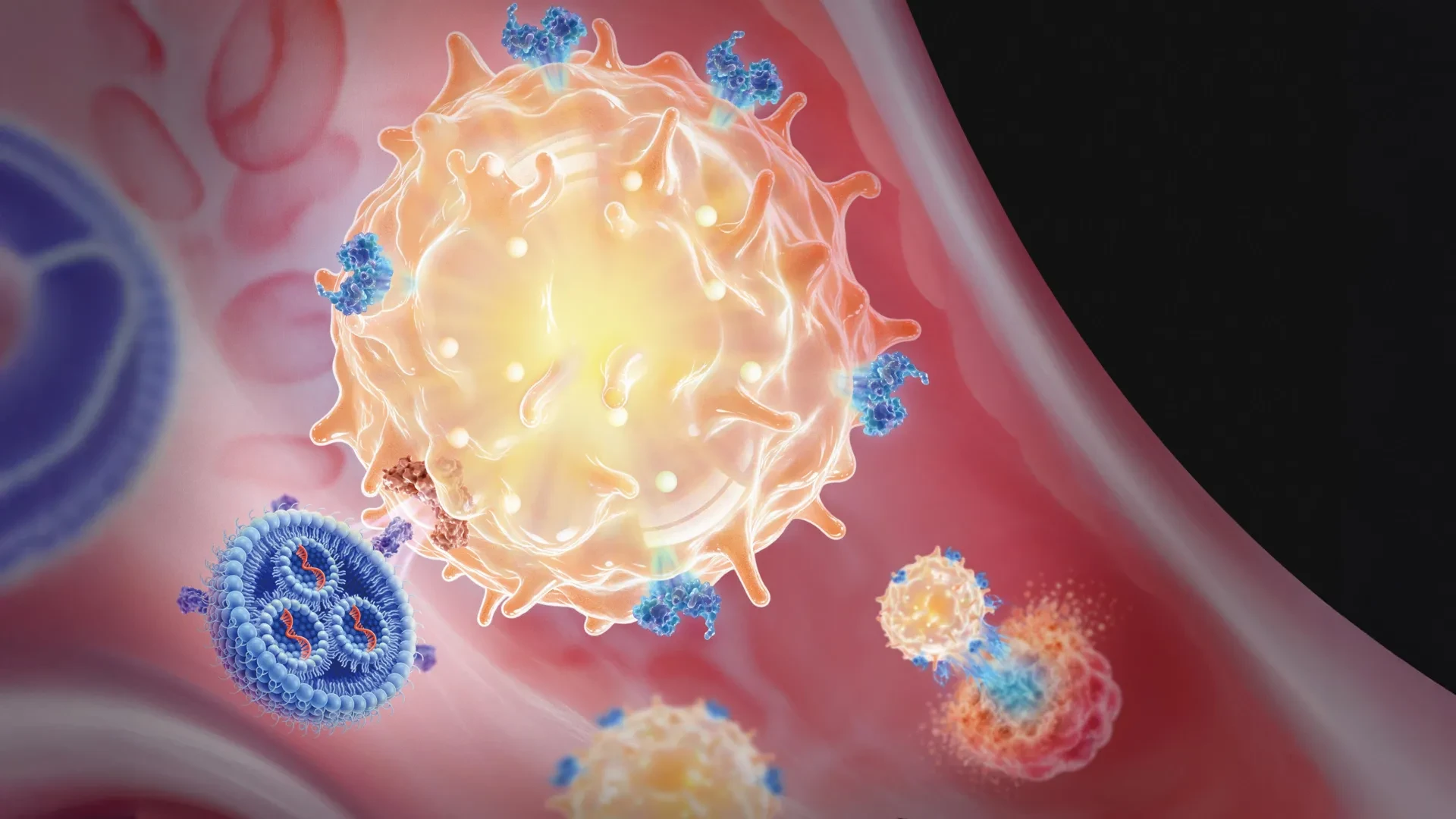
In a development that could fundamentally alter how advanced immunotherapies are produced and administered, researchers at the Massachusetts Institute of Technology (MIT) have successfully engineered a new technique to transform immune cells into cancer fighters directly inside the living body. Published in the journal Nature Biotechnology, this innovative approach bypasses the complex, costly, and lengthy laboratory manufacturing processes that have long restricted the widespread availability of personalized cell therapies for cancer and autoimmune diseases.
The breakthrough centers on natural killer (NK) cells, a vital component of the human immune system capable of recognizing and destroying compromised or harmful cells. By deploying tiny, specially engineered particles made from fatty molecules, the research team delivered genetic instructions straight to these cells in vivo. These instructions, carried safely inside messenger RNA (mRNA), direct the natural killer cells to manufacture specialized proteins known as chimeric antigen receptors, or CARs. Once equipped with these receptors, the newly minted CAR NK cells gain the precise targeting ability required to hunt down and eliminate malignant cells, including cancerous T cells and rogue T cells that mistakenly target healthy human tissue in autoimmune conditions like lymphoma and autoimmune hepatitis.
The implications of this technique are profound for the field of modern medicine. Traditional cellular immunotherapies, while revolutionary, require extracting a patient’s cells, shipping them to specialized facilities, genetically modifying them over several weeks, growing them in large quantities, and finally infusing them back into the patient. By carrying out this entire engineering process directly inside the patient through a simple injection of nanoparticles, the MIT approach removes much of the logistical complexity, financial burden, and time associated with standard manufacturing workflows.
"The manufacturing challenges with CAR NK cells are significant. The idea here is you can deliver a nanoparticle that will modify your own NK cells with a CAR construct and teach them to attack tumor cells," explains Daniel Anderson, a professor in MIT’s Department of Chemical Engineering and a member of both MIT’s Koch Institute for Integrative Cancer Research and its Institute for Medical Engineering and Science.
Anderson served as the senior author of the study. The research team also included lead authors Yuang Chen, an MIT postdoctoral researcher, and graduate students Julia Monkovic and Haseeb Mughal, alongside contributions from Robert Langer, MIT’s David H. Koch Institute Professor.
Why Current Cancer Immunotherapies Are So Complex
Over the past decade, immune cell engineering has profoundly shifted the landscape of oncology, providing entirely new avenues of hope for patients facing difficult-to-treat malignancies. The U.S. Food and Drug Administration has granted approval to seven distinct cancer therapies relying on genetically modified T cells, universally known as CAR T cell therapies.
These sophisticated treatments operate by endowing a patient’s T cells with custom-designed surface receptors engineered to recognize specific molecular markers, or antigens, present on target cells. When an engineered T cell encounters a cell carrying its designated marker—such as a specific protein associated with tumor growth—it becomes fully activated and systematically destroys the target.
CAR T cell therapies have achieved remarkable clinical success against a variety of blood cancers originating from B cells, including multiple myeloma and certain forms of leukemia and lymphoma. Despite their efficacy, preparing these treatments remains an intricate logistical hurdle. The procedure begins with drawing blood from the patient, isolating the lymphocytes, and transporting the biological material to an off-site laboratory facility. Technicians must then use viral vectors or other methods to introduce the new genetic material, expand the cell population to therapeutic numbers, rigorously test the batch for safety and viability, and ship the finished product back to the hospital for intravenous infusion. This multi-step pipeline demands specialized cleanrooms, highly trained personnel, and substantial financial investment.
Natural Killer Cells Offer a Different Way to Fight Cancer
In recent years, biomedical researchers have increasingly turned their attention to natural killer cells as an alternative vehicle for cellular immunotherapy. Beyond their natural ability to target tumors and virally infected cells, NK cells present a unique tactical advantage when addressing specific types of malignancies and autoimmune disorders involving abnormal T cells.
Attempting to deploy traditional CAR T cell therapies against diseased T cells introduces a severe biological complication. Because both the engineered therapy and the intended target are T cells, the modified cells frequently recognize one another as targets and destroy each other, a phenomenon known as fratricide. This unintended friendly fire can severely undermine the potency and safety of the treatment.
Natural killer cells naturally circumvent this obstacle because they belong to an entirely different lineage of immune cells. They can be programmed to hunt down and eliminate harmful T cells without triggering the destructive self-annihilation seen when T cells are pitted against each other.
"NK cells can treat these T cell malignancies — not only T cell cancer, but also T cell autoimmune diseases," notes Yuang Chen, co-lead author of the study.
However, producing CAR NK cells through conventional laboratory protocols still inherits many of the same specialized equipment demands, labor-intensive steps, and high processing costs that burden CAR T cell manufacturing. To bypass these roadblocks, the MIT research team investigated whether natural killer cells could be successfully programmed in vivo, avoiding the ex vivo laboratory phase entirely.
"If a patient can just get an infusion of nanoparticles, it would dramatically simplify the process and reduce costs," Anderson observes. Although scientists worldwide are actively advancing various forms of CAR NK cell therapies for clinical translation, none have yet secured formal approval from the U.S. Food and Drug Administration.
How mRNA Nanoparticles Reprogram Immune Cells
To achieve successful gene delivery directly inside the bloodstream, the MIT team engineered advanced lipid nanoparticles (LNPs) capable of encapsulating and protecting messenger RNA. This mRNA carries the precise genetic blueprint for synthesizing a chimeric antigen receptor tailored to home in on a designated disease-associated protein.
The underlying platform is remarkably modular and can be adapted to recognize different targets depending on the specific pathology being addressed. For instance, the researchers can program the genetic instructions to express a receptor targeting CD19, a prominent protein found on the surface of B cells, or alternatively, target CD3, a protein abundantly expressed on T cells, including the autoreactive populations responsible for driving autoimmune attacks.
Navigating the complex cellular environment of the bloodstream to find the right immune cells presents a formidable challenge. To ensure precision, the scientists coated the outer surfaces of their lipid nanoparticles with specific antibody fragments. These molecular tags recognize and bind tightly to receptors natively expressed on the surface of natural killer cells, effectively guiding the delivery vehicle to its intended destination and facilitating the uptake of the genetic payload.
Once the nanoparticle successfully enters an NK cell, the enclosed mRNA directs the cellular machinery to synthesize the new chimeric antigen receptor. This equips the native immune cell with a powerful new ability to recognize, bind to, and eliminate its specific disease target. Following the design phase, the researchers set out to test the efficiency of this mRNA delivery platform and evaluate the therapeutic potential of the resulting reprogrammed cells in animal models of cancer and autoimmune disease.
Reprogrammed Immune Cells Eliminate Tumors in Mice
Initial experiments yielded highly encouraging metrics. Following the intravenous injection of the engineered nanoparticles into test animals, the researchers successfully modified approximately 80 percent of the targeted natural killer cells circulating within the body, demonstrating high delivery efficiency.
The team then evaluated whether these newly minted, body-engineered cells could effectively infiltrate and destroy active tumors. In murine models featuring an aggressive form of melanoma, three out of five animals treated with the targeted nanoparticles experienced complete tumor remission.
To test the technology against human-relevant pathologies, the scientists utilized humanized mice—specialized animal models engrafted with human blood cells that temporarily develop immune systems possessing key functional traits shared with humans. In these models targeting T cell lymphoma, the treatment drove substantial tumor destruction. Following a regimen of five nanoparticle injections, the tumors were entirely eradicated.
Crucially, the therapeutic outcomes achieved through direct in vivo nanoparticle reprogramming were comparable to those yielded by traditional CAR NK cells manufactured externally in a laboratory setting and subsequently infused back into the subjects. This parity suggests that generating CAR NK cells directly inside the living body can achieve matching therapeutic potency while completely sidestepping the intricate, expensive, and time-consuming infrastructure required by conventional cell therapies.
A Single Injection Reverses Autoimmune Liver Damage
Beyond oncology, the MIT team sought to explore whether the novel nanoparticle platform could address autoimmune diseases, conditions characterized by a malfunctioning immune system launching destructive attacks against healthy, native tissues.
The researchers focused their investigation on autoimmune hepatitis, a chronic inflammatory liver condition in which aberrant, autoreactive T cells attack hepatocytes, the primary functional cells responsible for maintaining liver health. By formulating lipid nanoparticles designed to instruct natural killer cells to recognize and eliminate these harmful T cells, the scientists aimed to interrupt the pathological immune cascade at its source.
The intervention successfully cleared out the autoreactive T cells in mice afflicted with the disease. In an outcome that highlights the regenerative capacity of the liver once the immune assault ceases, the damaged liver tissue in the treated animals naturally healed following the removal of the pathogenic cells.
Remarkably, these profound clinical improvements were achieved after administering just a single nanoparticle injection, illustrating the broad potential of the technology well beyond the traditional boundaries of cancer therapy.
"This study is an excellent example of the power of nano delivery systems and their ability to potentially treat cancer and other diseases," states Robert Langer, co-author of the study and Institute Professor at MIT.
A New Direction for Cancer and Autoimmune Treatments
The research team believes that successfully reprogramming natural killer cells within the living body could eventually lay the groundwork for entirely new therapeutic options across a much wider spectrum of human diseases. Among the primary clinical targets they hope to pursue in future studies are complex chronic conditions such as multiple sclerosis and rheumatoid arthritis, both of which are driven by harmful, dysregulated immune responses involving dysfunctional T cells.
While these preclinical findings offer significant promise, the experiments were performed in animal models, and extensive further research, optimization, and clinical trials will be strictly necessary to establish whether the technique maintains an acceptable safety profile and robust efficacy in humans.
Should future human trials prove successful, the technology could fundamentally transform the accessibility of engineered immune cell therapies. By replacing a complex, weeks-long laboratory manufacturing pipeline with the direct administration of genetic instructions via targeted nanoparticles, medicine may soon take a decisive step toward simpler, faster, and more widespread treatments for some of the world’s most challenging diseases.
The research was supported by funding from Sanofi, the Marble Center for Cancer Nanomedicine, and a Koch Institute Support Grant from the National Cancer Institute.