
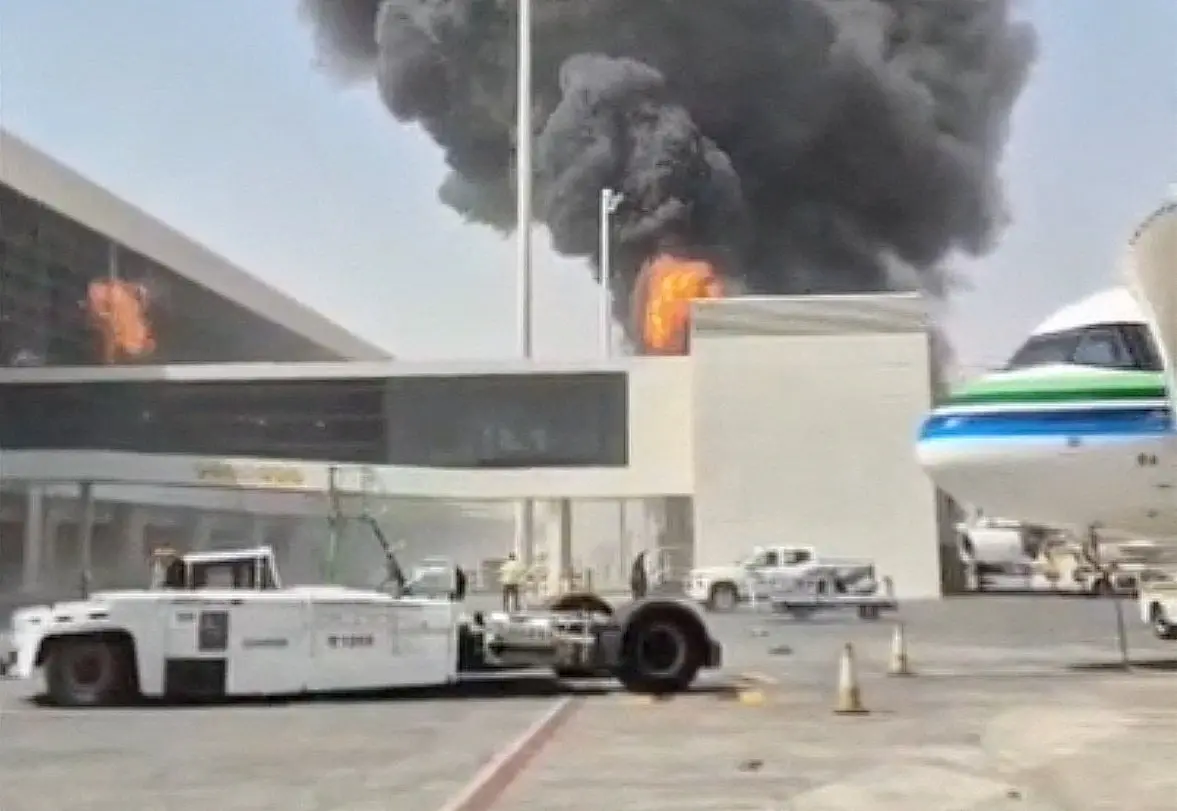
A rapidly growing coalition of Western and international governments has issued urgent travel warnings for Saudi Arabia following an unprecedented series of missile and drone attacks targeting civilian airports across the kingdom. Governments including the United States, Australia, Canada, Japan, South Korea, the United Kingdom, and New Zealand have officially updated their diplomatic travel advisories, strongly urging their citizens to avoid or carefully reconsider travel to Saudi Arabia amidst escalating regional security threats and widespread aviation disruptions.
The sudden wave of diplomatic alerts reflects mounting global concern over an intense week of security incidents on the Arabian Peninsula. In less than seven days, major aviation infrastructure in Saudi Arabia has been targeted in five separate attacks, causing significant loss of life, widespread civilian casualties, structural damage, and severe operational chaos across Middle Eastern airspace.
On Monday, Australia and New Zealand became the latest nations to elevate their official security alerts, aligning their stance with preliminary advisories previously issued by foreign ministries in Washington, Ottawa, London, Seoul, and Tokyo. The coordinated notifications underscore the perceived risk to international travelers, commercial aviation corridors, and foreign nationals currently residing within or planning visits to the kingdom.
In its official guidance, Australia’s Department of Foreign Affairs and Trade (DFAT) issued an explicit directive instructing Australian citizens to avoid King Khalid International Airport in the Saudi capital of Riyadh entirely. Furthermore, Australian authorities urged their nationals to reconsider any planned travel to all other airports throughout Saudi Arabia, highlighting the broad vulnerability of the country’s aviation network amidst the ongoing crisis.
New Zealand’s Ministry of Foreign Affairs and Trade (MFAT) adopted an even broader cautionary posture. The ministry explicitly urged New Zealand citizens to refrain from traveling to Riyadh’s primary international gateway for any purpose. Furthermore, Wellington issued a strict warning against all travel to the southern Saudi border provinces of Najran, Jazan, and Asir, citing heightened risk factors in those specific regions. Beyond these specific geographical zones, New Zealand authorities formally advised their public against all non-essential travel to Saudi Arabia as a whole.
These updates build upon security alerts released over the weekend by major Western partners. The United States Embassy in Riyadh formally advised American citizens to reconsider travel to Saudi Arabia, explicitly citing the lingering threat of strikes originating from Iran and the Iranian-backed Houthi movement. Washington’s diplomatic stance underscored the volatile regional atmosphere, warning that defense systems and civilian infrastructure remain under threat.
Simultaneously, Global Affairs Canada revised its national travel guidance, issuing a comprehensive advisory warning Canadian citizens against non-essential travel to any part of Saudi Arabia. The blanket nature of Ottawa’s warning highlights the international consensus regarding the unpredictable nature of the current threat environment across the kingdom.
Asian partners have taken similarly decisive steps to protect their citizens. South Korea’s Ministry of Foreign Affairs issued an advisory urging South Korean nationals currently located within Saudi Arabia to depart the country immediately unless their presence is strictly required for essential business operations. Furthermore, South Korean diplomatic authorities strongly advised any citizens planning upcoming trips to the kingdom to cancel their travel plans until further notice. Japan similarly joined the international consensus, cautioning its citizens against travel to the kingdom in light of the rapidly deteriorating security situation.
European allies have also restricted travel advice for the region. The United Kingdom’s Foreign, Commonwealth and Development Office (FCDO) updated its travel guidance to urge British citizens to avoid travel to major commercial centers including Jeddah and Dammam. The FCDO specifically advised against travel to all Saudi airports—with the sole exception of Medina International Airport—unless such travel is undertaken for strictly essential reasons.
The intense international diplomatic response comes as Saudi Arabia grapples with the fallout from five distinct attacks on its airport infrastructure within less than a single week. The aerial strikes have targeted key hubs critical to both domestic movement and international transit, creating an unprecedented challenge for the kingdom’s civil aviation security.
The crisis reached a violent peak over the weekend during a pair of catastrophic strikes on the nation’s capital. On Saturday, a devastating Houthi strike directly hit King Khalid International Airport in Riyadh, killing 13 people and injuring more than 300 others. The strike marked the single deadliest attack reported on Saudi Arabian territory in more than a decade, shocking domestic authorities and sending alarm waves through the global aviation sector.
The situation escalated further on Sunday when a second projectile struck King Khalid International Airport. According to an official statement from Saudi Arabia’s General Authority of Civil Aviation (GACA), Sunday’s strike resulted in one death and left 11 other people injured. While the Houthi movement formally claimed responsibility for the initial four attacks carried out against Saudi airport facilities during the week, no group immediately came forward to claim responsibility for Sunday’s deadly follow-up strike on the capital’s main airport.
The cumulative impact of the aerial campaign has severely crippled Saudi Arabia’s primary travel arteries and reverberated across the broader Middle Eastern transport sector. King Khalid International Airport in Riyadh and King Fahd International Airport in Dammam both remain closed to commercial operations in the wake of the strikes, shutting down two of the Arabian Peninsula’s essential hub facilities.
The groundings and security closures at Riyadh and Dammam have created a massive logistical bottleneck, disrupting flight schedules far beyond the immediate target zones. Operations at King Abdulaziz International Airport in Jeddah—the primary maritime and air gateway to the western region—have experienced severe knock-on operational strain. Real-time aviation data provided by the flight-tracking platform Flightradar24 revealed that more than 150 flights were completely cancelled and an additional 374 flights suffered extensive delays at Jeddah airport on Sunday alone as air traffic control networks struggled to manage altered flight paths and displaced aircraft.
Industry experts emphasize that the long-term consequences for the region’s commercial aviation sector remain uncertain as officials work to secure facilities and evaluate operational readiness. Brendan Sobie, an independent aviation analyst and consultant based in Singapore, noted that it remains too early to fully calculate the ultimate scope of the operational and economic ramifications for Middle Eastern aviation and international travel corridors.
Sobie observed that the ultimate impact of the current emergency will depend heavily on the duration of the operational disruptions and the stringency of security protocols implemented once facilities reopen. Drawing parallels to previous regional security crises, he highlighted how major geopolitical disruptions, such as the conflict involving Iran and its historical impact on neighboring commercial hubs in the United Arab Emirates, Kuwait, and Bahrain, demonstrate that systemic aviation recovery depends directly on how long key infrastructure remains out of service.
As Riyadh airport remains shuttered and airlines assess the safety of flight corridors across the region, foreign governments continue to closely monitor the situation. Diplomatic missions across the kingdom remain on high alert, reiterating that travelers should anticipate continued flight cancellations, route adjustments, and heightened security measures at all operating regional transit points until the threat subsides.