
The stock market has once again proved its capacity to surprise. As valuations reach historic and sometimes dizzying heights, investors are increasingly asking a familiar question: are we hurtling toward a massive economic correction? With the current financial boom heavily fueled by the rapid rise of Artificial Intelligence, market watchers are drawing comparisons to past speculative frenzies, most notably the dot-com bubble of the early 2000s.
For many long-term investors, market volatility is a source of persistent anxiety. When stocks plunge, retirement portfolios shrink; when they surge to record-breaking valuations, the fear of an impending crash simply takes on a new form. This anxiety is particularly acute today, as the conversation is dominated by the monumental hype surrounding AI technology.

Yet, looking past the daily financial news cycle reveals a broader perspective on wealth, human progress, and the nature of fear itself. Financial commentators and long-retired early retirement advocates have begun addressing these anxieties head-on, offering a historical view of market booms, busts, and the psychological traps that catch investors time and time again.
Will the Artificial Intelligence Bubble Ruin Retirement?
Reflecting on more than two decades of retirement, financial observers frequently encounter a recurring question from anxious friends and followers: how is it possible to remain comfortable and sleep soundly at night given the state of the world?

A snapshot of modern anxieties typically includes familiar macro-level threats: volatile geopolitical leaders, stubborn inflation eroding purchasing power, soaring national debt, ongoing international conflicts, and the looming threat of an AI-driven market collapse. Yet, looking back reveals that these worries are merely updated versions of fears from decades past.
In 2006, the worries were remarkably similar, albeit tailored to a different era. Back then, headlines focused on different political leaders, the war in Iraq, rising national debt, and inflation concerns. Instead of an AI bubble, the stock market was inflated by a dangerous housing bubble. Instead of artificial intelligence taking white-collar jobs, the prevailing fear was that employment would be hollowed out by outsourcing to India and China. There was even widespread panic over "Peak Oil"—the belief that the world was running out of fossil fuels.

What actually followed those concerns was the Great Financial Crisis, triggered by a toxic mix of housing speculation and excessive financial leverage. It was the most severe economic downturn since the Great Depression. Yet, viewed through the lens of a twenty-year horizon, even that historic crash appears as a temporary dip within a massive upward trajectory. A standard index investment made two decades ago would have grown substantially despite the intervening financial crisis and subsequent disruptions like the 2020 pandemic crash.
Concurrently, the broader world experienced remarkable improvements. Global extreme poverty rates plummeted significantly over a twenty-year span, infant mortality rates were cut in half, and clean energy technologies advanced dramatically. Solar power generation surged as manufacturing costs dropped, and electric vehicle adoption expanded globally. Looking at this historical trajectory raises a fundamental question: does focusing energy on fear and an uncertain future serve investors better than maintaining an objective, long-term perspective?

Productivity, Prosperity, and the Nature of Human Happiness
Skeptics argue that the current economic landscape is fundamentally different—that the United States national debt has reached unprecedented levels, that the AI bubble far exceeds the housing market mania, or that artificial intelligence could eventually surpass human control entirely. Financial media outlets thrive on amplifying these dramatic narratives. However, these pessimistic accounts frequently overlook a core economic truth: true prosperity is not derived from abstract figures flickering across financial exchange computers, but from genuine human productivity.
The fundamental mechanics of capitalism are inherently choppy and prone to wild psychological swings. Beneath the surface turbulence, however, real people perform real work and develop tangible inventions. Financial systems and economic economies are ultimately human constructs; if a market system falters due to unsustainable valuations, societies have repeatedly demonstrated the capacity to reset the financial architecture and return to productive labor.

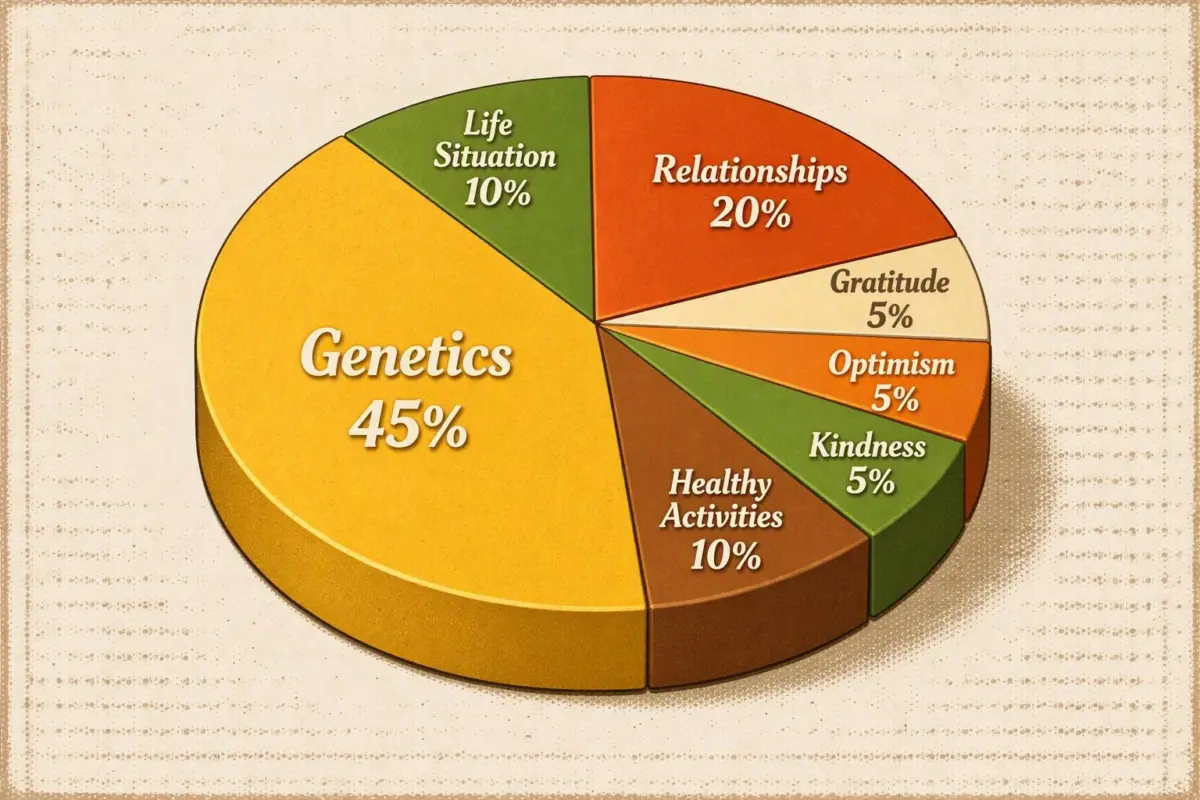
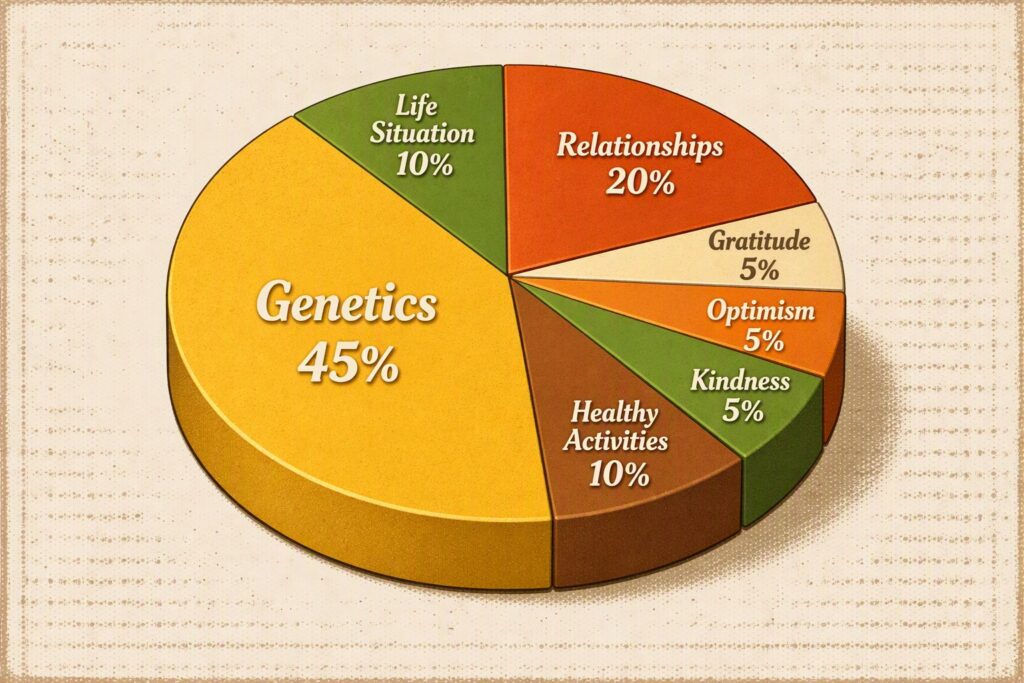
Standard of living, economic growth, and the viability of long-term financial independence stem directly from productivity gains. Once a society achieves a baseline level of material security and a comfortable standard of living, human happiness tends to plateau along that specific financial dimension. Beyond meeting basic needs, individuals universally seek fulfilling lives, strong personal relationships, daily gratitude, optimism, and healthy physical activity. Wealth is merely a single component within a much broader spectrum of life satisfaction, which is heavily influenced by personal choices, community connections, and individual outlooks.
Confronting Fear Itself
Despite historical evidence demonstrating that economies recover and adapt, pervasive background anxiety remains remarkably common among investors. Psychologists note that human beings are essentially wired as danger-detection machines. This evolutionary trait historically protected humans from immediate environmental threats, but in modern, stable societies, the brain continues searching for potential dangers to fixate upon.

When acute physical survival threats are neutralized, human anxiety shifts toward resource scarcity, social exclusion, or financial security. As individuals achieve upper-middle-class stability, these worries can manifest in hyper-specific ways—ranging from local neighborhood disputes over property aesthetics to anxieties surrounding tax optimization and government-mandated retirement account distributions.
Overcoming this pervasive background fear requires a high degree of self-awareness and rational evaluation. Examining personal history—such as childhood experiences shaped by family financial stress or broader historical traumas—often reveals the root causes of modern scarcity mindsets. By actively identifying specific fears, evaluating worst-case scenarios, and recognizing that absolute financial ruin is statistically rare for established investors, individuals can begin to diminish the psychological power of those anxieties.

Taking concrete action remains one of the most effective antidotes to fear. Direct engagement with unfamiliar challenges transforms the unknown into the manageable, building resilience and confidence. Furthermore, curating one’s mental environment by reducing exposure to sensationalized daily news streams allows individuals to redirect their cognitive energy away from fear-mongering and toward constructive behaviors, physical health, and meaningful personal goals.
Viewing Technological Change as an Experiment
This mindset of curiosity and resilience applies directly to the contemporary debate surrounding Artificial Intelligence. Rather than viewing technological shifts through a lens of existential dread, framing major life and economic transitions as experiments can fundamentally alter one’s perspective. Whether evaluating a minor lifestyle change or a major career transition like early retirement, treating changes as experimental tests reduces emotional friction.

The rapid emergence of artificial intelligence represents a profound technological experiment. While it brings genuine uncertainty and disruption—particularly regarding entry-level administrative and technical roles—it simultaneously functions as a powerful cognitive tool capable of driving unprecedented efficiency gains and productivity. Just as previous technological revolutions like the internet and mobile computing displaced specific jobs while simultaneously creating entire new industries and economic sectors, AI is poised to reshape the modern workplace.
Inevitably, the economic rewards of new productivity technologies tend to concentrate among capital owners and shareholders. However, the broader availability of powerful technological tools also democratizes capability and lowers costs for consumers and businesses alike. Ultimately, artificial intelligence is neither an existential threat nor a guaranteed economic doom, but rather another profound technological shift requiring adaptation, informed decision-making, and proactive learning.
By understanding the root causes of financial anxiety, stepping back from sensationalized media narratives, and focusing on human productivity and personal resilience, investors can better navigate market bubbles and economic uncertainties. As many long-term financial advocates emphasize, meaningful personal growth and life satisfaction invariably lie just on the other side of managed fear.