
As global financial markets continue to defy expectations with record valuations and frantic technological expansion, investors are once again grappling with an old, familiar anxiety. The explosive rise of Artificial Intelligence has sparked widespread debate across Wall Street and main street alike, leaving many retirement savers wondering if the current boom is merely a precursor to a catastrophic market correction—reminiscent of the dot-com bust of the early 2000s or the 2008 global financial crisis.

For long-term investors and those enjoying early retirement, these cyclical worries are nothing new. Addressing the persistent anxiety surrounding the modern AI market cycle, veteran financial commentator and early retirement advocate Mr. Money Mustache recently shared insights from a presentation delivered at Camp FI Midwest, with an upcoming address scheduled for the Bogleheads conference in November. Drawing on more than two decades of personal retirement experience that began in the wake of the dot-com era, the financial writer argues that while market volatility is guaranteed, contemporary panic over emerging technologies is largely misplaced.

Will the AI Bubble Ruin Retirement?
Reflecting on twenty-one years of retirement, the financial commentator recalls a question posed by a concerned friend back in 2006: how one could remain comfortable and sleep at night given the state of the world. Two decades ago, the list of anxieties felt remarkably similar to today’s headlines. Back then, the world worried about geopolitical leaders, conflicts in the Middle East, surging national debt, and inflation. Economic fears centered around a frothy housing market rather than an AI bubble, and workforce concerns focused on outsourcing to overseas markets rather than automated intelligence. Furthermore, society wrestled with theories of peak oil and dwindling fossil fuel supplies—scenarios that ultimately played out in reverse as global energy production and clean technology surged.

Looking back at a twenty-year chart of the stock market reveals that even the Great Financial Crisis—the most severe economic downturn since the Great Depression—proved to be a temporary blip in the broader arc of long-term economic growth. A hypothetical investment of one hundred thousand dollars during those turbulent years would have still grown significantly over time, weathering both the 2008 crash and the subsequent market disruption during the COVID-19 pandemic in 2020.

Beyond the financial markets, global living conditions experienced remarkable improvements over the same twenty-year period. Statistics indicate that the proportion of the global population living in extreme poverty dropped dramatically from roughly twenty percent in 2005 to single digits. Infant mortality rates were cut in half, while clean energy adoption accelerated as solar panel manufacturing costs plummeted, making solar generation a dominant source of new energy capacity worldwide. Meanwhile, electric vehicle adoption transitioned from a fringe concept into a substantial share of global automotive sales.

Despite these demonstrable global advancements, financial media and cautious observers continue to sound alarm bells regarding the U.S. national debt, potential geopolitical conflicts, and the sustainability of the AI market. However, such pessimistic narratives often overlook a fundamental economic principle: true societal prosperity originates from productivity, not the digital metrics of the stock market.

Productivity as the Foundation of Economic Growth
Economic systems and financial markets are fundamentally human-made constructs built on computerized data. When financial systems experience severe corrections, history shows that societies adapt, restructure, and continue working. Real prosperity derives from human productivity, innovation, and the application of tools designed to enhance efficiency.

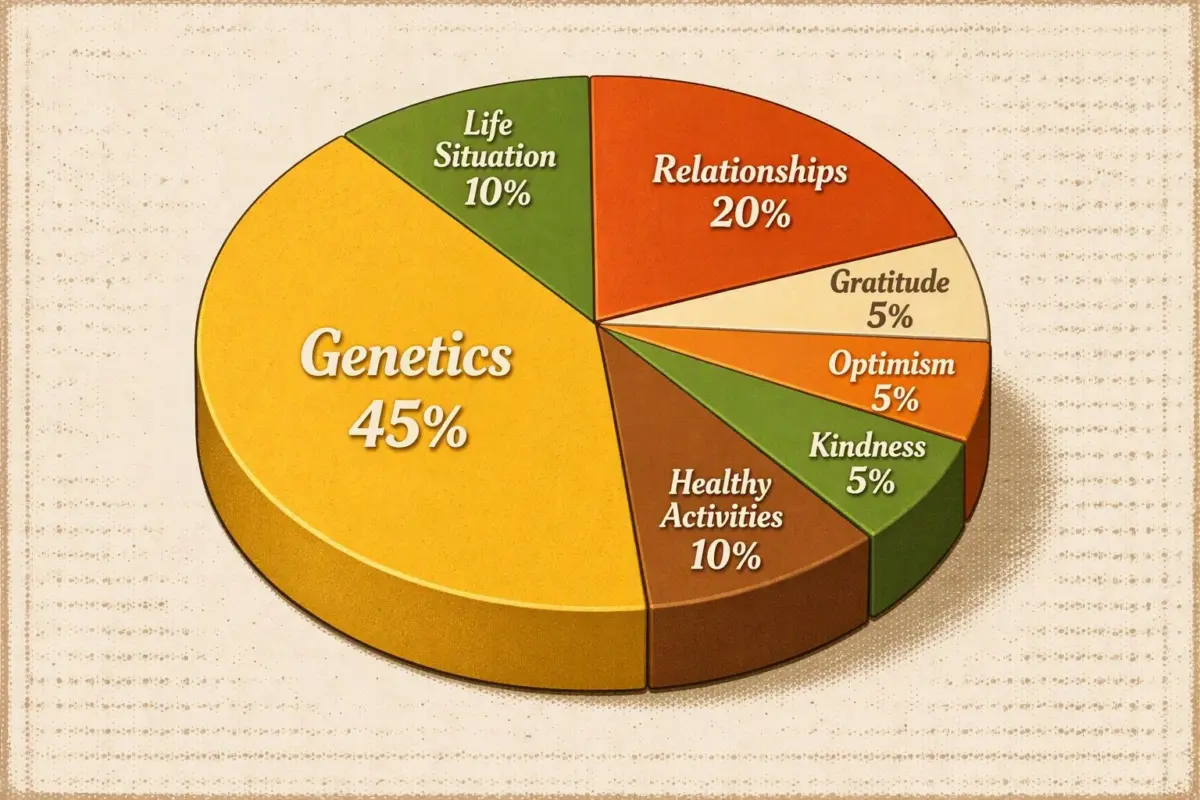
While financial markets are inherently volatile, the underlying engine of capitalism relies on real people performing real labor and developing tangible inventions. Human standards of living and economic growth are inextricably linked to productivity gains rather than short-term market valuations. Once a society achieves a baseline level of material security, human happiness and fulfillment depend far less on fluctuations in net worth and far more on personal choices, community relationships, physical health, and a positive outlook on life.

Psychological factors heavily influence how individuals perceive financial risk and economic uncertainty. Human beings evolved as danger detection mechanisms, equipped with a neurological wiring designed to spot and react to threats. While this evolutionary trait successfully protected early humans from physical predators and environmental scarcity, modern environments lack those immediate physical threats. Consequently, the human brain frequently repurposes its threat-detection machinery to fixate on abstract modern concerns, ranging from inflation and geopolitical tensions to neighborhood homeownership associations and portfolio tax strategies.
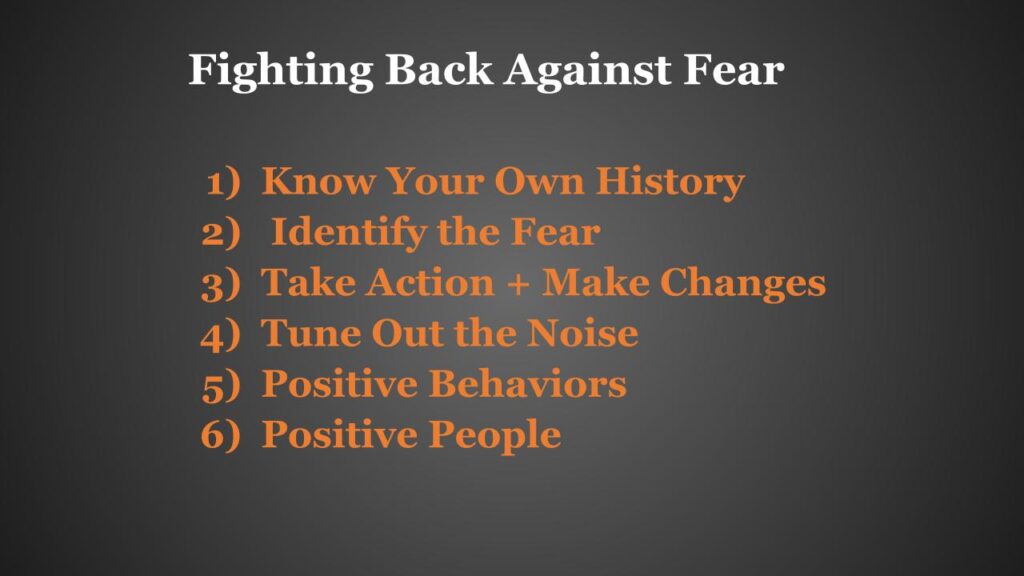
To combat persistent financial anxiety, experts suggest examining the historical roots of personal fears, which often stem from childhood experiences or inherited scarcity mindsets passed down from generations that lived through historical hardships like the Great Depression. Recognizing that these fears reflect past conditioning rather than objective present-day reality allows individuals to approach uncertainty more rationally. Taking deliberate, constructive action helps demystify unfamiliar situations, building resilience and confidence in one’s ability to adapt to any future economic environment.

Viewing Artificial Intelligence Through the Lens of Experimentation
Rather than succumbing to doom-scrolling and sensationalized media coverage regarding Artificial Intelligence, commentators suggest reframing technological shifts as large-scale experiments. Throughout history, major technological innovations have consistently disrupted traditional labor markets while simultaneously driving unprecedented efficiency and spawning entirely new industries.
AI functions essentially as a cognitive tool designed to supercharge human productivity, much like automated machinery revolutionized manufacturing. While this transition inevitably displaces certain entry-level administrative and technical roles, it simultaneously lowers the cost of valuable services and generates novel economic sectors, following a trajectory comparable to the rise of the internet and mobile computing revolutions.

While the economic gains from such technological leaps are frequently concentrated among business owners and market shareholders, individual investors participating in broad equity markets also capture a share of that long-term growth. Ultimately, technological innovation presents choices rather than predetermined threats. By replacing background fear with active learning, continuous adaptation, and a focus on fundamental human well-being, individuals can navigate market bubbles and economic transitions with confidence, recognizing that meaningful personal growth and fulfillment lie on the other side of apprehension.