
The stock market has once again proved its capacity to surprise. As valuations reach historic highs driven by the explosive growth of artificial intelligence, investors find themselves caught in a familiar emotional tug-of-war. While a crashing market causes immediate anxiety over shrinking retirement portfolios, a booming market brings its own distinct brand of dread—the lingering suspicion that an even bigger correction is inevitable.
This tension forms the core of a recent presentation and essay by prominent personal finance commentator known as Mr. Money Mustache, who has spent more than two decades in early retirement. Drawing on his experience navigating the dot-com boom of the late 1990s and early 2000s—an era that nearly cost him his job and citizenship application—he addressed these market anxieties during a talk at Camp FI Midwest, with an upcoming appearance scheduled at the Bogleheads conference in November.

Will the AI Bubble Ruin Our Retirement?
Reflecting on over twenty years of retirement, the financial commentator noted that friends and followers frequently ask how anyone can remain calm and sleep at night amid constant global instability. A review of contemporary anxieties reveals a long list of familiar concerns: geopolitical conflicts, inflation, soaring national debt, and the fear that the artificial intelligence boom represents a massive speculative bubble ready to burst.
Interestingly, these concerns mirror the exact anxieties voiced two decades ago in 2006. Back then, observers worried about different political leaders, the war in Iraq, soaring national debt, and inflation. The overvalued stock market of that era was driven by a housing bubble rather than AI, and outsourcing to overseas labor markets was viewed as the primary threat to domestic jobs. The world was also gripped by debates over "Peak Oil," with many predicting that rising fossil fuel consumption would inevitably lead to global economic collapse.

Yet, despite the severe downturn of the Great Financial Crisis—which triggered the steepest market crash since the Great Depression—long-term data tells a different story. Broad stock market indexes ultimately recovered and grew significantly over the ensuing two decades. Global quality-of-life indicators also improved substantially during that same period: extreme poverty rates dropped dramatically, infant mortality rates were cut in half, the cost of solar energy plummeted, and electric vehicle adoption expanded worldwide.
This historical perspective highlights a fundamental misconception perpetuated by financial fear-mongering. At its core, human prosperity is not derived from abstract figures within the financial system or stock market tickers, but rather from tangible productivity.

Productivity, Prosperity, and Human Happiness
The financial system and the broader economy are ultimately human inventions. When market systems experience severe disruptions, historical precedent shows that societies adapt, restructure financial metrics, and resume productive work. Real economic growth, rising living standards, and the feasibility of early retirement originate from high productivity rather than speculative trading.
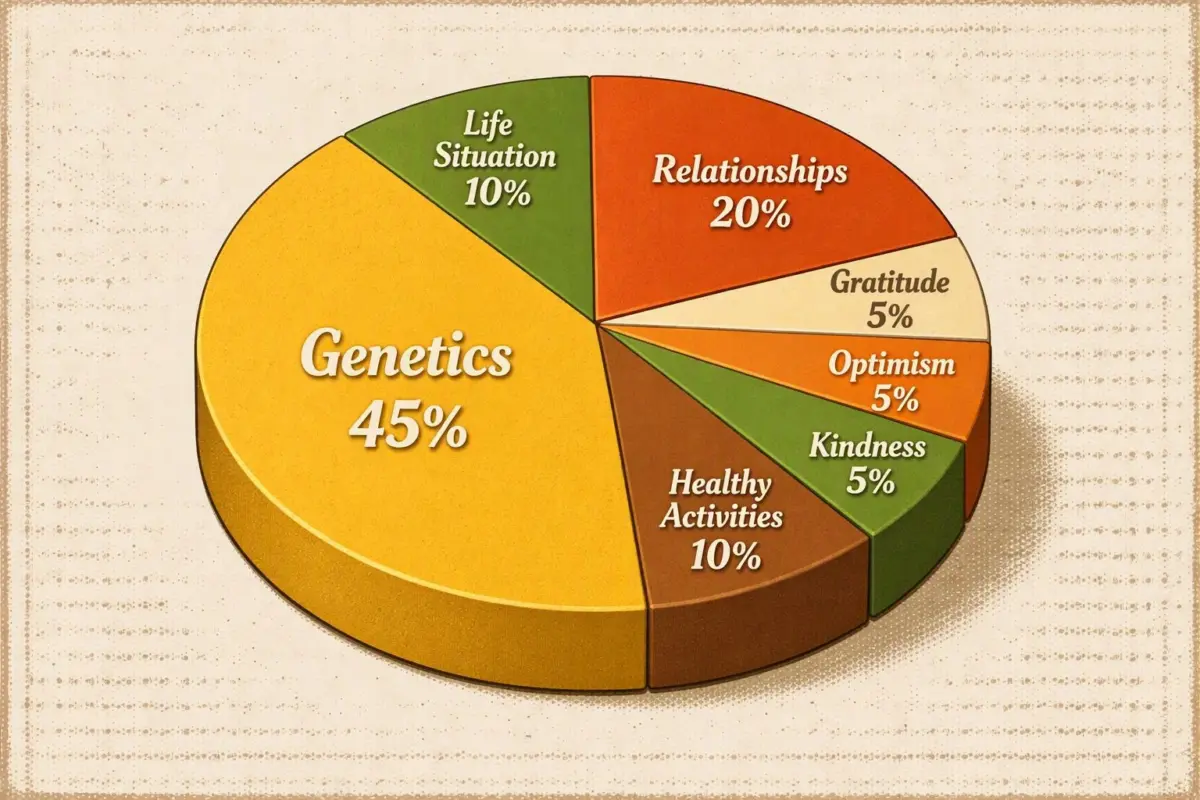
Furthermore, once societies achieve a certain baseline standard of living, human happiness ceases to scale purely with material wealth. Psychological and sociological observations suggest that overall life satisfaction is largely influenced by non-financial factors. Genetics, close interpersonal relationships, regular physical activity, and a philosophical outlook rooted in optimism and gratitude play far more significant roles in determining an individual’s well-being than portfolio fluctuations.

Despite these reassuring realities, many individuals within the financial independence community continue to experience persistent anxiety regarding an uncertain financial future. This enduring apprehension often stems less from objective economic threats and more from fundamental human psychology.
Understanding and Managing Fear
Human beings have evolved primarily as danger-detection machines. This evolutionary trait served essential survival functions by protecting early humans from predators and scarcity. However, modern environments largely lack these immediate physical threats, causing the brain’s detection machinery to shift its focus toward abstract worries.

Once physical survival and basic financial security are established, individuals often pivot to worrying about social standing, tax strategies, or managing surplus wealth. This persistent cycle of anxiety can make even successful retirees feel uneasy about potential future scenarios.
Recognizing the root causes of these fears is a critical step toward overcoming them. Personal histories, childhood experiences with financial scarcity, or past trauma often shape an individual’s perception of risk in adulthood. By objectively examining these fears and identifying realistic worst-case scenarios, individuals can better distinguish between actual present danger and internalized anxiety.

Taking concrete action remains one of the most effective ways to neutralize fear. Engaging directly with unfamiliar situations builds confidence, adaptability, and resilience—traits that render future uncertainties far less intimidating. Additionally, reducing exposure to sensationalized daily news cycles and surrounding oneself with positive, forward-thinking peers can profoundly shift an individual’s mental well-being toward constructive behaviors.
Viewing Artificial Intelligence Through the Lens of Experimentation
Approaching life changes through the mindset of an experiment can help reframe potential disruptions, including the current technological shift surrounding artificial intelligence. Rather than viewing AI strictly as an ominous existential threat or the catalyst for an impending market crash, it can be understood as a powerful tool for productivity.

Artificial intelligence functions essentially as a cognitive tool designed to enhance efficiency and output. Much like past technological revolutions—such as the advent of the internet or smartphones—AI will inevitably displace certain administrative and entry-level tasks while simultaneously reducing service costs and sparking entirely new industries.
While the economic rewards of such technological leaps often concentrate among business owners and shareholders, individual market participants frequently benefit through diversified portfolios and broader economic growth. Ultimately, artificial intelligence presents another opportunity for individuals to choose between paralysis driven by fear or engagement fueled by learning, action, and adaptability.