
The stock market has a persistent habit of surprising observers. Whether it experiences a sharp downturn that shrinks retirement portfolios or surges to record, unprecedented valuations, it continually generates anxiety. A high market boom frequently sparks fears of an impending crash, particularly when the current economic expansion is driven by the frenzied momentum of the artificial intelligence boom.

For individuals who have tuned out financial media drama and focused on daily life, this skepticism might pass unnoticed. However, the overarching AI narrative involves massive capital investment, rapid technological integration, and widespread speculation about whether society is hurtling toward a modern iteration of the early-2000s dot-com crash. That historic boom shaped the early career of financial commentator and long-term retiree known as Mr. Money Mustache, a period that ultimately paved the way for early retirement before the subsequent market correction nearly jeopardized his career stability and immigration status.
As financial cycles repeat, questions regarding market volatility inevitably surface. To address these concerns, commentary originally delivered at events like Camp FI Midwest and the Bogleheads conference highlights a fundamental disconnect between modern panic and historical reality. Looking back twenty years provides a stark perspective on how human anxiety operates during periods of perceived economic peril.

Will the AI Bubble Ruin Our Retirement?
Achieving decades of retirement brings a certain comfort with market rhythms, yet questions regarding financial security in a turbulent world remain common. Friends and peers frequently express astonishment that retirees can sleep peacefully given current global events. Modern news consumers face a barrage of alarming headlines: political instability, inflation eroding purchasing power, the looming AI bubble, mounting national debt, and geopolitical conflicts threatening widespread disruption.
Interestingly, these worries closely mirror the anxieties of the past. In 2006, individuals voiced similar fears regarding geopolitical leaders, Middle Eastern conflicts, ballooning national debt, and rising inflation. Back then, the overvalued stock market was attributed to a dangerous housing bubble rather than artificial intelligence, and job security fears centered on outsourcing to India and China rather than automated software. There was also intense debate surrounding "Peak Oil," with predictions that rising fossil fuel consumption would inevitably outstrip supply and doom global stability—an outcome that ultimately reversed as technology and production evolved.

Despite the profound anxieties of 2006, the subsequent decades revealed a different trajectory. While the Great Financial Crisis materialized from a dangerous mix of real estate speculation and excessive leverage in mortgage-backed financial instruments, triggering the deepest economic downturn since the Great Depression, the long-term growth of the broader market proved resilient. A hypothetical long-term investment made prior to that historic crash still expanded significantly over the following twenty years, absorbing subsequent shocks such as the 2020 pandemic downturn.
Simultaneously, global standards of living improved markedly across multiple metrics. Extreme poverty rates dropped substantially over a twenty-year span, while global infant mortality rates were cut in half. Clean energy adoption surged as the cost of solar panels plummeted, transforming solar generation into a dominant source of new energy capacity globally. Pure electric vehicle adoption similarly transitioned from a theoretical concept to a substantial share of worldwide automotive sales.

These historical shifts raise a central question regarding whether current anxieties are truly different this time. Whether concerns involve the expanding national debt, a massive artificial intelligence bubble, or dystopian scenarios of runaway superintelligence, financial media consistently amplifies scary narratives. Yet these pessimistic forecasts often overlook a foundational economic principle: true prosperity originates from productivity rather than abstract numbers tracked within financial systems.
Prosperity, Productivity, and Human Happiness
The core lesson of sustainable economics is that capitalism is inherently volatile and prone to wild market swings. Beneath the fluctuating waves of the financial system, however, real people perform tangible work and develop genuine innovations. Economies and financial networks are fundamentally human constructs. If a system collapses due to strained mathematical valuations, society historically recreates new metrics and resumes productivity, as demonstrated following the 2008 financial crisis and prior historical contractions.

All tools driving economic growth, higher standards of living, and early retirement capabilities stem directly from human productivity. Yet even productivity and material prosperity have natural ceilings regarding their impact on human fulfillment. Once a society achieves a baseline standard of living—a milestone surpassed in developed nations decades ago—additional wealth yields diminishing returns in overall happiness.
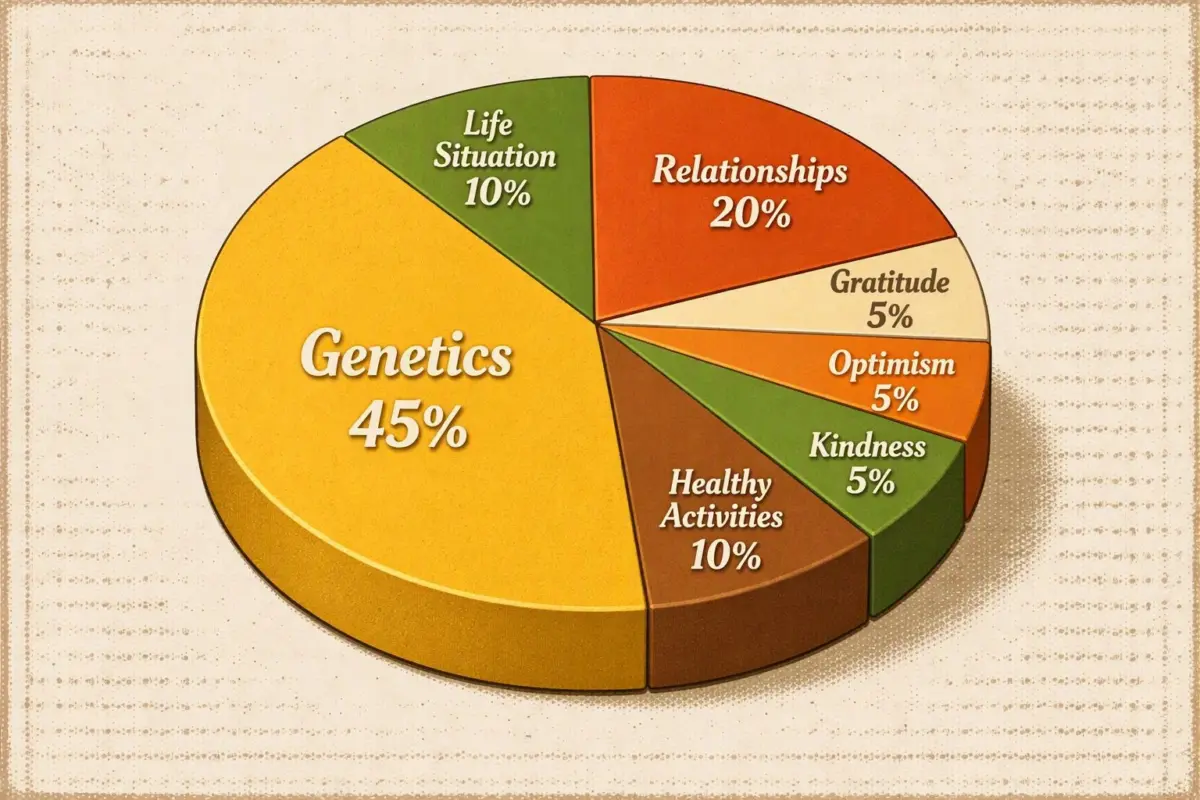
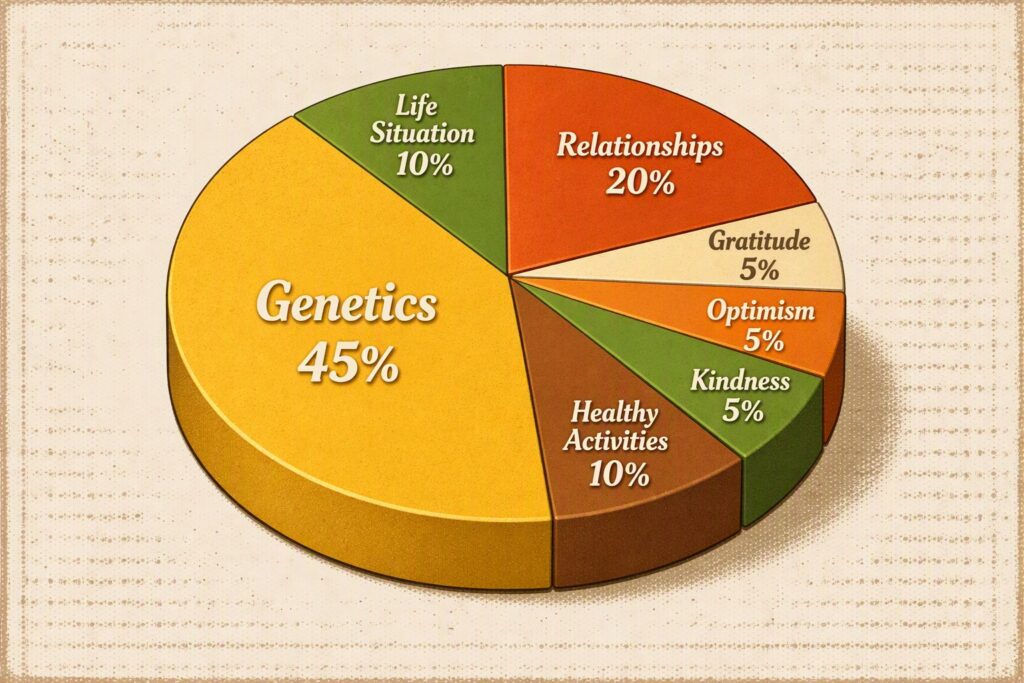
Behavioral research suggests that happiness is influenced primarily by non-financial factors. Genetics plays a significant role, but controllable choices—such as cultivating close relationships, practicing gratitude, maintaining an optimistic outlook, and engaging in regular outdoor physical activity—have a profound impact on daily well-being. Despite this understanding, widespread fear and uncertainty regarding the unknown future persist even among financially secure individuals.

Understanding and Combating Fear
The root of this pervasive anxiety lies in human evolution. Humans function largely as danger-detection mechanisms, an inherited trait designed to protect against environmental threats. However, when immediate physical dangers are resolved, this cognitive machinery often continues scanning for alternative sources of worry, effectively moving the goalposts of anxiety.
Once physical survival and food security are established, anxiety shifts toward social standing, economic stability, and abstract financial milestones. This dynamic can escalate to localized concerns such as neighborhood property aesthetics, tax optimization strategies, or government-mandated Required Minimum Distributions for retirees holding substantial assets.

Combating this intrinsic fear requires self-awareness and rational evaluation. Examining personal history helps trace modern anxieties back to childhood environments or past financial scarcity mentalities absorbed from previous generations who lived through historic economic depressions. Identifying specific fears by evaluating worst-case scenarios often reveals that perceived catastrophes are manageable.
Taking deliberate action remains one of the most effective ways to dissolve unfamiliarity and build resilience, often described as cultivating personal capability. When individuals develop mental, physical, and emotional adaptability, fewer situations appear threatening. Furthermore, reducing exposure to sensationalized daily news diets helps minimize psychological distress, redirecting focus toward constructive behaviors, outdoor activity, and positive social communities centered on mutual support and well-being.

Everything Is an Experiment
Adopting an experimental mindset changes how individuals approach life transitions, whether navigating minor daily adjustments or major decisions such as changing careers, relocating, or entering retirement. This framework applies directly to the current artificial intelligence landscape, which generates widespread apprehension.
Rather than succumbing to doom-scrolling and ominous media narratives, understanding the underlying mechanics of artificial intelligence provides valuable context. Viewed through an economic lens, AI functions primarily as a sophisticated cognitive tool designed to enhance efficiency and productivity. Much like previous technological revolutions—including the advent of the internet and mobile smartphones—artificial intelligence will boost operational output while simultaneously displacing certain entry-level administrative and driving roles. Over time, however, these efficiencies tend to lower consumer costs and catalyze entirely new industries.
While technological revolutions often concentrate financial rewards among asset owners and shareholders, they also present individuals with choices. Artificial intelligence represents another wave of technological change, serving as a catalyst for continuous learning and adaptation rather than an insurmountable threat. Ultimately, managing fear and embracing uncertainty unlocks the potential for personal growth, reinforcing the principle that the most rewarding experiences in life lie just beyond apprehension.