
The global stock market has a persistent habit of surprising observers. Whether it is plunging into sudden downturns that trigger widespread anxiety over retirement portfolios or climbing to unprecedented valuations that spark fears of an impending collapse, market volatility remains a constant feature of modern economic life. Today, much of the public anxiety is centered around the artificial intelligence boom, a rapid technological expansion that many fear could mirror or even surpass the dot-com crash of the early 2000s.

For veteran financial commentators, this dynamic feels remarkably familiar. The early 2000s dot-com boom helped shape the early careers of many financial independence advocates before the subsequent market correction threatened employment stability and residency applications. As questions mount regarding the current investment cycle, financial educators are addressing these concerns head-on through public speaking engagements, including recent presentations at Camp FI Midwest and upcoming appearances at the Bogleheads conference.

The core question facing many investors today is whether the current artificial intelligence bubble poses a genuine threat to long-term retirement security. Looking back over the past two decades reveals a clear pattern of shifting anxieties. In 2006, investors harbored deep concerns about geopolitical instability, national debt, inflation, and a wildly overvalued housing market. At the time, widespread anxiety focused on the real estate bubble rather than artificial intelligence, while job displacement fears centered on outsourcing to overseas markets like India and China rather than automated systems. There were also intense debates surrounding peak fossil fuel supplies, with many predicting that increasing global energy consumption would inevitably lead to severe scarcity.

Instead of those specific doomsday predictions, the subsequent twenty years unfolded differently. While the global economy did experience the Great Financial Crisis—a severe downturn driven by irrational exuberance in housing prices and complex mortgage-backed financial leverage—the broader historical trajectory of the stock market continued upward over the long term. Major historical disruptions, including the 2020 economic contraction triggered by the COVID-19 pandemic, ultimately registered as temporary interruptions within a much larger growth curve.

At the same time, global living standards improved substantially across multiple measurable metrics. The proportion of the global population living in extreme poverty dropped significantly over a twenty-year span, while global infant mortality rates were cut in half. Clean energy adoption expanded rapidly as solar panel manufacturing costs plummeted, allowing solar power to become a dominant source of new electrical generation capacity worldwide. Simultaneously, pure electric vehicle adoption grew from a negligible fraction to a substantial share of global automobile sales.

Examining these historical shifts raises fundamental questions about whether the present moment is truly different. While financial media outlets frequently produce alarming narratives concerning soaring national debt levels, potential geopolitical conflicts, or runaway artificial intelligence developments, these warnings often overlook a foundational economic principle: true prosperity is not derived from abstract figures within the financial system, but rather from tangible productivity.

Economic history demonstrates that the capitalist system is inherently volatile and prone to cyclical swings. However, beneath short-term market fluctuations, human ingenuity continues to drive real-world production, invention, and problem-solving. Financial systems and market economies are human inventions; if a system undergoes a severe correction, societies have historically restructured the financial architecture to resume productive activity. Long-term standards of living, economic growth, and the viability of early retirement strategies ultimately rely on productivity gains rather than daily market sentiment.

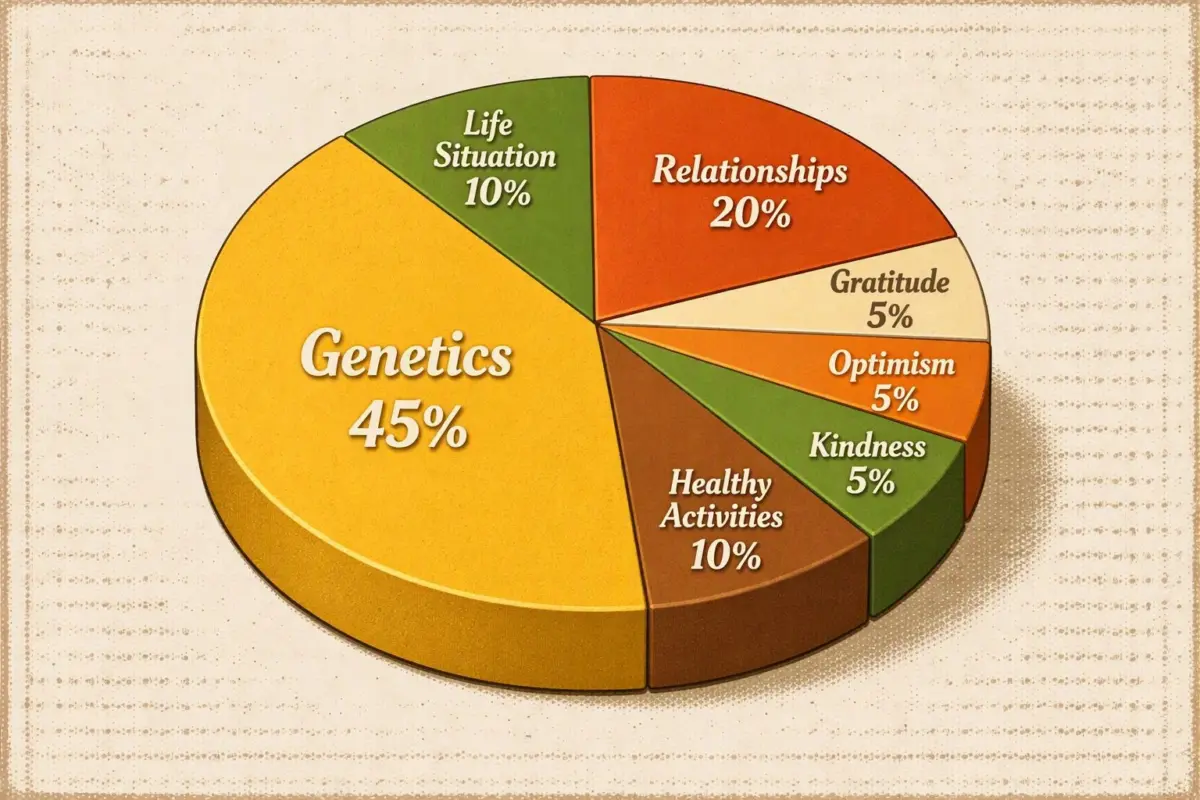
Beyond economics, human happiness tends to stabilize once basic material standards of living are met. Psychological and sociological research indicates that once a society moves past the baseline requirements of survival and comfort, overall life satisfaction is largely dictated by non-financial factors. Genetics plays a primary role in baseline happiness, but controllable elements—such as maintaining strong personal relationships, practicing gratitude, cultivating optimism, and engaging in regular outdoor physical activity—have a far greater impact on daily well-being than portfolio values.
Despite these realities, widespread anxiety persists, even among individuals who have achieved financial independence. This persistent unease points to a deeper psychological phenomenon rooted in human evolution. Humans evolved as danger-detection machines, utilizing background anxiety as an evolutionary survival mechanism to protect against immediate physical threats. However, when physical dangers and severe scarcity are successfully mitigated, the human brain often continues searching for new sources of worry, shifting focus toward social status, comparative wealth, tax strategies, and future uncertainties.

Addressing this pervasive fear requires self-awareness and an understanding of personal history. Individuals frequently inherit financial anxieties or scarcity mindsets from their parents or childhood environments, which can be compounded by past trauma or abuse. By identifying the root causes of specific fears and examining worst-case scenarios objectively, individuals can replace passive worry with deliberate action. Taking concrete steps makes the unfamiliar manageable, fostering resilience and the capacity to adapt to new circumstances.
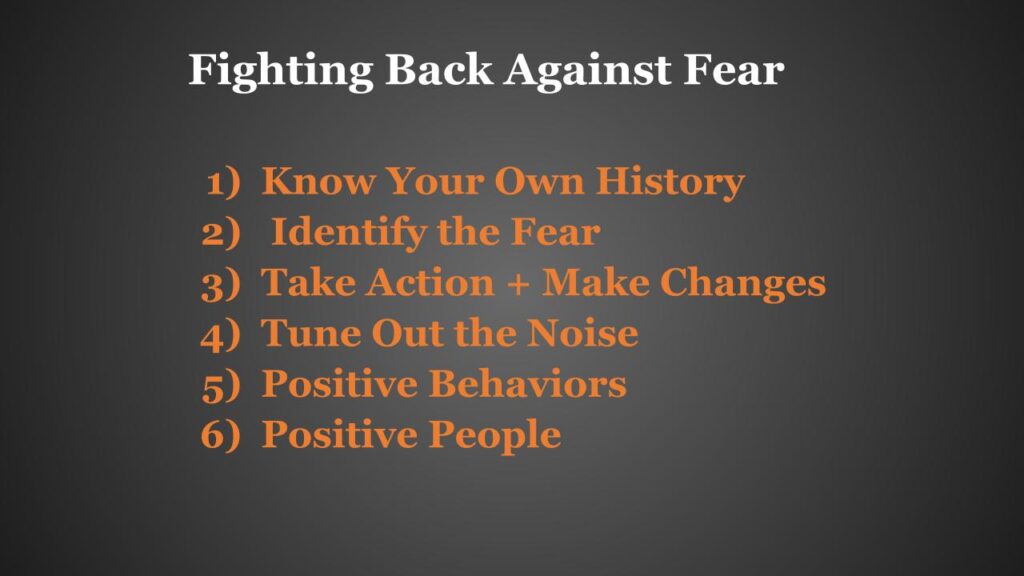
Furthermore, managing mental well-being involves curating daily information consumption. Relying heavily on continuous news cycles often exposes individuals to a curated selection of alarming narratives that amplify stress without providing constructive solutions. Engaging in physical activity, spending time outdoors, and surrounding oneself with optimistic, productive peers can significantly alter one’s perspective on the future.

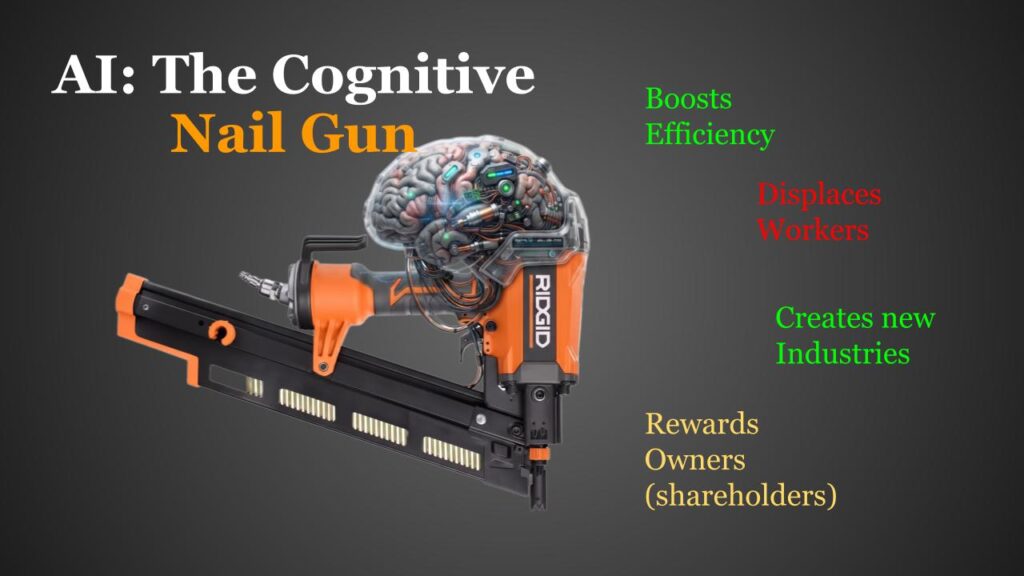
This experimental mindset applies directly to modern technological advancements, including the rapid rise of artificial intelligence. Rather than viewing technological shifts through a lens of catastrophic doom, observers can analyze AI as a powerful tool for cognitive efficiency. Much like physical tools that multiply human labor, artificial intelligence functions as a cognitive nail gun, dramatically increasing productivity and lowering the cost of complex intellectual services.

While technological revolutions inevitably displace certain types of labor, they simultaneously drive down the cost of goods and services while spawning entirely new industries, much like the internet and the mobile app revolution did in previous decades. The economic rewards of these innovations frequently concentrate among asset owners and shareholders, reinforcing the importance of broad participation in economic growth.
Ultimately, artificial intelligence represents another major transition in human history—an opportunity for learning, adaptation, and action rather than fear. By understanding the evolutionary roots of anxiety and focusing on productivity, resilience, and positive human behavior, individuals can navigate economic uncertainty and pursue a satisfying life on the other side of fear.