
The stock market has once again proved its capacity to surprise, continuing a long-running trend of defying expectations and pushing into unprecedented territory. For decades, investors have grappled with a familiar emotional cycle: the anxiety of watching retirement portfolios shrink during a sudden crash, countered by the lingering dread that accompanies historic market highs. When valuations climb to super-sized levels, many assume an even bigger downturn is inevitable, particularly when the current economic boom is powered by the rapid, frenzied ascent of artificial intelligence.

While market observers point out that AI represents a genuinely monumental technological shift, the mania surrounding its adoption has sparked widespread concerns that the tech sector is barreling toward a modern version of the dot-com crash of the early 2000s. For veteran financial commentators, this cycle feels deeply familiar. The dot-com boom of the turn of the millennium helped launch many early careers and paved the way for early retirement, even if the subsequent bust nearly derailed employment and citizenship applications. As investors navigate the latest wave of market enthusiasm, questions about the long-term viability of the AI investment cycle continue to dominate financial discussions, prompting public presentations at events like Camp FI Midwest and the upcoming Bogleheads conference.

Reflecting on more than two decades of retirement, financial observers note that the overarching question often remains the same: how can anyone stay retired and sleep comfortably at night with so much turmoil in the world? A glance at contemporary headlines reveals no shortage of anxieties, from political instability and persistent inflation to towering national debts, geopolitical conflicts, and the looming threat of an AI-driven economic disruption. Yet, a look back twenty years reveals a striking parallel. In 2006, the anxieties were remarkably similar, albeit centered on different flashpoints. Back then, society worried about political leaders, ongoing conflicts in the Middle East, the national debt, inflation, and a wildly overvalued housing market that ultimately triggered the Great Financial Crisis.

Even during the most severe economic downturn since the Great Depression, the broader trajectory of the stock market continued upward over the long term. A hypothetical $100,000 investment made during those turbulent years would have still ballooned substantially over the following two decades, easily weathering subsequent shocks, including the pandemic-related market drop of 2020. Beyond financial charts, global living standards demonstrated remarkable resilience. Extreme poverty rates dropped significantly over a twenty-year span, infant mortality rates were cut in half, and clean energy adoption surged as solar panels became dramatically more affordable, turning solar generation into a dominant source of new energy capacity alongside a rapid rise in electric vehicle sales.

This historical perspective challenges the underlying premise of constant financial panic. The persistent fear that an uncertain future will completely dismantle retirement plans often overlooks a fundamental economic truth: true prosperity stems from productivity rather than financial systems and stock market ticker symbols, which ultimately represent human-made numerical metrics. Capitalism is inherently choppy, prone to wild swings, and driven by real people performing real work and developing tangible inventions. If a financial system breaks down because market participants lose confidence in current valuations, history shows that societies can reset the metrics and return to productive labor.

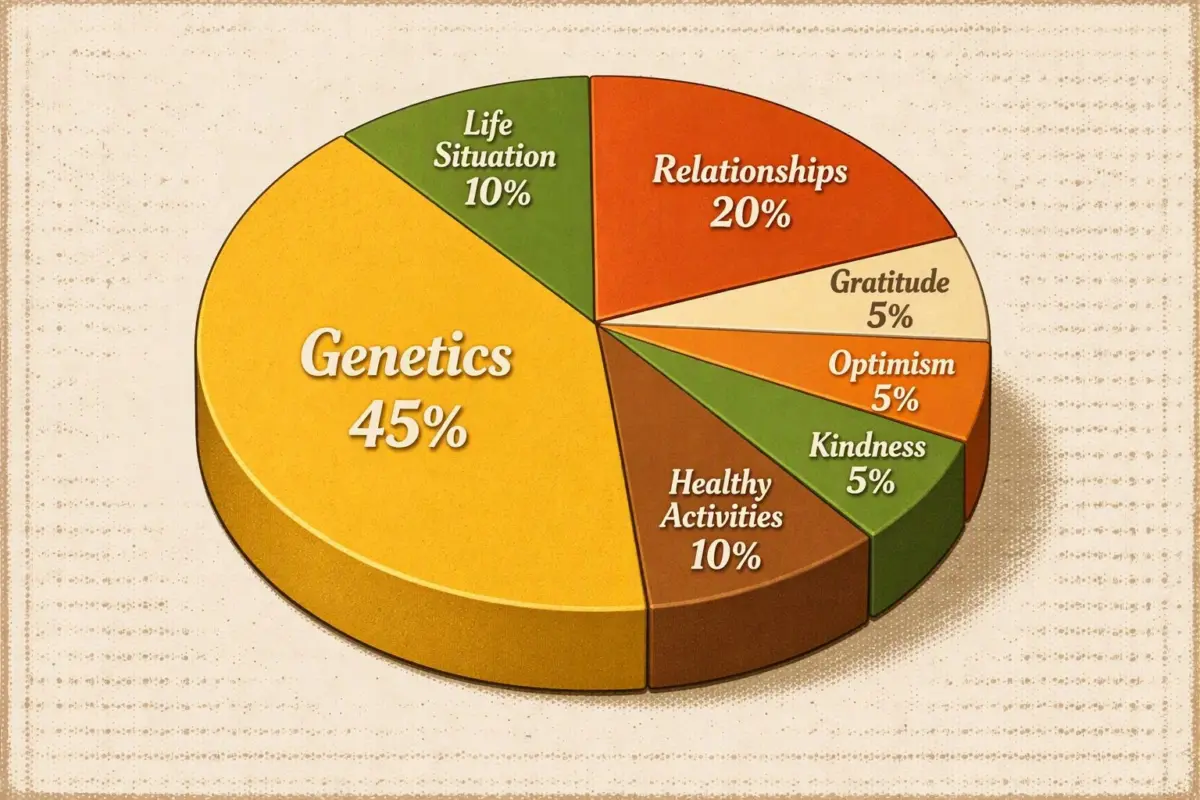
Economic growth, living standards, and the feasibility of early retirement are fundamentally anchored in high productivity. Furthermore, once basic material needs and a certain standard of living are achieved, human happiness tends to stabilize in the economic dimension. First-world nations surpassed those foundational requirements decades ago, shifting the focus of well-being toward non-financial factors. Psychological research and life experience suggest that overall happiness is largely shaped by a mix of genetics, personal relationships, the practice of gratitude and optimism, and regular engagement in healthy physical activities.

Despite these reassuring historical realities, background anxiety remains a prevalent force among investors and retirees alike. This persistent worry is largely a product of human evolution. As a biological species, humans function essentially as danger detection machines, developing survival traits to protect against immediate threats. However, when those primary dangers recede, the detection machinery does not simply turn off; instead, it looks for new problems to solve, continuously moving the goalposts. Once scarcity is managed, individuals begin worrying about social standing, tax strategies, or managing required minimum distributions when retirement accounts grow too large.

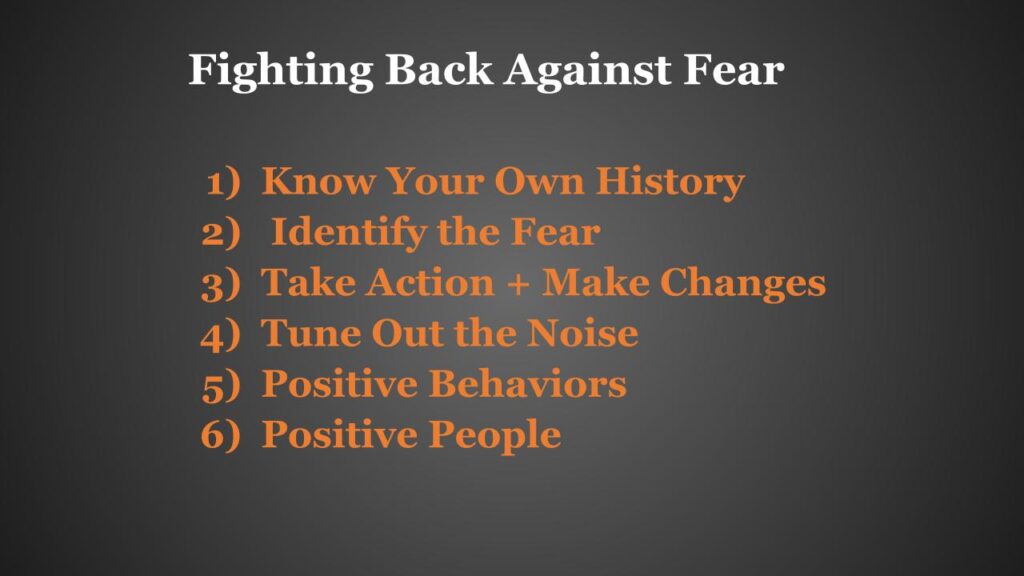
Combatting this innate fear requires self-awareness and rational evaluation. Examining personal history often reveals the root causes of financial anxiety, whether tied to childhood memories of economic scarcity or broader life trauma. By identifying specific fears and examining worst-case scenarios, individuals frequently realize that potential financial pitfalls are rarely as catastrophic as anticipated. Taking proactive measures helps make the unfamiliar familiar, building the resilience needed to adapt to new situations.

For many, reducing exposure to daily news media—which frequently relies on curated, high-fear narratives—serves as an effective way to improve mental well-being. Focusing instead on positive behaviors, physical movement, outdoor activity, and constructive problem-solving aligns more closely with natural human needs. Surrounding oneself with optimistic, productive peers further reinforces a healthy outlook, shifting the focus from speculative dread to living a fulfilling life.

Viewing major transitions through the lens of experimentation can also reframe how individuals approach uncertainty. Whether evaluating a new career path, a lifestyle change, or the sweeping emergence of artificial intelligence, treating developments as experiments neutralizes panic and replaces it with curiosity. Rather than succumbing to doom-scrolling, understanding the actual mechanics behind new technologies reveals their potential utility. Artificial intelligence functions essentially as a cognitive tool designed to boost efficiency, productivity, and ultimately broader economic prosperity.
Like previous technological revolutions, AI will inevitably displace certain jobs while simultaneously lowering service costs and catalyzing the creation of entirely new industries, much like the advent of the internet and mobile applications. While the economic rewards of such advancements often concentrate among business owners and shareholders, the technology itself remains another catalyst for personal choice. Ultimately, whether artificial intelligence is perceived as a terrifying disruption or an exciting catalyst for learning depends largely on individual perspective, reinforcing the idea that everything worth pursuing lies just on the other side of fear.