
The stock market has once again found a way to surprise observers, climbing to record valuations and prompting familiar questions about whether an impending economic crash is right around the corner. With the current market boom heavily fueled by the frenzied rise of Artificial Intelligence, investors are increasingly drawing parallels to historical market bubbles, most notably the dot-com crash of the early 2000s. Yet, looking past the day-to-day market volatility reveals a broader perspective on financial anxiety, long-term prosperity, and the human tendency to focus on fear rather than progress.
For seasoned investors and those who have spent decades navigating financial cycles, the anxiety surrounding the AI boom feels like déjà vu. The early 2000s dot-com boom helped launch the careers of many early retirement advocates before the subsequent market correction threatened jobs and stability. As questions mount regarding this latest investment cycle, financial commentators are once again addressing public concerns about whether an AI-driven market correction could derail retirement plans. Comparing today’s anxieties with those of previous decades offers a revealing look at how human psychology shapes our relationship with risk, wealth, and the future.

Will the AI Bubble Ruin Our Retirement?
Reflecting on more than two decades of retirement, financial veterans often encounter a recurring question from anxious friends and followers: how is it possible to remain comfortable and sleep peacefully at night given the state of the world? A news watcher’s typical list of worries today is extensive. Headlines frequently highlight polarizing political figures, persistent inflation eroding purchasing power, the looming AI bubble, towering national debt levels, and geopolitical conflicts threatening global stability.
Interestingly, this exact conversation has happened before—specifically over twenty years ago in 2006. At that time, society was consumed by a similarly daunting list of concerns. The geopolitical landscape featured contentious leaders and wars in the Middle East. People worried about national debt, inflation, and an overvalued housing market rather than an AI bubble. Instead of artificial intelligence taking white-collar jobs, the prevailing fear was that employment would be entirely outsourced overseas. There was even widespread panic over "Peak Oil," with gloomy predictions that fossil fuel consumption would inevitably outstrip dwindling supplies, leading to global catastrophe.

Yet, looking back at what actually unfolded over the subsequent twenty years provides a stark reality check. Despite the Great Financial Crisis—triggered by a combination of housing market irrational exuberance and complex mortgage leverage, resulting in the deepest economic downturn since the Great Depression—the long-term trajectory of the stock market continued upward. A historical look at major market indexes shows that even through severe downturns, including the pandemic-related crash of 2020, diversified long-term investments have historically grown substantially over two decades.
Beyond the financial markets, the broader world made remarkable strides. Global metrics show that extreme poverty rates dropped significantly over a twenty-year span, while infant mortality rates were cut in half. Clean energy adoption surged, driven by a dramatic decrease in the cost of solar panels, which now account for the vast majority of new energy generation capacity. Meanwhile, sales of electric vehicles transitioned from a niche concept to a substantial share of the global automotive market. Examining these historical shifts underscores a fundamental choice between viewing the future through a lens of paralyzing uncertainty or long-term optimism.

The Core of Prosperity and the Trap of Fear
As financial media continues to spin cautionary tales about national debt, AI overvaluation, and potential market collapses, critics of doom-scrolling point out a fundamental misunderstanding at the heart of these fears. Modern prosperity is not primarily derived from financial systems or stock market valuations, which are essentially numerical reflections on digital ledgers. True economic prosperity stems from productivity.
The underlying mechanism of capitalism is inherently volatile, marked by periodic corrections and wild swings. However, beneath the surface turbulence, real people perform tangible work and develop genuine innovations. The financial system itself is a human invention; if a system fails due to unsustainable metrics, society has historically adapted by restructuring financial parameters and returning to productive labor. Standard of living, economic growth, and the feasibility of early retirement are all anchored in rising productivity rather than speculative market sentiment.

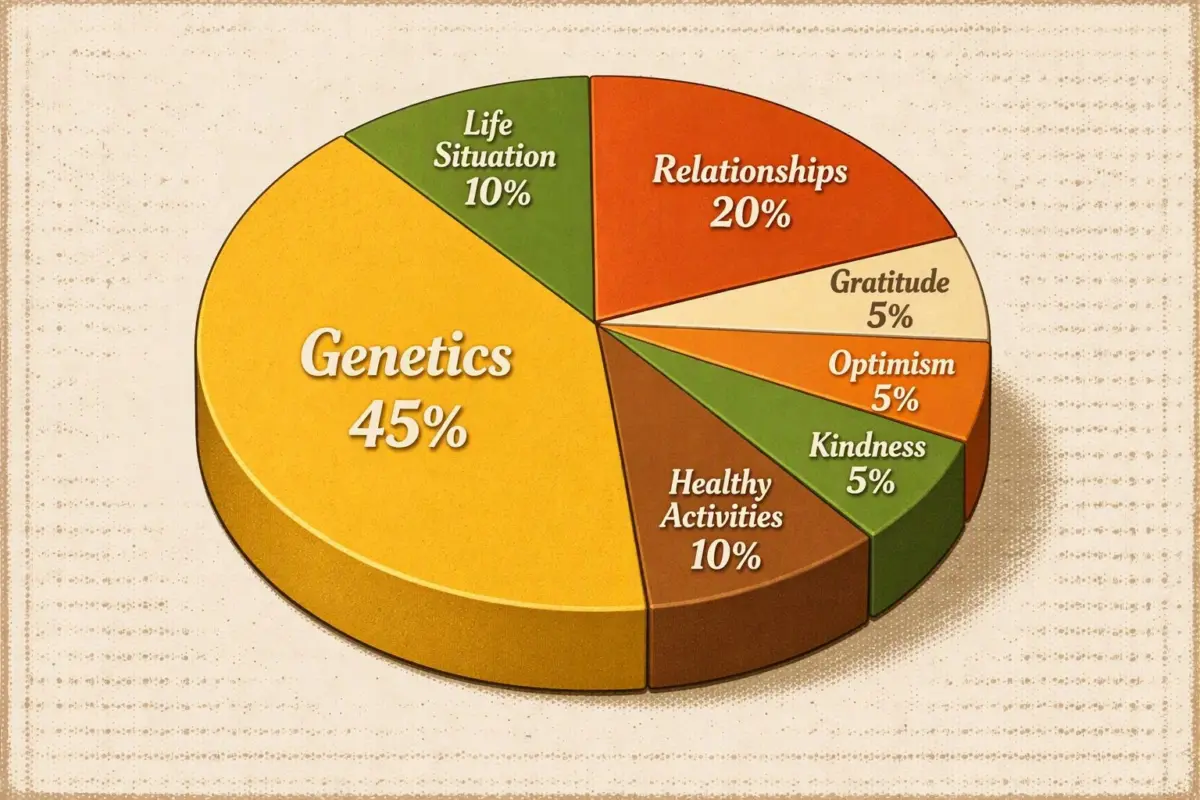
Furthermore, once a society achieves a certain baseline standard of living, human happiness tends to plateau in the material dimension. Modern populations in developed nations surpassed those minimum requirements decades ago, shifting focus toward non-material factors of well-being. Psychological research suggests that while genetics play a major role in baseline happiness, daily choices—such as cultivating positive relationships, practicing gratitude, maintaining optimism, and engaging in regular physical activity—have a far greater impact on overall life satisfaction.
Despite these realities, baseline anxiety remains prevalent. Human beings evolved as sophisticated danger-detection machines, a biological trait designed to protect against predators, disease, and scarcity. However, this evolutionary mechanism creates a psychological trap. When immediate physical dangers are resolved, the brain continues to scan the environment for threats, constantly shifting the goalposts of worry. Once scarcity is managed, people worry about social acceptance, followed by financial comparisons, neighborhood rules, tax strategies, and retirement distribution regulations.

Challenging Fear Through Action and Perspective
Combating pervasive financial anxiety requires self-awareness and a rational examination of personal history. Many people carry fear rooted in childhood experiences or generational scarcity mindsets passed down from family members who survived historical hardships like the Great Depression. Recognizing that these fears often stem from the past rather than an objective evaluation of the present is a crucial first step.
Analyzing worst-case financial scenarios often reveals that potential outcomes are far less catastrophic than anticipated. Taking proactive measures serves as an effective antidote to fear, transforming the unfamiliar into the familiar and fostering resilience. Individuals who develop broad mental, physical, and emotional adaptability find that few situations remain genuinely intimidating.

Another vital strategy for managing anxiety involves filtering out the continuous stream of sensationalized media diets. Traditional news outlets frequently prioritize alarming headlines over constructive information, which can skew perspectives on global stability. Focusing instead on direct actions, physical health, and positive community engagement aligns better with human evolutionary needs. Cultivating relationships with optimistic, productive individuals further reinforces a forward-looking mindset.
Applying an experimental mindset to major life transitions—whether changing careers, relocating, or entering retirement—helps reframe uncertainty as an opportunity for discovery rather than a source of dread.

The AI Era as a New Productivity Tool
This experimental approach applies directly to the current wave of Artificial Intelligence adoption. Rather than succumbing to headlines predicting technological displacement or societal collapse, viewing AI through the lens of economic history provides a more balanced perspective. Technology experts and economists often categorize AI not as an existential threat, but as a sophisticated form of cognitive leverage—effectively a cognitive nail gun.
Like previous technological revolutions, AI enhances human efficiency, driving productivity gains that ultimately generate broader economic prosperity. At the same time, it inevitably displaces certain routine tasks, particularly in entry-level administrative, financial, and software roles, much like past automation waves did for manufacturing and agriculture. History shows that while specific job roles evolve, new industries and efficiencies emerge in their wake, mirroring the transformative impact of the internet and mobile computing.

While productivity tools tend to concentrate immediate financial rewards among business owners and shareholders—a group that includes many everyday investors—the overarching theme remains consistent. Artificial intelligence represents another major technological shift that offers choices rather than predetermined doom. By understanding the root causes of fear, tuning out unnecessary panic, and focusing on productivity and personal resilience, individuals can navigate market cycles and technological revolutions with confidence.