
The modern stock market has a persistent habit of surprising even the most seasoned observers. As years pass, indices climb to unprecedented heights, setting new records that naturally trigger a familiar wave of anxiety. When the market crashes, investors watch their retirement stashes shrink in real time. Yet, even when valuations soar to super-sized record levels, apprehension remains high. After all, a dramatic boom is frequently viewed as the precursor to an even bigger crash—particularly when the current market surge is fueled by the breathless momentum of the artificial intelligence boom.
For those who manage to tune out financial media drama and focus on daily living, the ability to maintain peace of mind is an enviable trait. However, for investors tracking the current landscape, the AI narrative involves a familiar pattern of rapid technological advancement, massive capital influx, and soaring market valuations. Investors worry that while artificial intelligence is unquestionably a major innovation, the sheer mania surrounding it is happening too fast and too intensely. This has sparked widespread fears that the global economy is hurtling toward a modern, magnified version of the dot-com crash of the early 2000s.

That historical parallel resonates deeply with early retirement advocates who navigated the turn-of-the-century tech boom, an era that launched early careers before an ensuing market correction threatened job security and residency applications alike. As financial commentators address persistent questions about the current investment cycle, comparisons to past booms and busts inevitably surface. Discussions at financial gatherings, such as Camp FI Midwest and upcoming appearances at the Bogleheads conference, highlight a central question on the minds of retirees and aspiring retirees everywhere: Will the AI bubble ultimately ruin modern retirement plans?
Two Decades of Anxiety: Looking Back at the Worries of 2006
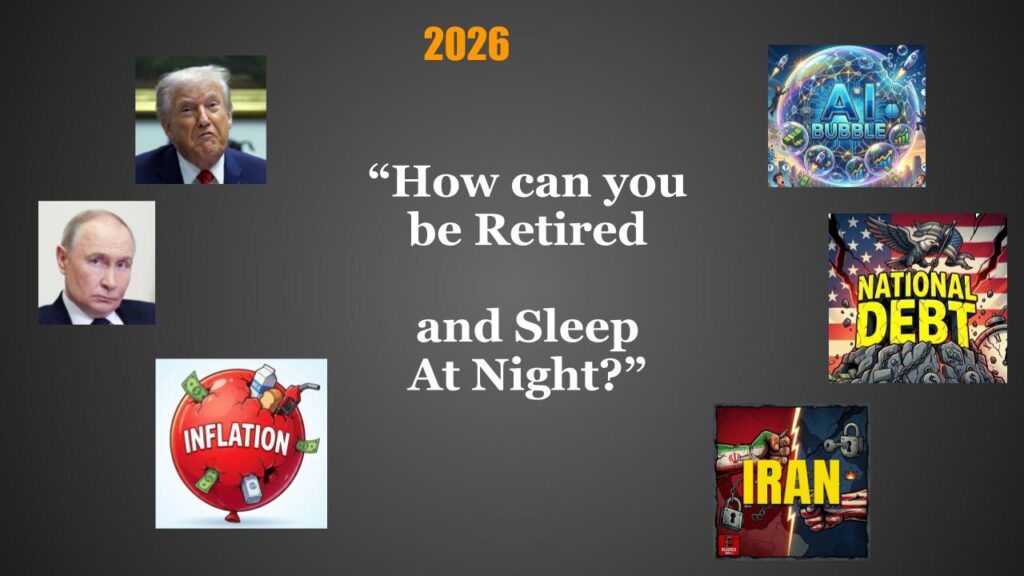
Achieving two decades of retirement brings a comfortable familiarity with market volatility, yet questions from concerned peers often reveal persistent underlying anxieties. Friends observing the global stage frequently ask how anyone can remain retired and sleep soundly given the state of the world, citing a continuous stream of alarming headlines.

A comprehensive list of modern concerns sounds remarkably heavy: volatile geopolitical leaders menacing the global stage, inflation eroding purchasing power, the looming AI bubble, towering national debt levels, and simmering international conflicts threatening wider destruction. Yet, when historical context is introduced, these anxieties reveal a striking pattern. Similar questions asked during the year 2006 focused on entirely different, though emotionally identical, crises.
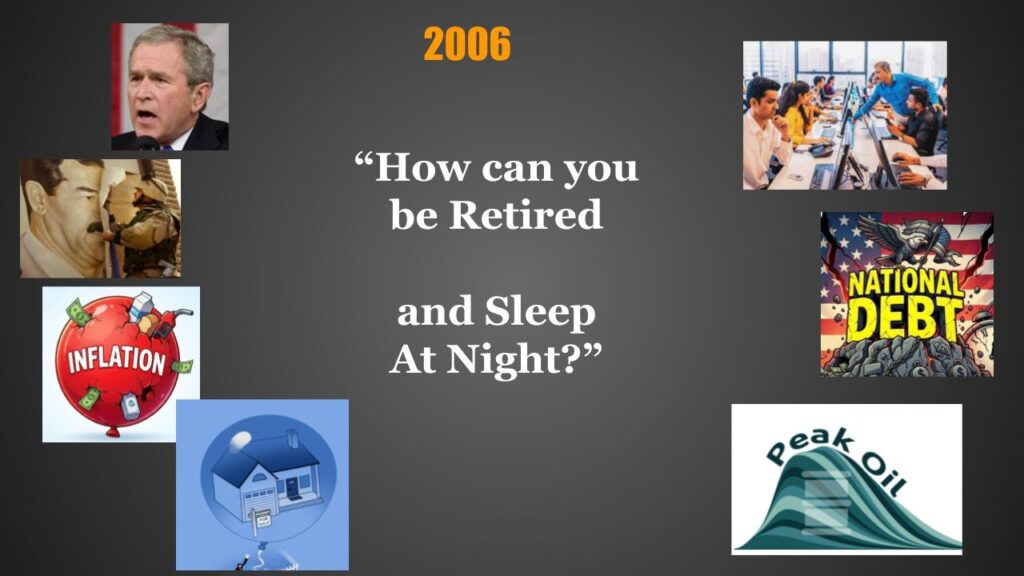
Two decades ago, the world worried about provocative geopolitical leaders, ongoing conflicts in the Middle East, surging national debt, and rising inflation. Back then, overvalued asset prices drove anxieties centered around the housing bubble rather than an artificial intelligence bubble. Instead of artificial intelligence threatening white-collar employment, the dominant fear was outsourcing jobs overseas to India and China. Major debates raged over peak oil, with forecasts warning that a depleting fossil fuel supply would inevitably doom global civilization—an outcome that ultimately reversed as technological advancements unlocked new energy paradigms.

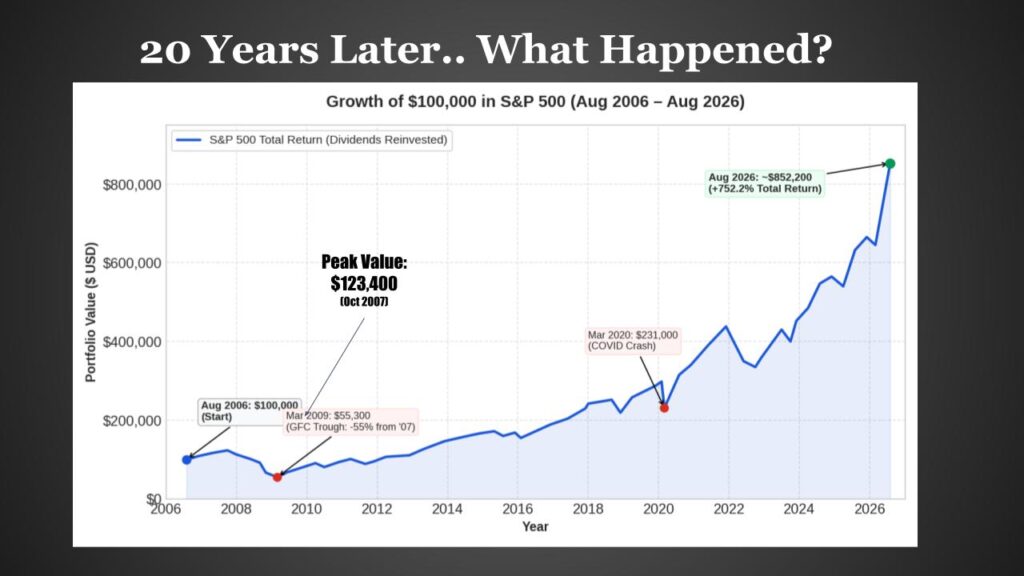
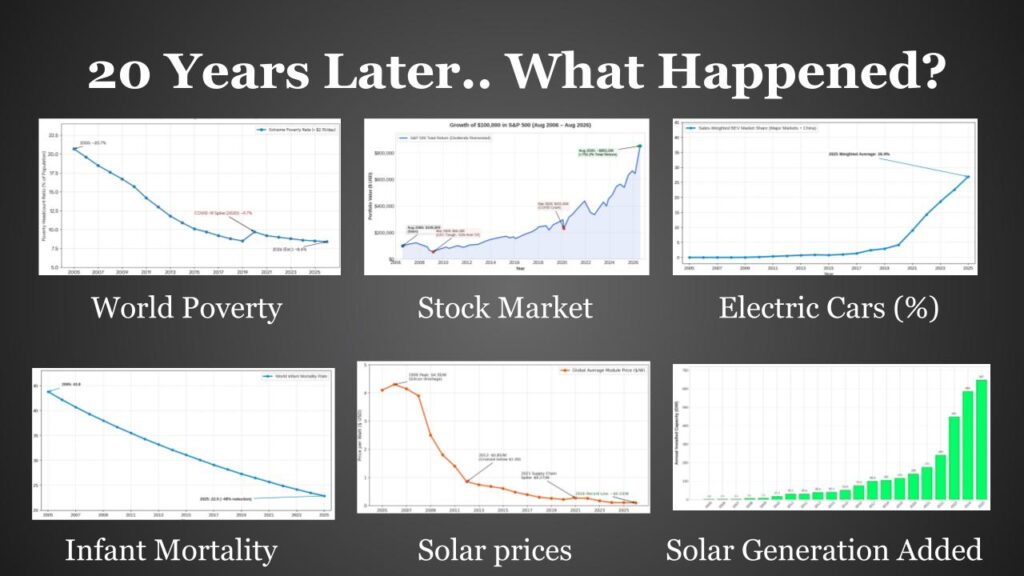
Despite the heavy gloom of 2006, the subsequent two decades witnessed monumental economic and social shifts. While the Great Financial Crisis did arrive, triggered by irrational exuberance over rising home prices and excessive financial leverage, its long-term impact on diversified portfolios appears measured in the rear-view mirror. A long-term stock investment weathered not only the deepest economic downturn since the Great Depression but also the localized market shock of the 2020 pandemic, continuing a broader historical upward trajectory.
Simultaneously, global living standards improved dramatically across multiple metrics. The proportion of the human population living in extreme poverty dropped from 20% in 2005 to roughly 8% over the following twenty years. Global infant mortality rates were cut in half. Clean energy infrastructure experienced a revolution as solar panels plummeted in cost, allowing solar power generation to expand rapidly and replace the equivalent of hundreds of nuclear power plants in peak capacity additions. Meanwhile, sales of pure electric vehicles scaled from near-zero to represent a substantial share of global automotive sales.
Prosperity Stems From Productivity, Not Market Sentiments
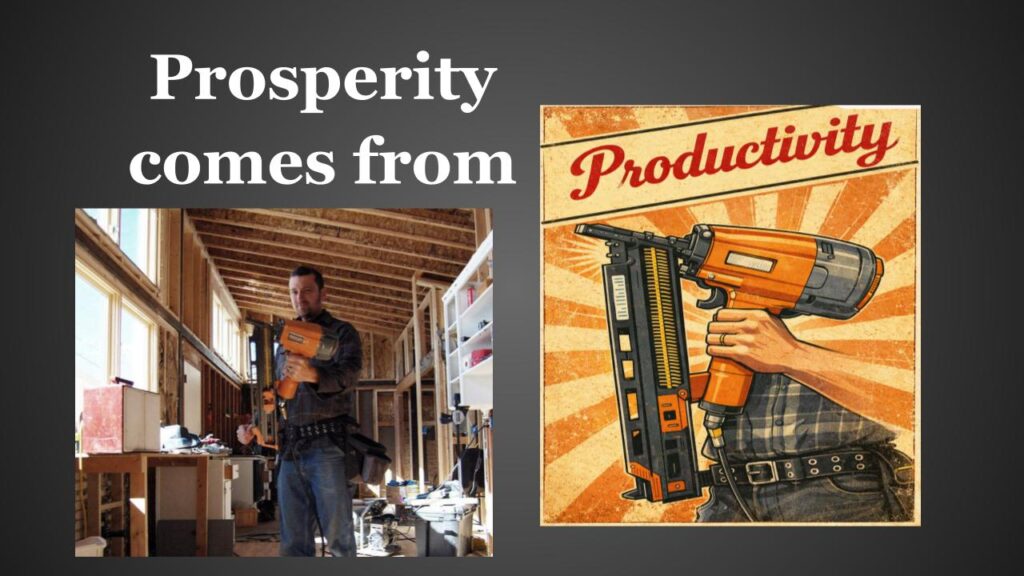
The recurring cycle of panic and recovery highlights a fundamental economic truth that financial media often overlooks: true societal prosperity does not originate from the financial system or the stock market, which ultimately represent numerical abstractions tracked on computers. Prosperity is fundamentally driven by productivity.
Capitalism is inherently choppy, prone to wild swings driven by sentiment and speculation. Beneath the surface turbulence, however, real people perform tangible work, solve practical problems, and develop genuine inventions. The concept of an economy is simply another human construct. When financial systems experience severe corrections because market participants dislike prevailing numbers, society routinely resets the metrics and resumes productive labor, a mechanism that successfully restored stability following the 2008 financial crisis and numerous historical precedents prior.
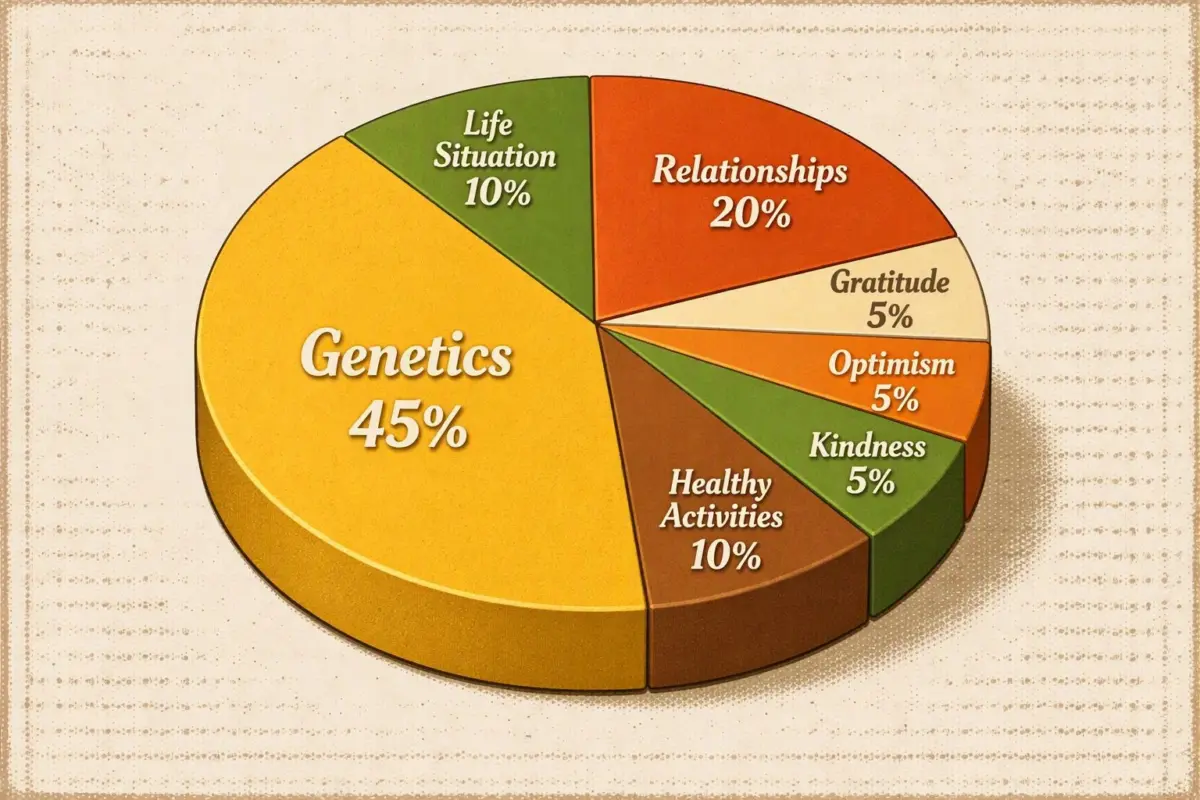
Humanity retains every productivity-enhancing tool ever invented. Standard of living, economic growth, and the viability of early retirement are directly tethered to sustained increases in productivity rather than temporary fluctuations in asset valuations. Furthermore, once societies achieve a robust baseline standard of living, human happiness ceases to scale linearly with financial wealth alone. First-world nations surpassed minimum material requirements decades ago, shifting the focus of individual well-being toward non-monetary factors such as close personal relationships, community engagement, daily gratitude, and active outdoor lifestyles.
Confronting the Evolutionary Mechanics of Fear
Despite historical evidence demonstrating long-term resilience, background anxiety remains a persistent companion for many individuals. Anthropologically, human beings function largely as danger-detection machines, an evolutionary trait designed to protect early humans from immediate threats. However, this detection machinery struggles to deactivate when actual physical dangers recede, leading modern minds to continuously move the goalposts of worry.
Once immediate concerns regarding food scarcity, physical safety, and social belonging are resolved, anxiety frequently shifts toward financial optimization, tax strategies, and portfolio longevity. Retirees even fret over regulatory mechanisms like Required Minimum Distributions, worrying about government rules that mandate spending accumulated wealth.
Overcoming this pervasive background dread requires conscious self-awareness and an understanding of personal and familial history. Scarcity mentalities often trace back to childhood experiences or generational trauma handed down from forebears who survived historical hardships like the Great Depression. Recognizing that these fears are historical echoes rather than objective assessments of the present moment allows individuals to rationally dismantle them.
Taking deliberate action serves as an effective antidote to fear, transforming the unfamiliar into the manageable and building personal resilience. Tuning out sensationalized daily news cycles and redirecting focus toward constructive behaviors—such as physical movement, outdoor activity, continuous learning, and engagement with optimistic communities—helps realign modern daily routines with human evolutionary biology. Embracing a mindset where every new life phase or economic shift is treated as an experiment rather than a catastrophe replaces paralysis with curiosity.
Artificial Intelligence Viewed Through the Lens of Experimentation
This experimental framework applies directly to the contemporary rise of artificial intelligence, a technological shift that currently dominates financial anxieties. Rather than succumbing to doom-scrolling and ominous media coverage, understanding the mechanics behind AI reveals its potential as a powerful catalyst for efficiency.
Artificial intelligence functions essentially as a cognitive tool designed to amplify human capability. Much like physical tools that revolutionized manual labor, AI promises to boost efficiency, drive productivity, and ultimately foster broader economic prosperity by lowering the cost of complex cognitive tasks. Naturally, technological revolutions also displace existing job roles, disrupting entry-level office functions in software and finance while foreshadowing changes in transportation and logistics. Historically, however, such transitions coincide with the creation of entirely new industries and services, echoing the transformative waves unleashed by the internet and mobile computing.
While technological rewards tend to concentrate among capital owners and shareholders, individual market participants retain the agency to navigate these shifts through informed choices. Artificial intelligence represents another major variable in the ongoing economic experiment, offering an opportunity for active adaptation rather than passive apprehension. By addressing the root causes of fear and maintaining a focus on productivity, human resilience, and meaningful living, individuals can navigate market bubbles and technological revolutions with clarity and confidence.