
The stock market has a persistent habit of surprising observers. As years pass, major market indices continue to defy expectations, oscillating between painful corrections and record-breaking valuations. While severe market downturns understandably trigger anxiety among retirees and investors watching their nest eggs shrink, hitting all-time highs brings a different brand of worry. Sky-high valuations often invite predictions of an impending, catastrophic crash, particularly when the current economic boom is fueled by the frenzied momentum of the artificial intelligence sector.
For those fortunate enough to remain blissfully detached from daily financial drama, market volatility is barely a footnote. However, the broader economic narrative surrounding artificial intelligence rests on a familiar three-part dynamic: rapid technological breakthroughs, massive capital expenditure by major technology conglomerates, and soaring stock market valuations that price in immense future growth.

This dynamic has left many investors wondering where the breaking point lies. The prevailing anxiety is that while artificial intelligence is unquestionably a monumental technological invention, the speculative mania surrounding it is moving too fast and scaling too high. Many fear the market is setting the stage for an amplified replay of the dot-com crash of the early 2000s—an era that serendipitously launched early retirement paths for some professionals, even as the subsequent downturn nearly derailed careers and immigration statuses.
Long-running financial commentators and early retirement advocates frequently field inquiries regarding this current investment cycle, mirroring the questions asked during previous economic booms and busts. To address these systemic anxieties publicly, financial educators have taken the conversation directly to the stage, delivering presentations at gatherings such as Camp FI Midwest and the broader financial independence community.

Will the AI Bubble Ruin Our Retirement?
Reaching milestones like two decades of retirement brings a comfortable equilibrium, yet fundamental questions from peers still manage to challenge conventional wisdom. A recurring question often posed by anxious observers is how anyone can remain retired and sleep soundly at night given the state of the world, asking whether ongoing global uncertainties are cause for alarm.
For news-watchers inclined toward worry, the list of immediate threats is never-ending. Headlines routinely highlight controversial political leaders menacing the geopolitical landscape, persistent inflation eroding purchasing power, the looming artificial intelligence bubble, soaring national debt, and bubbling military conflicts in the Middle East and Eastern Europe that threaten wider escalation.

Yet, a historical perspective reveals that these worries are merely updated versions of anxieties from decades past. Reflecting on the economic climate of 2006, the worries of the day felt equally existential. Back then, political instability in the Middle East dominated the news, alongside anxieties regarding national debt, inflation, and an overvalued housing market that ultimately catalyzed the Great Financial Crisis. Instead of artificial intelligence threatening white-collar employment, the prevailing fear was job outsourcing to emerging markets like India and China. Global debates also centered on peak oil and the alarming prospect that fossil fuel consumption would inevitably outstrip dwindling supplies—a fear upended by subsequent technological advancements in energy production.
Despite the profound anxieties of 2006, the subsequent two decades witnessed staggering economic growth. The ensuing Great Financial Crisis, driven by housing market exuberance and excessive financial leverage, delivered the deepest market crash since the Great Depression. Yet, viewed through a long-term lens, even that unprecedented financial trauma appears as a temporary dip in a monumental upward trajectory. Historical stock market data demonstrates that diversified long-term investments withstood the crisis, outpaced subsequent shocks like the 2020 pandemic crash, and generated substantial long-term wealth.

Global socioeconomic conditions experienced similar structural improvements. Over a twenty-year span, the global proportion of people living in extreme poverty dropped dramatically, and global infant mortality rates were cut in half. Clean energy transitioned from a niche concept to a dominant economic force as solar technology costs plummeted, making solar generation a primary source of new electrical capacity worldwide. Meanwhile, electric vehicle adoption surged from negligible levels to capture a significant share of global automotive sales.
Examining these historical parallels raises a fundamental question: whether current fears regarding soaring national debt, an overextended AI market, or existential technological disruption represent a genuinely unprecedented threat, or simply the latest iteration of cyclical human anxiety.

Financial media platforms thrive on cautionary tales, but financial doomsayers frequently overlook a foundational economic principle: true economic prosperity stems from productivity, not the ephemeral numbers displayed on financial system computer screens.
Prosperity, Productivity, and Human Happiness
The underlying mechanics of capitalism are inherently volatile, characterized by cyclical booms and sharp corrections. Beneath these surface-level financial fluctuations, however, real people perform tangible work and develop genuine technological innovations.

The concept of an economic system is itself a human construct. If financial architectures falter due to systemic valuation imbalances, historical precedent demonstrates that societies adapt, recalibrate metrics, and continue productive output. Standard of living, economic growth, and the feasibility of financial independence are inextricably linked to productivity enhancements rather than speculative asset pricing.
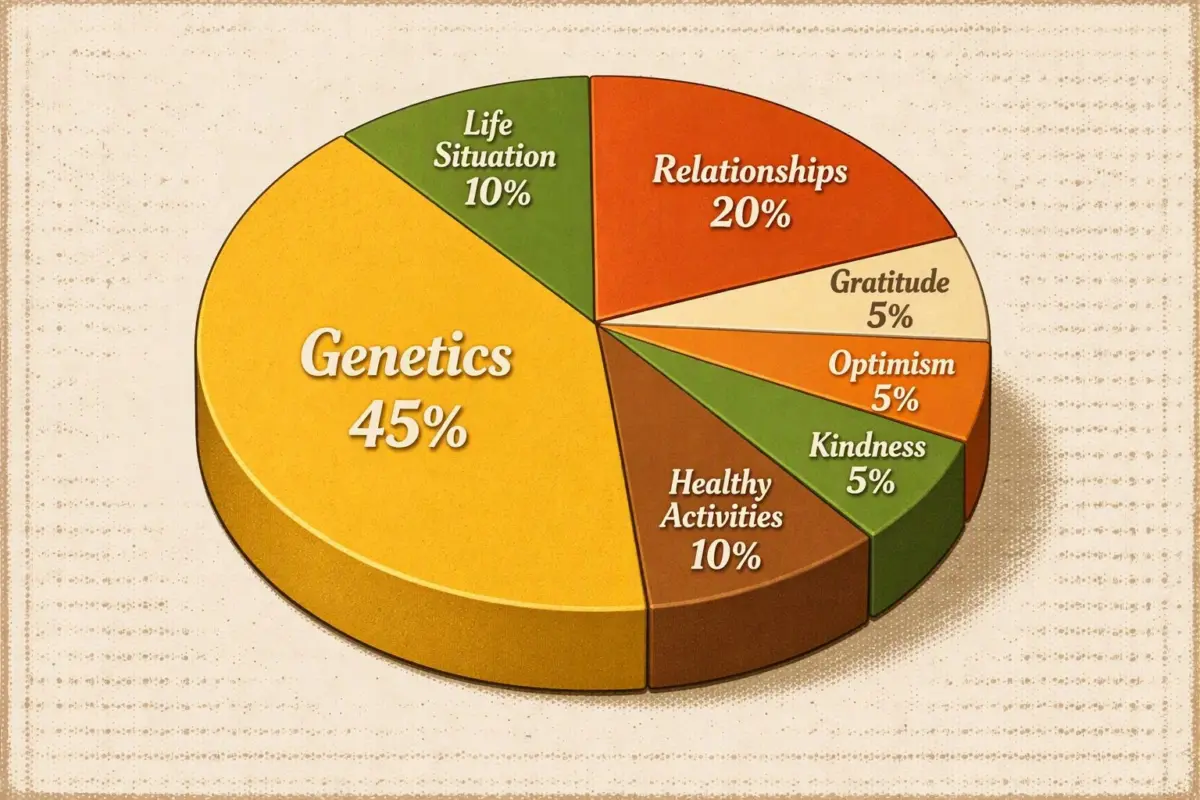
Beyond material prosperity, human psychological well-being ultimately plateaus after basic living standards are satisfied. Developed nations surpassed these minimum physiological requirements decades ago, prompting individuals to seek fulfillment through non-monetary channels. Wealth represents merely one component of an individual’s broader life circumstances, functioning as a smaller subset within a comprehensive pie of human happiness.

While psychological research suggests foundational traits like genetics heavily influence baseline disposition, controllable lifestyle choices remain powerful determinants of well-being. Cultivating strong personal relationships, practicing gratitude, maintaining an optimistic outlook, and engaging in regular outdoor physical activity consistently rank among the most effective drivers of life satisfaction.
Despite widespread awareness of these principles, background anxiety persists among savers and retirees alike. This persistent unease is deeply rooted in human evolutionary biology.

Confronting the Roots of Fear
Human beings evolved as sophisticated threat-detection machinery. This pervasive background vigilance served an essential protective function in ancestral environments. However, a quirk of this evolutionary adaptation is that when immediate physical dangers are mitigated, the human brain continues scanning the horizon for novel threats, effectively shifting the goalposts of anxiety.
Once scarcity, predation, and disease are managed through modern societal structures, anxiety migrates toward secondary concerns, such as social acceptance, economic competition, and portfolio management. In advanced stages of financial security, anxieties can devolve into hyper-specific worries regarding tax efficiency, legacy wealth transfer, or government-mandated retirement account distributions.

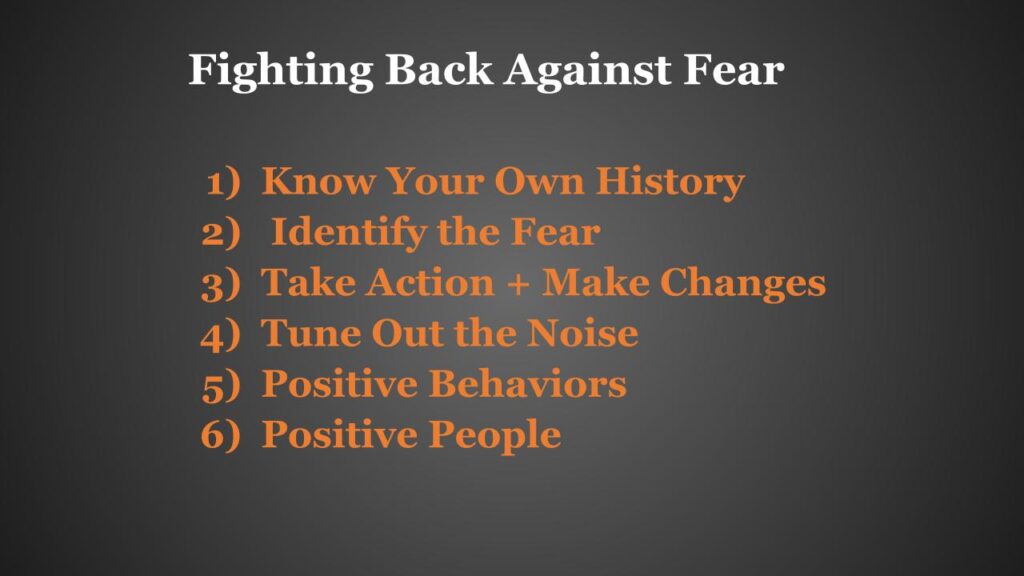
Combating this irrational fear requires self-awareness and an understanding of personal history. Anxieties surrounding financial scarcity often trace back to childhood environments or generational trauma inherited from ancestors who lived through severe economic depressions. Identifying the specific roots of an anxiety-driven narrative allows individuals to confront worst-case scenarios rationally rather than reacting impulsively to present-day uncertainties.
Taking deliberate action is widely recognized as a primary antidote to fear. Direct engagement transforms the unfamiliar into the manageable, fostering resilience and adaptability. When individuals cultivate broad mental, physical, and emotional capabilities, external economic volatility loses its capacity to paralyze decision-making.

Filtering out the relentless stream of sensationalized daily news is another crucial step in reclaiming mental well-being. Modern news media relies on curated, fear-inducing narratives designed to capture attention. Redirecting energy toward constructive personal behaviors, physical health, and problem-solving yields tangible improvements in quality of life. Surrounding oneself with optimistic, productive peers further reinforces a balanced mental outlook.
The AI Era as a Technological Experiment
Approaching new technological frontiers with an experimental mindset reframes potential disruption from a source of dread into an object of fascination. The current surge in artificial intelligence is best understood as a sweeping technological experiment rather than an existential crisis.
Rather than succumbing to doom-scrolling, examining the core utility of artificial intelligence reveals its potential upside. Advanced AI models function essentially as high-powered cognitive tools, capable of amplifying human efficiency and productivity in ways comparable to historical innovations like the combustion engine, the personal computer, and the internet.
While productivity-enhancing technologies invariably displace specific labor categories—disrupting entry-level roles in administration, software development, and transportation—they simultaneously reduce consumer costs and stimulate entirely new industrial ecosystems. Concurrently, these shifts tend to concentrate financial rewards among technology owners and equity holders, highlighting the importance of broad participation in capital markets.

Ultimately, artificial intelligence represents another variable in a long line of historical innovations, presenting clear choices for how individuals adapt. By addressing the root causes of fear and embracing continuous learning, society can navigate technological transitions with resilience, proving once again that meaningful progress lies just beyond the horizon of uncertainty.