
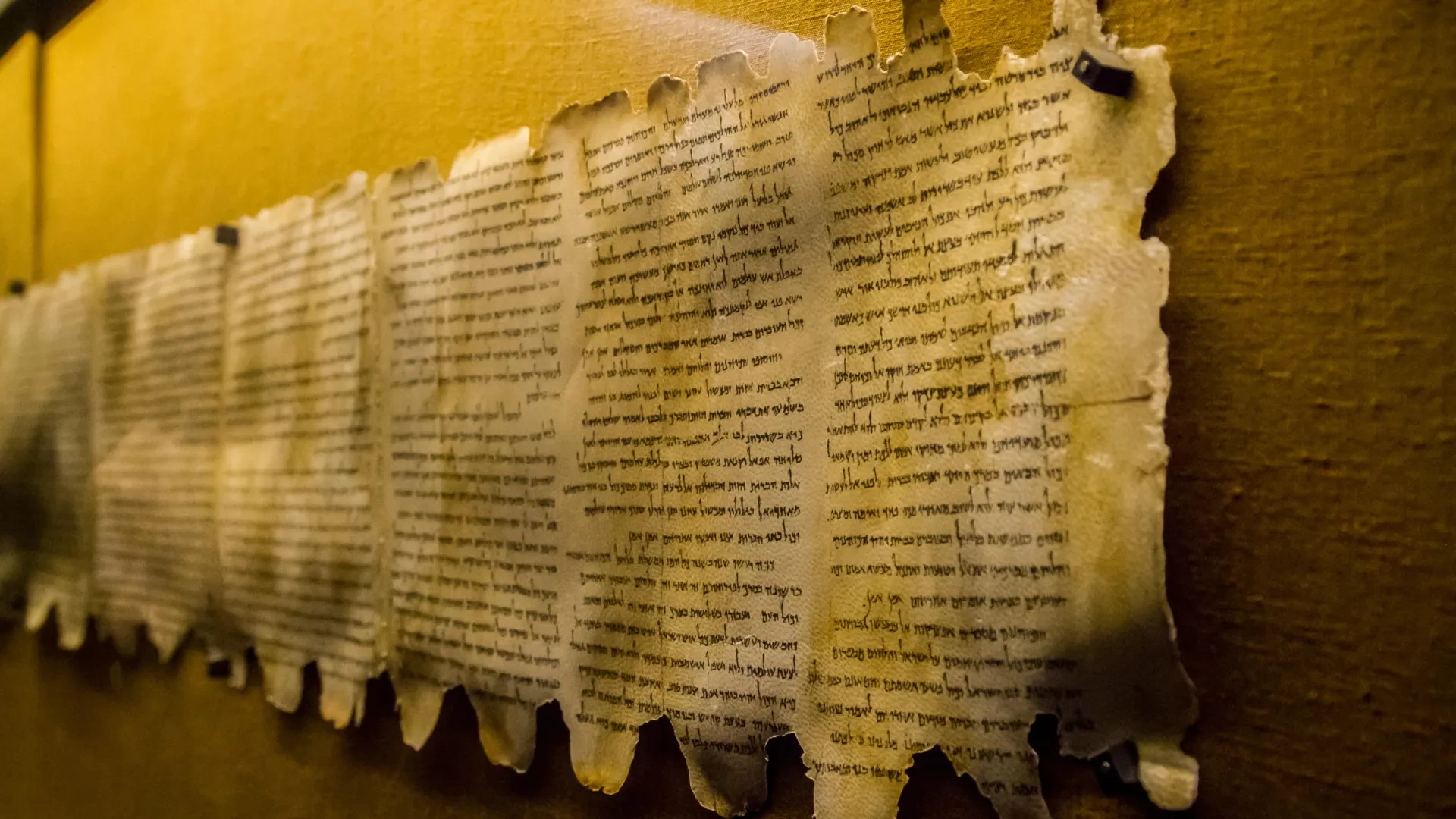
A longstanding and perplexing mystery surrounding the Dead Sea Scrolls may finally have a definitive explanation. For decades, academic researchers have fiercely debated whether the enigmatic Qumran sect actually practiced its unusual 364-day calendar in everyday life, or whether the complex mathematical system existed purely as a religious, theoretical, and eschatological ideal far removed from practical agricultural and societal routines.
A comprehensive new study conducted at Tel Aviv University suggests that both traditional academic viewpoints may actually be partly correct. According to the newly proposed historical reconstruction, members of the Qumran community likely utilized the 364-day calendar during the early history of their movement. During this formative era, bitter disagreements over sacred dates, religious authority, and the proper calculation of holy festivals directly contributed to the sect’s ideological and physical separation from the established religious hierarchy in Jerusalem. Later in the community’s history, however, the system may have been quietly abandoned. This shift was allegedly driven by a combination of fundamental astronomical problems—specifically, the inevitable drift between a static year and the solar cycle—and evolving political relations with the ruling Hasmonean leadership, particularly during the reign of Alexander Jannaeus.
The groundbreaking research was spearheaded by Prof. Eshbal Ratzon, a scholar affiliated with the Department of Jewish Philosophy and the Cohn Institute for the History and Philosophy of Science and Ideas at the Entin Faculty of Humanities. The findings of her extensive investigation were officially published in the Tarbiz Quarterly for Jewish Studies, a respected academic journal dedicated to Jewish history and culture.
A Calendar Built Around 52 Perfect Weeks
To fully understand the weight of the academic debate, one must examine how sharply the Qumran calendar diverged from the lunisolar calendar that shaped mainstream Jewish religious life during the turbulent Second Temple period.
Unlike the official calendar used in Jerusalem—which relied on the phases of the moon and required periodic adjustments to keep pace with the solar year—the Qumran system was entirely solar-based and meticulously symmetrical. Its year contained an exact total of 364 days. Because 364 can be divided evenly by the number seven, the entire system produced precisely 52 complete weeks every single year. A profound byproduct of this mathematical structure was that every single religious festival, Sabbath, and holy day always occurred on the exact same day of the week, year after year, without exception.
For the devoted members of the Qumran sect, this orderly, predictable structure was far more than a mere mathematical convenience or an administrative preference. Instead, they regarded it as a direct reflection of a perfect divine system established by the Creator.
Furthermore, the calendar carried immense political and religious significance within the landscape of ancient Judea. The religious authorities operating at the central Temple in Jerusalem determined important calendar dates using their own prevailing system, but the Qumran sect fiercely rejected the notion that human leaders possessed the legitimate authority to alter sacred times. Members of the community strongly believed that the precise dates of holy days had already been permanently established by God during the Creation of the world and therefore must never be tampered with or modified by mortals.
The Hidden Problem With 364 Days
Yet, the very feature that made the Qumran calendar so aesthetically and religiously elegant also created a serious, unavoidable practical problem for anyone attempting to live by it.
A calendar year consisting of exactly 364 days is roughly one day and a quarter shorter than the actual astronomical solar year, which lasts approximately 365 and a quarter days. While this discrepancy might seem small and negligible at first glance, it accumulates steadily and significantly over the course of time.
If a community were to follow a rigid 364-day system for twenty consecutive years without making any intercalary corrections, its religious festivals would drift backward by almost four weeks relative to the natural seasons. After several decades of uncorrected drift, a sacred festival traditionally associated with the spring harvest would eventually fall during the cold months of winter or even deep into autumn.
Such a calendar drift would have proved exceptionally disastrous for an ancient society whose religious festivals and obligations were deeply and intrinsically connected with agriculture, seasonal harvests, the offering of first fruits, and the natural cyclical rhythms of the earth.
The underlying mathematical dilemma can be easily compared to a mechanical clock that loses a minute every single day. The error is barely noticeable during the first few days, but after enough time has passed, the hands on the clock completely cease to reflect the actual time of day.
Prof. Ratzon’s study suggests that something strikingly similar happened with the calendar of the Qumran sect. Although the system was conceptually brilliant and mathematically harmonious, it gradually drifted further and further away from the natural seasonal cycle that it was originally designed to organize and celebrate.
Was the Calendar Ever Really Used?
Over the years, modern scholars have offered several diverse explanations to resolve this historical puzzle.
Some researchers have proposed that the Qumran community must have periodically inserted additional days or weeks into their system, functioning much like modern leap years, to keep their calendar aligned with the shifting seasons. Conversely, other prominent scholars have argued that the 364-day system was never intended for everyday agricultural or civil use in the first place, functioning instead merely as an idealized, esoteric religious framework cherished by scribes and scholars.
Prof. Ratzon argues, however, that the physical evidence preserved within the Dead Sea Scrolls does not clearly support either of these polarized explanations in their entirety.
Instead, she points to compelling internal evidence suggesting that the calendar was of paramount importance to the everyday religious identity of the sect and formed a major, operational part of its founding schism with the religious authorities in Jerusalem.
The sheer volume of textual evidence discovered in the Judean Desert highlights this obsession. Nearly twenty distinct scrolls discovered at Qumran address calendars, timekeeping, and astronomy—an unusually large concentration of documents that indicates just how vital these subjects were to the daily life and intellectual pursuits of the community.
Furthermore, the Book of Jubilees, one of the most important and widely preserved works found within the Qumran library, launches fierce criticisms against the prevailing lunar calendar used by the wider Jewish world. The text proudly presents the 364-day system not as a human invention, but as the original, authentic calendar revealed by God to Moses on Mount Sinai.
A Calendar at the Center of a Religious Conflict
Drawing directly upon this rich body of textual evidence, Prof. Ratzon proposes a fresh and compelling historical scenario to explain the rise and fall of the system.
She argues that the Qumran sect actively and literally followed the 364-day calendar during the formative period of their movement in the second century BCE. During this volatile era, the bitter dispute over how sacred time should be measured likely intensified the sect’s ongoing conflict with the dominant religious leaders in Jerusalem, ultimately contributing to the community’s self-imposed isolation in the desert.
However, as the decades passed and generations aged, the growing mismatch between their static calendar and the actual turning of the seasons would have become increasingly difficult to ignore or manage practically.
Simultaneously, broader political circumstances in Judea shifted dramatically.
Relations between the Qumran sect and the ruling Hasmonean dynasty notably improved during the reign of Alexander Jannaeus. Historical analysis indicates that he supported a legal interpretation—or halacha—similar to that embraced by the sect, while fiercely opposing the rival Pharisaic leadership that dominated other segments of society.
According to the new study, this changing political and religious environment may have made it significantly easier for the sect to abandon its previously rigid, uncompromising position regarding the calendar and instead adopt the more practical, lunisolar system utilized at the Temple in Jerusalem.
Importantly, abandoning the calendar for daily use did not mean it vanished entirely from the sect’s collective consciousness. The group’s original calendar did not disappear from their religious philosophy; rather, it survived as an idealized system that members believed was valid during the primordial Creation of the world and was destined to return once again in the End of Days.
A Possible Solution to a Dead Sea Scrolls Mystery
This nuanced historical interpretation effectively explains why the 364-day calendar occupies such a prominent, visible place in the Qumran writings, even though archaeological and historical indicators suggest it eventually vanished from practical, everyday use.
Summarizing the implications of her research, Prof. Ratzon concluded that the Qumran calendar has long been regarded as one of the community’s defining features, yet remained one of the most baffling mysteries of the entire Dead Sea Scroll collection. Her study offers a viable alternative to bridge the apparent contradiction between a functional calendar and a purely theoretical one, suggesting that the system was indeed put into practice for a specific historical period before losing its utility and transforming into a cherished religious ideal and ultimate symbol of community identity.