
Nearly one in four residential properties resold across the Greater Toronto Area (GTA) over the past year changed hands for less than their previous purchase price, according to comprehensive new research from real estate brokerage and data analytics platform Valery Real Estate. The findings underscore the mounting financial losses and pressures that a significant segment of homeowners are currently facing in the region’s softened and highly volatile housing market.
The losses were found to be particularly severe among properties that were acquired during the height of the pandemic-era housing boom. The vast majority of GTA homes that were purchased during the peak market years of 2021 or 2022 and subsequently resold during the study period fetched less than what their original owners paid for them.
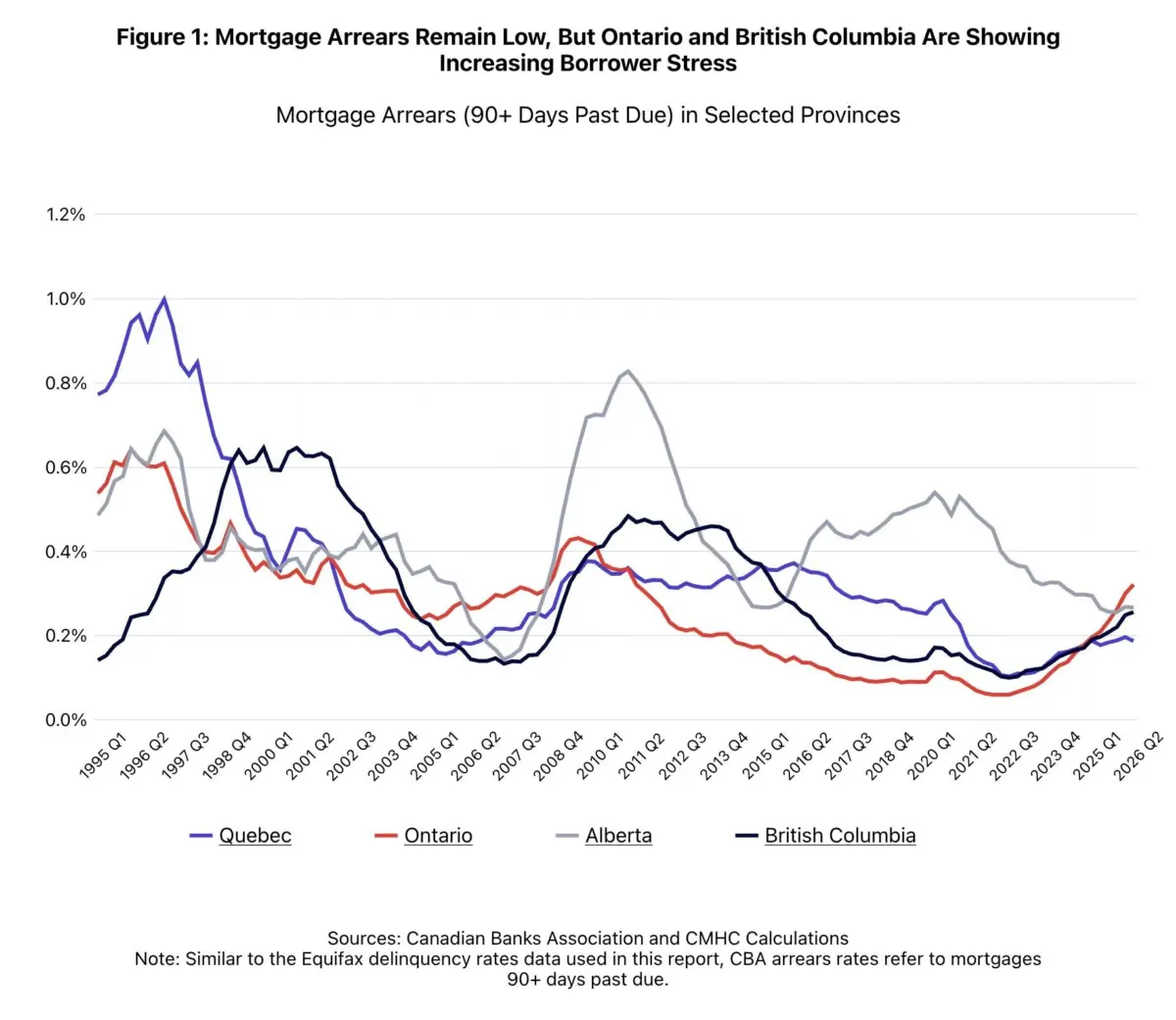
These sobering findings arrive simultaneously with a warning from the Canada Mortgage and Housing Corporation (CMHC), which projects that mortgage arrears in Ontario will continue to climb steadily through the middle of 2027. This convergence of declining resale values and rising arrears adds to broader concerns regarding the financial health and stability of households across the province.
One in Four GTA Resales Below Previous Purchase Price
Valery’s extensive analysis examined 27,271 GTA residential resales that occurred over a twelve-month study window. The data revealed that 24.8 per cent of these transactions closed below the property’s previous purchase price, yielding a median nominal loss of 11 per cent among those specific deals. When additional transaction-related expenditures—such as land transfer taxes and brokerage selling costs—are factored into the equation, the proportion of transactions resulting in a financial loss climbs sharply to 32 per cent.
Within the City of Toronto proper, the downward pressure on prices was even more pronounced. Out of 10,133 resales analyzed within municipal boundaries, 28 per cent sold for less than their prior purchase price. That figure increases to 38 per cent once transaction costs are accounted for.
A stark divergence in performance also emerged between different housing types. Condominiums bore the brunt of the market correction, with 38 per cent of condo resales changing hands below their previous purchase price. In contrast, only 20 per cent of detached single-family homes experienced a similar fate during the same timeframe.
Pandemic-Era Buyers Particularly Hard Hit
The most striking revelation of the Valery Real Estate study concerns properties that entered the market during the unprecedented price surge of the pandemic era.
Of all GTA homes purchased during 2021 or 2022 and resold during the study period, a staggering 80 per cent sold below their original acquisition cost. When transaction costs are included, that proportion escalates to 92 per cent. Condominiums purchased during those same two turbulent years fared even worse upon resale, with 87 per cent changing hands at a nominal loss.
These insights are derived from Valery’s deep-dive examination of Toronto Regional Real Estate Board (TRREB) Multiple Listing Service (MLS) data. The dataset specifically covers sales that closed between October 25, 2025, and October 24, 2026. To ensure accuracy, researchers matched each resold property directly to its previous transaction history, while carefully filtering out teardowns, major rebuilds, and administrative data entry errors. Analysts emphasize that the figures are nominal—meaning they are not adjusted for general inflation—and strictly reflect properties that underwent a resale transaction rather than representing the entire universe of GTA homeowners.
Are Sellers Under Financial Pressure?
Despite the clear prevalence of nominal losses, quantifying precisely how many local homeowners are being forced into distress sales remains a complex challenge for market observers.
Daniel Foch, chief real estate officer with Valery Real Estate, notes that listings explicitly signaling overt financial distress represent a relatively small fraction of the broader market. Properties advertised under power-of-sale proceedings, listings marketed with "as is, where is" conditions, or those explicitly identifying highly motivated sellers account for less than 1.5 per cent of active listings.
However, Foch contends that the very act of selling a home below its original purchase price can serve as a reliable indicator of underlying financial pressure, even if the listing does not explicitly advertise distress.
"To me, selling at a loss is a position of distress," Foch says, pointing out that homeowners rarely choose to part with an asset for less than they paid unless circumstances compel them to do so.
Mortgage Arrears Expected to Rise Through 2027
The empirical evidence of sliding resale values aligns closely with macroeconomic forecasts from federal housing authorities. The CMHC reported that Ontario’s residential mortgage arrears rate reached 0.32 per cent in the second quarter of 2026, and the crown corporation projects that further increases will materialize steadily through mid-2027.
According to the federal housing agency, Ontario is anticipated to experience the largest and most sustained increase in mortgage delinquencies nationwide. This upward pressure is expected to be particularly acute within the Greater Toronto and Hamilton Area, as well as across Southwestern Ontario. Regional economic headwinds, including ongoing trade tensions, broader labor-market uncertainty, and persistently softer housing market conditions, are compounding the financial strain on local borrowers.
Financial Pressure Could Persist for Another Two Years
Looking ahead, Foch anticipates that loss-making resales will remain a defining characteristic of the GTA real estate landscape for approximately another two years. He bases this projection on delinquency and default patterns observed across other categories of consumer credit.
"We probably still have two years of this continuing," Foch explains, noting that financial distress typically takes time to ripple entirely through a household’s broader financial architecture. He observes that missed payments on unsecured credit cards or automobile loans frequently precede formal mortgage delinquency, acting as an early warning indicator for the housing market.
While Foch does not necessarily expect the absolute volume of loss-making sales to accelerate indefinitely, he believes they will consistently command a noticeable share of market supply for the foreseeable future.
"We’ll keep seeing sellers who need to square up their financial position in some way that includes taking an equity loss on their home. That’ll continue being a portion of supply," he notes.
Rate Hike Adds Another Consideration
The broader macroeconomic environment continues to present hurdles for property owners. The Bank of Canada’s policy rate increase of 25 basis points introduced an additional layer of budgetary challenge for mortgage holders, particularly those navigating variable-rate financing structures.
Foch points out, however, that variable-rate mortgages have generally remained more economical than comparable five-year fixed-rate products, meaning the recent rate adjustment does not automatically place variable-rate borrowers in a worse position than they would have been under a fixed term.
For homeowners who bought near the cyclical market peak and are now opting to sell at a loss, the individual outcomes and motivations vary widely. Foch explains that some of these sellers are real estate investors who are absorbing financial losses on unsuccessful investments, while others are owner-occupiers actively restructuring their household finances and housing expenditures.
"They might rent instead or downsize into a smaller home to own that maybe better fits their monthly budget," he says.
Despite the localized economic and housing pressures intensifying in Ontario, the CMHC emphasizes that systemic mortgage stress is far from uniform across the rest of Canada. Mortgage arrears have actually declined in provinces such as Alberta and Saskatchewan, while British Columbia and Atlantic Canada are projected to see only moderate, manageable increases in delinquency rates.
"Canada is not facing a broad mortgage crisis," states Aled ab Iorwerth, CMHC’s deputy chief economist. "Financial pressure is becoming more concentrated in specific regions of the country and is appearing first in other debts, before mortgages."