
Even as unseasonably warm autumn weather persists across many regions, seasonal culinary cravings remain entirely unchanged. The deep-seated desire for carbohydrate-heavy comfort foods, sweet caramelized onions, and earthy, savory skillets of vegetables continues to drive home cooks toward hearty meals. Yet, navigating the thick of a demanding autumn season—fraught with household milestones, academic transitions, and professional deadlines like writing a new cookbook—leaves precious little time for elaborate kitchen endeavors.
For home cooks balancing a packed schedule, any method that yields a full meal in a single pan without forcing compromises on flavor or texture instantly earns a permanent spot in the weekly dinner rotation. A newly popularized approach to frozen pierogi achieves precisely that, turning a traditional preparation method on its head to deliver a satisfying, comforting meal in under thirty minutes using inexpensive, accessible ingredients.

The technique serves as an inverse to the conventional preparation of pierogi, which are typically boiled first and subsequently sautéed in butter or oil. Instead, this streamlined one-pan method begins with the vegetables, developing deeply savory layers through almost-caramelized onions and garlic-infused mushrooms. Once those foundational elements are built, frozen pierogi are introduced directly to the hot skillet to achieve a golden-brown crust before being steamed to tender completion with a measured splash of water.
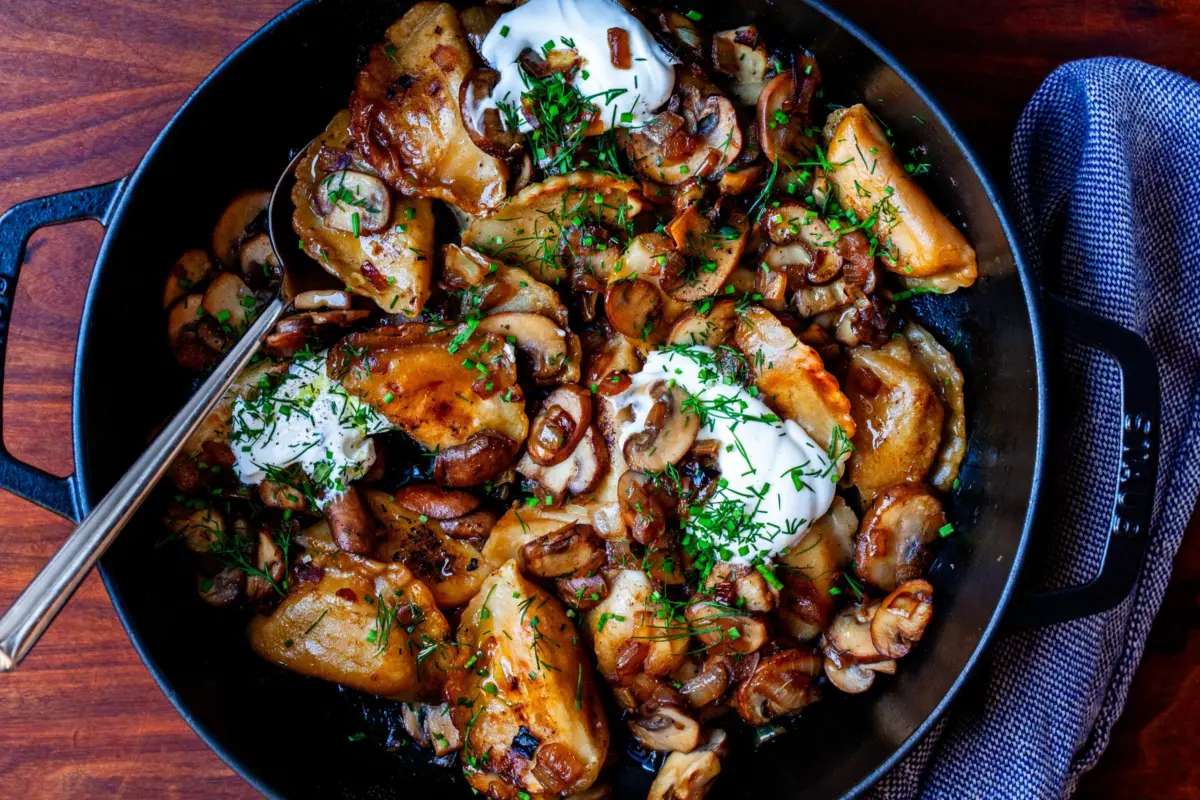
The resulting dish merges contrasting textures and flavors into a cohesive whole. Partly crispy and partly chewy dough casings encase soft, fluffy potato centers, surrounded by buttery, earthy mushrooms and punctuated by precisely balanced cold, tangy, and fresh finishes. The entire process requires only a single pan, a cutting board, a fork, and a knife, minimizing the post-meal cleanup to a fraction of what a traditional multi-vessel recipe would demand.

The culinary background behind this approach highlights a preference for smaller pierogi varieties when shopping, as they cook more rapidly and evenly within a standard skillet setup. While the recipe features widely available pierogi, food writers and home cooking advocates often note close culinary relatives like vareniki. Traditionally of Ukrainian origin, vareniki typically feature a thinner, softer dough and a slightly smaller profile, offering an alternative for those inclined to make their own potato-filled dumplings from scratch.
Skillet Pierogi with Mushrooms
Preparing the dish begins by heating a large, deep skillet, ideally equipped with a matching lid, over medium-high heat. Butter and a measured portion of olive oil are combined in the pan. Once heated, chopped onions are introduced, seasoned with salt and pepper, and cooked until softened and turning golden at the edges, a process taking approximately five minutes. Minced garlic is then added, cooking for an additional minute before mushrooms enter the skillet.

The mushrooms are seasoned with further salt and pepper and allowed to cook completely unstirred until a rich brown crust develops underneath, requiring about four to five minutes. Once browned, the mixture is stirred continuously until any liquid released by the mushrooms has fully evaporated. At this stage, the onions and mushrooms are transferred out of the pan to a plate, bowl, or cutting board to rest while the dumplings are addressed.
The second phase of cooking utilizes the same skillet with the addition of a secondary portion of oil. Frozen pierogi are arranged in a single, unbroken layer across the bottom of the pan and cooked until the undersides turn golden brown, roughly five minutes, before each piece is carefully flipped. Water is then introduced to the hot pan, an action that inevitably triggers a rapid burst of steam. The skillet is immediately covered with its lid, and the heat is reduced to a medium setting to allow the dumplings to steam through.

This steaming process typically takes between five and eight minutes. Cooks are advised to check the pan a few minutes in to ensure the liquid has not evaporated prematurely, adding a few tablespoons more water if necessary. Once a sample pierogi confirms the interior is thoroughly heated and cooked through, the core cooking phase is complete.
The final assembly brings the components back together. The reserved mushrooms and onions are returned to the skillet with the pierogi and stirred briefly to ensure everything is thoroughly rewarmed. After removing the pan from the heat source, a splash of white vinegar is drizzled directly over the contents. The dish is then finished with generous dollops of sour cream and a handful of freshly chopped herbs, such as dill and chives, before being served straight from the skillet to the table.