
Welcome back to Open Tab, a weekly column covering the news, gossip, internet culture, and major food industry stories that have lingered in our digital workspaces all week long. Last week, our attention was fixed on Italy’s looming food shortage, a complex agricultural puzzle that captured global concern. This week, however, the cultural conversation has shifted closer to home, taking in everything from local New England community fallout and high-stakes Washington D.C. politics to unprecedented corporate mega-mergers that promise to reshape how America eats, shops, and votes.
The Fall of Last Ditch: How a Mask Mandate Controversy Doomed a Greenfield Bar
The saga is finally over, though not with a triumphant resolution for its proprietors. Last Ditch, the independent bar in Greenfield, Massachusetts, that became the epicenter of a massive tornado of public scrutiny, ridicule, relentless online discourse, and extensive media coverage just a few weeks ago, has officially closed its doors. According to statements published on the business’s official social media channels, the establishment is now actively searching for new co-owners or looking to sell the bar entirely to new operators who might salvage what is left of the brand.
If your memory requires a brief refresh, the core of the controversy centered around a seemingly simple operational change: the bar decided to relax its COVID-conscious mask restrictions. Rather than uniting a post-lockdown clientele, the policy shift tore the local community completely apart, dividing patrons, neighbors, and online commentators into deeply entrenched camps.
The story quickly broke out of local circles when The Boston Globe covered the brewing drama, causing the narrative to go viral across multiple social media platforms. Yet despite—or perhaps directly because of—its newfound, highly polarizing infamy, the bar simply could not attract enough steady clientele to keep its lights on. Foot traffic dwindled as the local backlash metastasized, leaving the business financially unviable. The central question now facing the local hospitality community is whether fresh leadership and new owners can step in to resurrect the beleaguered business, or if the bar’s name has been permanently tarnished by the digital storm.
Beyond New England, the national discourse this week has also turned toward Washington, D.C., where residents are preparing to vote on a contentious upcoming ban on foie gras. The ballot measure has driven prominent local chefs into the open, with many coming out as firmly pro-foie despite intense public pushback from animal welfare advocates. Among them, celebrated chef José Andrés has argued publicly that the American industrial food system routinely mistreats many other animals on a massive scale. Andrés contends that focusing exclusively on luxury delicacies overlooks much broader, systemic issues within the nation’s food supply, such as widespread child hunger, which he believes deserve far more urgent attention from policymakers and the public alike.
Also featured in this week’s broader culinary and economic landscape are several unexpected developments: why the Cheesecake Factory suddenly found itself dominating national headlines, how salmon populations are poised to potentially decide the outcome of Alaska’s midterm elections, a historic and jaw-dropping delivery platform acquisition, and a behind-the-scenes look inside Los Angeles’s buzziest new destination, the Skywalker Grill.
"Now why am I in it?" The Cheesecake Factory, Probably
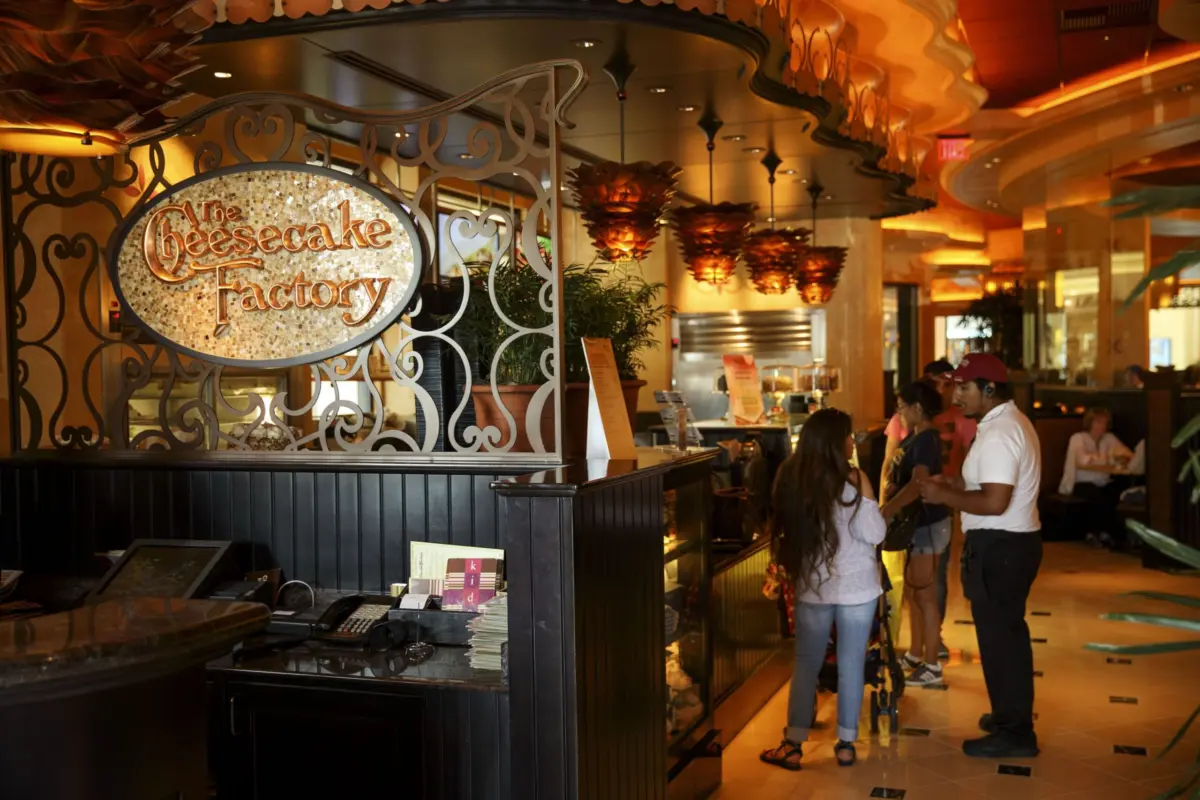
This week, the corporate name of the Cheesecake Factory was splashed across headlines in a handful of national magazines and major daily newspapers—a promotional feat that the casual dining giant hasn’t achieved with this level of intensity in recent memory, if ever.
The bizarre news cycle started over the weekend, when former President Barack Obama made an off-the-cuff joke during a political campaign rally in Ohio. Criticizing the aesthetic choices of his successor, Obama remarked that Donald Trump had "got the White House looking like Saddam Hussein opened a Cheesecake Factory. Just gold everywhere."
Trump himself lost little time responding to the jab, addressing reporters on Monday with a characteristic counterpunch. "For you to say it’s a Cheesecake Factory, that just shows why you were a lousy president," he fired back. The digital crossfire continued when the official White House account on X followed up with a series of AI-generated posts that leaned heavily into the public trolling.
Meanwhile, industry insiders were also drawn into the surreal political crossfire. Rick McCormack, the restaurant chain’s former vice president of design, weighed in on the media storm, telling reporters that he found it disheartening. "I think it’s a little bit sad that the pettiness of politics would create that sound bite, knowing all our challenges going on in the country today," he noted.
Aesthetically speaking, is the Cheesecake Factory designed to look like it was envisioned by an antiquity-obsessed decorator with an unrestricted budget and an unchecked maximalist ambition? Yes, absolutely. But that distinct visual excess is an integral part of its enduring commercial charm. Diners need a maximalist setting to comfortably match a maximalist menu that spans dozens of pages and hundreds of items.
The restaurant is deliberately engineered so that ordering an unorthodox "all day morning cocktail" alongside a gargantuan slice of Brownie Crunch Chocolate-Lot Cheesecake suddenly doesn’t feel entirely out of place. The Cheesecake Factory, as the public was reminded repeatedly this week, is a bona fide American institution. Unfortunately, so is a quips-based, sound-byte-heavy political system that can turn a casual restaurant reference into a 24-hour news cycle.
Fortunately for the corporate chain, which operates more than 200 locations nationwide, everyday consumers needn’t feel too bad about the temporary reputational bruising. The corporate C-suite is likely laughing all the way to the bank. As stock market analysts were quick to point out following the media frenzy, the Cheesecake Factory remains one of the highest-performing and hottest retail stocks on the market.
Something’s Fishy in Alaska’s Midterms
A few weeks ago, an acquaintance who grew up in Alaska mentioned rather nonchalantly that the state’s upcoming primary elections would ultimately be decided by a single factor: salmon. "It’s the only thing that matters," he stated. According to a comprehensive recent feature in The New Yorker, it appears his assessment was entirely accurate.
For generations of Alaskans, commercial and subsistence fishing has served dual purposes as both a primary livelihood and the foundational way to feed their families. The political resonance of the fish is so profound that Democratic candidate Mary Peltola famously centered her campaign around the succinct, highly resonant slogan: "Fish, Family, Freedom."
However, in recent years, the runs of king salmon and chum salmon have experienced catastrophic collapses, and local populations show little sign of natural recovery. While independent environmental scientists point broadly to warming ocean temperatures driven by climate change, local fishermen and grassroots activists direct their anger toward the industrial practice of trawling. Trawling involves dragging enormous, weighted nets across the ocean floor to harvest pollock, a process that frequently sweeps up millions of juvenile and adult salmon, which are subsequently killed and discarded as waste by commercial trawlers.
"This is an ecological crisis, a cultural trauma, an economic emergency, and a public-health disaster," declared one searing op-ed published recently in an Alaskan regional newspaper, capturing the existential dread felt by coastal communities as they head to the voting booths.
DoorDash Acquires Instacart
In corporate news that sounds entirely incomprehensible to anyone from a bygone era, the food delivery platform DoorDash—most recently in the news for testing out experimental fleets of autonomous delivery drones—has officially announced plans to acquire its primary grocery competitor, Instacart, in a staggering $17 billion deal.
It is difficult to overstate the massive economic and logistical scale of this transaction. Instacart has spent over a decade establishing itself as America’s dominant software and logistics platform for third-party grocery delivery, while DoorDash has successfully cornered the lion’s share of the market for restaurant meal delivery across the country.
Under most standard regulatory environments, a corporate marriage of this magnitude would immediately attract intense scrutiny from the Federal Trade Commission. After all, the deal represents a massive consolidation of power within the digital delivery sector. However, the current administration has proven notably permissive of corporate mega-mergers designed to maximize combined market share. In the context of the modern tech economy, this particular multi-billion-dollar deal translates directly to unprecedented market dominance and near-monopoly control over food logistics.
LA’s Skywalker Grill Sits Atop a Billion-Dollar Building
Modern cultural institutions can rarely survive on ticket sales and art appreciation alone; museums must have a buzzy, highly visible destination restaurant attached to stay relevant in the contemporary social landscape. Los Angeles’s ambitious Lucas Museum of Narrative Art is no exception to this rule.
Situated within the museum’s striking, billion-dollar architectural footprint is the Skywalker Grill, a dining space that bears a name deeply rooted in cinematic history. Despite its undeniably monied environment and high-profile backing, the restaurant features a menu that is surprisingly approachable and grounded. As Bon Appétit contributor Khushbu Shah reports, the establishment has quickly transformed into one of the most sought-after tables in the city, offering visitors a dining experience that balances high-art surroundings with everyday culinary comfort.