
If one foundational truth defines an Original Six franchise transitioning from a golden era to a new generation, it is that past glory guarantees nothing in the modern NHL.
The Detroit Red Wings stand as a textbook example of this sobering reality. Once celebrated as the undisputed gold standard of the league, the Red Wings have spent the better part of the last decade searching for their identity and missing the Stanley Cup playoffs.
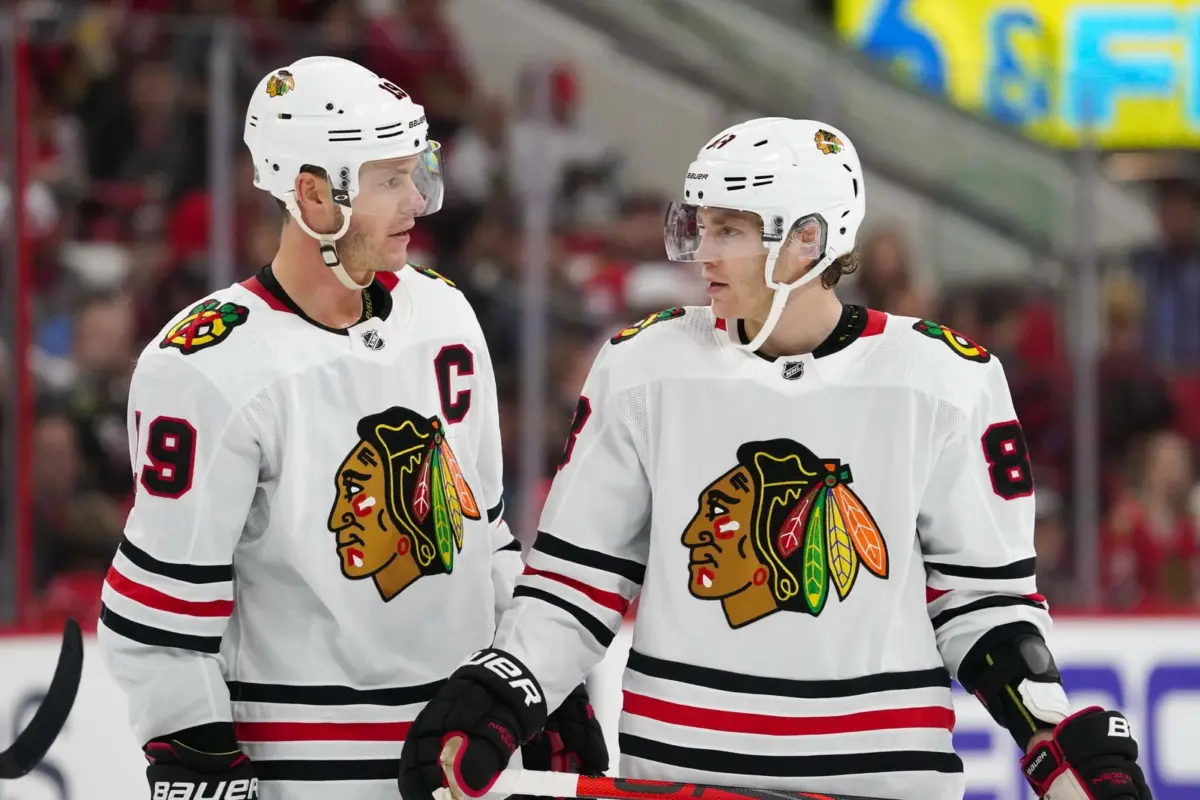
In a nearly identical position under strikingly similar circumstances are the Chicago Blackhawks. From 2010 through 2015, Chicago captured three Stanley Cups, establishing a dynasty that made the franchise look practically infallible in the eyes of hockey observers across North America. During those unforgettable years, the organization could seemingly do no wrong, drafting shrewdly, making astute veteran acquisitions, and capturing the imagination of a major U.S. sports market.
Unfortunately for the fiercely loyal fan base in the Windy City, the narrative has drastically flipped in recent years. In the eyes of Chicago supporters, the team currently seems capable of doing very little right. The Blackhawks have missed the post-season for six consecutive seasons, and what hurts even more is that they have rarely even flirted with qualification. During this prolonged six-year drought, the team has never managed to finish higher than sixth place in its division, mired deeply in the basement of a competitive Western Conference.
Tearing Down to the Studs: The Strategy Behind the Struggle
From a strategic perspective, many hockey analysts argued that the Blackhawks ultimately pursued the correct path by tearing their roster entirely down to the studs. A complete organizational reset was necessary to escape the shadow of their championship core and acquire generational talent through the NHL Draft. The centerpiece of this grand vision arrived when Chicago secured the first overall pick in 2023, drafting franchise cornerstone Connor Bedard.
However, general manager Kyle Davidson—who took the reins of the hockey operations department in 2021—has largely been unable to steer the club toward any tangible, sustained success. The promise of the lottery balls has not yet translated into competitive hockey on the ice.
Following a summer in which Davidson actively attempted to inject veteran talent into the lineup to accelerate the team’s developmental trajectory, the Blackhawks have instead plunged to the bottom of the standings. They have stumbled out of the gate with a dismal 3-8-0 record, positioning themselves as the second-worst team in the entire National Hockey League, trailing only the struggling Vancouver Canucks.
There was a brief, palpable sense of optimism and a short-term competitive bump when Bedard returned to the lineup from injury on October 13. Yet, that momentum evaporated quickly. The team is currently mired in a three-game losing skid during which they have managed to produce a meager total of three goals. It has been an undeniably ugly start to the campaign in Chicago, and unless a miraculous turnaround materializes in the near future, the Blackhawks are well on their way to completely extinguishing any lingering playoff aspirations before the calendar even turns to the winter months.
Questions Surround Coaching and Front Office Accountability
When things go so profoundly awry so early in a professional sports season, public scrutiny and media pressure naturally turn toward the architects of the roster and the man behind the bench. Even if general manager Kyle Davidson is granted a measure of patience and the benefit of the doubt regarding his overarching philosophy for constructing the roster, there is no escaping the mounting questions regarding head coach Jeff Blashill. Under Blashill’s guidance, the team is, once again, under-delivering relative to expectations.

A look at Blashill’s broader coaching resumé reveals a concerning trend for a franchise attempting to emerge from a rebuild. In his eight previous seasons as an NHL head coach—seven of which were spent steering the aforementioned Detroit Red Wings through their own dark years—Blashill guided his team to the postseason just once. With all due respect to his professional reputation and dedication, critical observers are left wondering whether Blashill was truly the most qualified coach available when Davidson made the hire.
To put the situation into perspective, coaches with stronger recent track records, such as former Edmonton Oilers bench boss Kris Knoblauch, have proven capable of deep playoff runs, boasting multiple playoff appearances and trips to the Stanley Cup Final on their resumés. Given how many opportunities Blashill was afforded in Detroit without achieving sustained success, tangible evidence suggesting he can fundamentally improve the trajectory of the Blackhawks remains scarce.
A Revolving Door Behind the Bench
The coaching dilemma highlights a broader structural issue that has created a sticky predicament for Davidson. During his tenure as general manager spanning roughly half a decade, Davidson has not relied on stability behind the bench. Instead, he has cycled through four different coaches, illustrating a turbulent path in his search for leadership.
Derek King served a stint as interim head coach for one season. Luke Richardson was subsequently handed the job, lasting just over two seasons before being dismissed. Anders Sorensen then stepped in for 56 games as an interim coach. Now, Jeff Blashill finds himself at the helm, presiding over a struggling squad through the early stages of the 2025-26 campaign.
This constant shifting of leadership is adding up to a growing sense of instability for a storied franchise. As things currently stand, there is very little light visible at the end of the tunnel for Chicago hockey fans.
Accountability and the Exhaustion of Fan Patience
Sooner or later, a general manager must be held fully accountable for a team’s perpetual disappointment. Aside from making a few clear, consensus-driven choices—such as drafting Connor Bedard and securing promising young forward Anton Frondell—Davidson has struggled to point to any legitimate, verifiable progress that gives fans confidence in the direction of the organization.
When a franchise has a rich, recent history of winning championships, supporters are typically willing to extend a generous amount of patience as the organization navigates the painful transition from one generation of players to the next. However, that reservoir of patience has officially been exhausted in Chicago. Blackhawks fans simply have no more time for excuses, platitudes, or long-term promises that fail to manifest on the ice.
Both Jeff Blashill and Kyle Davidson find themselves rightfully under intense professional pressure. The brutal, uninspiring start to the current NHL season will only serve to strengthen the argument from critics and supporters alike that neither man possesses the definitive answers required to heal what currently ails this proud Original Six organization.