
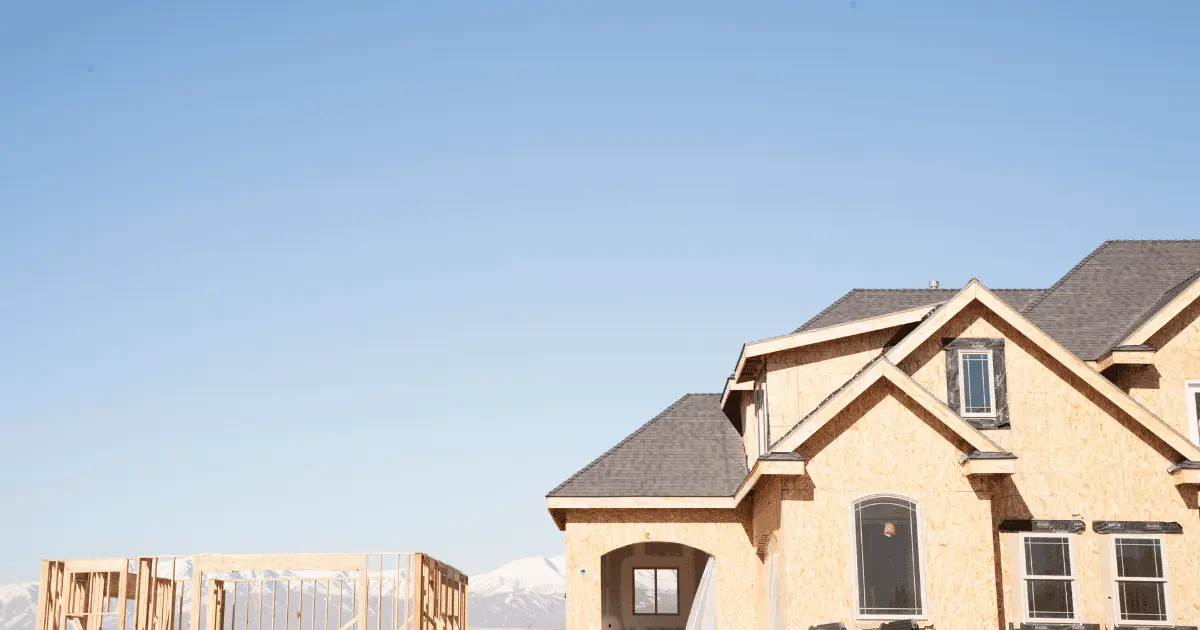
Canada stands at a critical juncture regarding housing. The nation desperately needs more homes, and it requires them urgently at prices that ordinary families can manage to pay. Yet, even as provincial governments and the broader homebuilding industry strive to address a deepening and pervasive housing shortage, a troubling combination of escalating tariffs, soaring diesel prices, and the sudden loss of domestic galvanized steel production in Hamilton threatens to drive the cost of building new homes even higher.
The unfolding consequences should deeply concern anyone who hopes to purchase a house or secure an affordable rental apartment in the near future. Building residential homes is becoming progressively and prohibitively more expensive precisely at the time when Canada needs to ramp up construction the most. Together, these mounting pressures threaten to slow down construction activity, undermine essential private sector investment, and add yet another layer of severe costs to an already overextended and deeply unaffordable housing market.
Tariffs Disrupt an Integrated Supply Chain
The ongoing U.S.-Canada tariff disputes offer a clear case study in how geopolitical and trade friction directly harms local economies. Residential construction in North America depends heavily on a closely integrated cross-border supply chain, with vital raw materials and manufactured building components constantly crossing the border in both directions. Tariffs and retaliatory counter-tariffs thoroughly disrupt this delicate ecosystem, significantly increasing the delivered cost of essential materials and forcing builders to constantly reconsider their project budgets, trusted suppliers, and construction schedules.
The extensive list of affected products touches nearly every phase of a residential development. Structural steel, reinforcing rebar, structural fasteners, lumber, engineered wood products, interior flooring, complex heating and cooling systems, elevators, electrical equipment, and household appliances are among the long line of materials and components that now face higher costs or severe supply disruptions.
These are not optional luxury extras; they are fundamental, non-negotiable components required to build habitable homes.
Recent economic estimates from the Residential Construction Council of Ontario (RESCON) indicate that protectionist trade measures introduced on September 8 could easily add anywhere from $9,000 to $14,000 to the total cost of building a typical detached home in Ontario, and a staggering $18,000 to $20,000 to the cost of a mid-rise residential unit. These alarming increases arrive on top of an estimated $15,000 to $25,000 in additional costs that were already associated with earlier trade measures introduced earlier in March 2025.
For real estate developers who are already contending with skyrocketing land prices, elevated financing costs, heavy municipal development charges, ongoing labour shortages, and persistent regulatory hurdles, these repeated financial shocks are virtually impossible to absorb. Most residential construction projects operate on notoriously tight financial margins, and builders cannot indefinitely shoulder these escalating external expenses. Ultimately, the eventual bill inevitably lands on the shoulders of everyday homebuyers and tenants.
Diesel Costs Hit Every Stage of Construction
Beyond trade friction, the construction industry faces acute pressure from the energy sector, most notably through the cost of diesel fuel.
Diesel functions as a fundamental, irreplaceable input across the entire construction lifecycle. Heavy machinery such as excavators, bulldozers, wheel loaders, cranes, and dump trucks depend entirely on fuel to clear and prepare raw sites, dig deep foundations, move massive amounts of earth, and transport heavy construction materials. When diesel prices experience dramatic surges, every single stage of the construction process instantly becomes more expensive.
The cascading effects extend far beyond the boundaries of the active construction site. Essential heavy aggregates, including sand, gravel, and crushed stone, must be hauled across significant distances to reach active projects. The production and delivery processes for cement and concrete are notoriously energy-intensive, as are the manufacturing processes for asphalt and precast concrete products.
Furthermore, higher fuel costs directly impact the long-distance transportation of steel, lumber, and other foundational building supplies. Rising petroleum prices also exert additional upward pressure on various petrochemical-based building products, including thermal insulation, plastic piping, and specialized waterproofing membranes.
With diesel prices up by 70 percent or more compared to levels recorded just a year earlier, the financial consequences for contractors are substantial. Skyrocketing fuel bills aggressively squeeze contractors who are operating under strict fixed-price agreements.
Eventually, these unmanageable expenses find their way into new project bids, equipment rental charges, and raw material price tags. Frustrated contractors may increasingly demand explicit fuel surcharges or contractual escalation clauses, while others may choose to decline bidding on projects altogether where the financial risks are deemed simply too high. A smaller pool of bidders combined with more expensive bids inevitably translates into higher overall construction costs and prolonged project delays.
Losing Domestic Galvanized Steel
The third major pressure facing the sector—Stelco’s decision to indefinitely idle its cold-rolled and galvanized steel production lines—carries profound significance for the local economy in Hamilton and the broader Ontario housing industry.
Galvanized steel, which is specifically treated with a protective coating to resist rust and corrosion, is widely used in light steel studs, structural framing, heating and ventilation ductwork, roofing materials, metal flashing, siding trim, joist hangers, structural connectors, and robust floor and roof decking. These specialized steel products are thoroughly integrated into modern residential construction, playing an especially critical role in mid-rise and high-rise apartment buildings that rely heavily on steel components for structural integrity.
With Stelco’s domestic production halted and major industry competitors like ArcelorMittal Dofasco reportedly rationing orders to manage supply, builders and regional distributors are left with significantly fewer domestic supply options. The inevitable result will be higher material costs, longer lead times, and frustrating project delays as builders scramble to source necessary supplies from alternative markets.
An Industry Already Falling Short
All of these compounding economic pressures are unfolding against the backdrop of an industry that is already struggling valiantly to meet baseline market demand.
Official figures show that Ontario recorded just 86,760 housing starts and additional housing-related units over the course of 2025, falling woefully short of its ambitious target of 150,000 new homes. Meanwhile, sales of new high-rise condominiums and apartments in the Greater Toronto Area plummeted to a mere 129 units in September alone, representing a staggering 90 percent drop below the 10-year historical average for that specific month.
Canada’s broader national supply challenge is equally stark and well-documented. Data from the Canada Mortgage and Housing Corporation (CMHC) highlights that inflation-adjusted home prices have more than doubled since 2005, while the pace of national population growth has routinely outpaced the creation of new housing stock.
The correct answer to this crisis cannot possibly be to make the construction process progressively more expensive while merely hoping that the market will somehow find a way to magically deliver more homes.
True housing affordability depends not only on prevailing interest rates and localized land-use policies, but fundamentally on the cost and physical availability of the materials, energy sources, and heavy equipment required to build new homes from the ground up. Unresolved trade uncertainty, volatile fuel prices, and domestic steel supply disruptions deserve immediate and urgent attention from policymakers at all levels of government.
When the cost of building rises at every turn, projects simply cease to make financial sense, construction activity slows to a crawl, and consumers ultimately pay much higher prices for whatever limited housing stock actually manages to get built.
The country cannot afford to make an already difficult socio-economic problem even harder to solve. The ultimate price will be measured not just in dollars per tonne of steel or litres of diesel consumed, but in the growing number of homes that ordinary families can no longer afford to buy or rent.
Richard Lyall is president of the Residential Construction Council of Ontario (RESCON). He has represented the building industry in Ontario since 1991.