
It has been another relentless week in the retail sector, marked by high-profile corporate restructuring, aggressive physical footprint expansions, and an influx of seasonal marketing stunts that push the boundaries of traditional consumer products. From executive departures at major footwear groups to strategic growth initiatives by international apparel heavyweights, the commercial landscape continues to shift rapidly. Below is a comprehensive look at the major stories that shaped the industry over the past week, along with a deep dive into the ongoing trends and financial pressures capturing the attention of analysts and investors alike.
What You May Have Missed
The corporate landscape within the apparel and footwear sector saw notable shifts this week, highlighted by strategic restructuring at Wolverine World Wide and continued retail expansion by Irish giant Primark.
Wolverine World Wide Eliminates Active Group President Role
In a significant executive shakeup, footwear and apparel conglomerate Wolverine World Wide announced that it eliminated the position of active group president as of Monday. As a direct result of this structural change, Susie Kuhn has departed the company. According to an official regulatory filing submitted to the U.S. Securities and Exchange Commission, Kuhn’s leadership duties and operational oversight have been systematically distributed throughout the existing organization.
Kuhn had originally been appointed to the active group president role in October 2024. During her tenure, she was tasked with spearheading brand strategies, developing go-to-market plans, and overseeing the overall commercial performance of the company’s active portfolio. This vital division encompasses prominent footwear and lifestyle brands including Merrell, Saucony, Sweaty Betty, and Chaco. Before joining Wolverine World Wide, Kuhn built an extensive career in retail leadership, most notably serving as the president of Europe, Middle East, and Africa for Foot Locker.
The organizational restructuring comes at a time when the active group has shown notable financial resilience. In the company’s most recent quarterly financial report, the active group division posted a solid revenue increase of 9.3%, reaching $388.4 million. Furthermore, Wolverine World Wide’s total second-quarter revenue rose 6.8% to $506.4 million, demonstrating that the division remains a critical engine for the broader enterprise even as executive leadership responsibilities are decentralized.
Primark Deepens U.S. Presence With Georgia Store Opening
Meanwhile, international value-apparel retailer Primark is pressing forward with its ambitious U.S. expansion strategy, marking its territory with a brand-new store opening in Augusta, Georgia.
The new location, situated at the Augusta Mall, officially opened its doors to shoppers on Thursday. This launch represents Primark’s second retail outpost in the state of Georgia, closely following the debut of its Lawrenceville store earlier in the month. With the addition of the Augusta location, Primark’s total U.S. retail footprint has expanded to 48 stores nationwide.
Kevin Tulip, president of Primark U.S., emphasized the strategic importance of this rapid regional growth in a public statement. "Primark is excited to have such a busy month in Georgia as it opens not one but two new stores in the state," Tulip said. "We know that Primark’s outstanding value is more important than ever to today’s consumers, and we’re looking forward to welcoming customers in the culturally rich and historic city of Augusta."
These latest retail openings form an integral part of Primark’s broader, long-term expansion efforts across the United States, which have proven instrumental in driving overall corporate growth. Primark’s total U.S. sales have experienced robust momentum, growing 14% so far this year, with a particularly strong 16% jump recorded during the third quarter alone.
Retail Therapy
With the official arrival of autumn this week, consumer brands have deployed their seasonal marketing campaigns in full force. While many companies choose to rely on reliable, time-tested staples such as pumpkin spice flavoring or classic Halloween-themed confectionery, other brands have chosen to venture into far more unconventional and borderline repulsive territory.
Hidden Valley Ranch made waves this week by introducing "Spooky Ranch," a radical seasonal variation described as a spooky black twist on the iconic creamy formula. The product derives its startling deep dark hue entirely from a combination of fruit juice and cocoa powder, and it is packaged distinctively in a glow-in-the-dark bottle. Spooky Ranch retails for an accessible price point of around $4 and is being sold exclusively through retail giant Walmart.
The novelty product wave did not stop in the condiment aisle. Cup Noodles also released its own startlingly themed seasonal flavor this week: Vampire Noodles. Featuring a savory blend of garlic and chicken flavors, the product is engineered to turn a striking, vibrant red color the moment hot water is added to the cup.
To drive consumer engagement and amplify the marketing stunt, Cup Noodles partnered with Titan Casket to design and manufacture a custom collector casket. The morbidly creative item features a prominent Cup Noodle emblem, a custom-embroidered head panel, and a rich maroon finish. Consumers interested in acquiring the piece have two options: they can enter an official Cup Noodles sweepstakes for a chance to win the specialty casket or purchase it outright directly from Titan Caskets for approximately $4,000.
What We’re Still Thinking About
Beyond product novelties and corporate restructuring, heritage brands are finding innovative ways to celebrate milestone anniversaries. J. Crew is currently observing a major corporate milestone, marking the 40th anniversary of its iconic Barn Jacket.
According to an official company press release, the apparel retailer chose to celebrate the outerwear staple through one of its most ambitious portrait marketing campaigns to date. The company photographed 160 diverse individuals across major metropolitan hubs, including New York City, Los Angeles, Boston, Chicago, and Austin, Texas, to showcase the versatility and enduring appeal of the jacket.
"For 40 years, the Barn Jacket has moved across wardrobes, generations and communities without ever feeling fixed in one place or moment," said Chief Marketing Officer Julia Collier in a statement regarding the campaign. "This campaign celebrates that enduring relevance and the many people who continue to carry it forward."
As part of the 40th-anniversary celebration, the retailer has rolled out its 2026 Barn Jacket collection, which spans an impressive 29 distinct styles designed for women, men, and children. Priced strategically from $98 to $898, the collection is available for purchase through the official J. Crew website as well as in select brick-and-mortar retail stores.
What We’re Watching
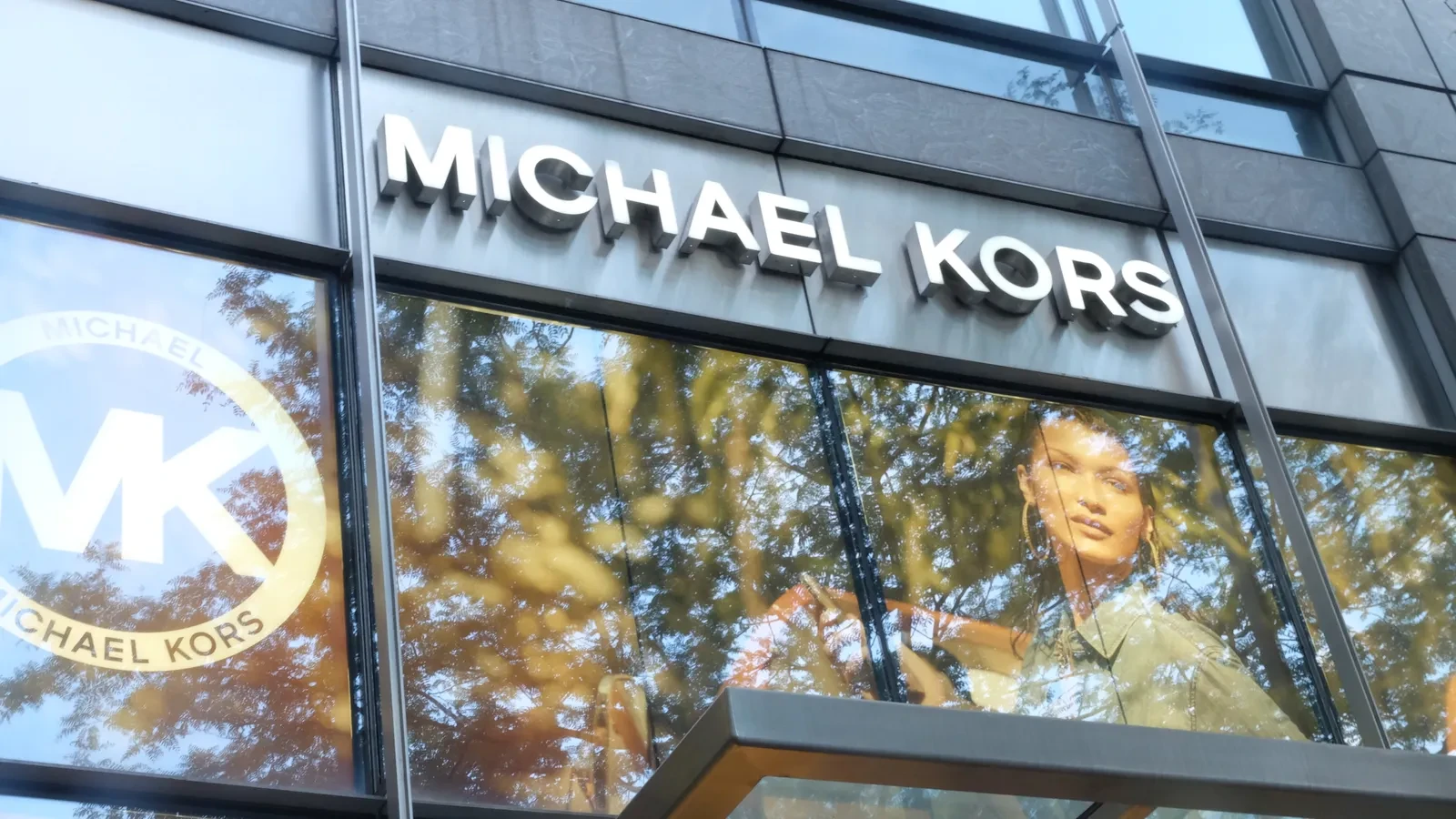
Financial analysts and retail investors are closely monitoring ongoing struggles within the luxury sector, specifically questioning whether Capri Holdings should consider offloading the Michael Kors brand.
Over recent quarters, Michael Kors has increasingly become a financial and operational challenge for its parent luxury conglomerate, Capri Holdings. During the most recent fiscal period, the brand’s sales dropped by over 7%, while its operating income plummeted significantly.
Market sentiment surrounding the label has cooled noticeably. Joaquín Nieves Uría, chief financial officer at El Corte Inglés, Europe’s largest department store operator, noted in a discussion with Wells Fargo analysts last week that the brand’s commercial momentum has largely stalled and its long-term strategic direction remains unclear. Earlier this month, a team of analysts led by Ike Boruchow documented a marked decline in brand heat for Michael Kors, pointing to falling engagement and declining social media mentions.
Compounding these challenges, sales of new handbags across the broader market remain sluggish. Recent research from UBS analysts indicates that the category is unlikely to return to healthy, mid-single-digit sales growth anytime soon. Industry experts suggest that shifting fashion trends—which have evolved significantly since the brand’s peak heyday between 1995 and 2010—combined with the surging popularity of the secondhand resale market, have severely impacted traditional primary sales.
Faced with these persistent headwinds, market watchers are actively questioning what steps Capri Holdings might take next. According to an industry report published this week by Women’s Wear Daily, which cited unnamed sources close to the matter, external investors have already expressed notable interest in acquiring the Michael Kors business.
Capri Holdings did not immediately respond to requests for comment regarding potential divestiture plans. The luxury group is no stranger to portfolio reshuffling; late last year, Capri completed the sale of Versace to Prada in a transaction valued at over $1 billion. In addition to Michael Kors, Capri Holdings retains ownership of the luxury footwear and accessories brand Jimmy Choo.