
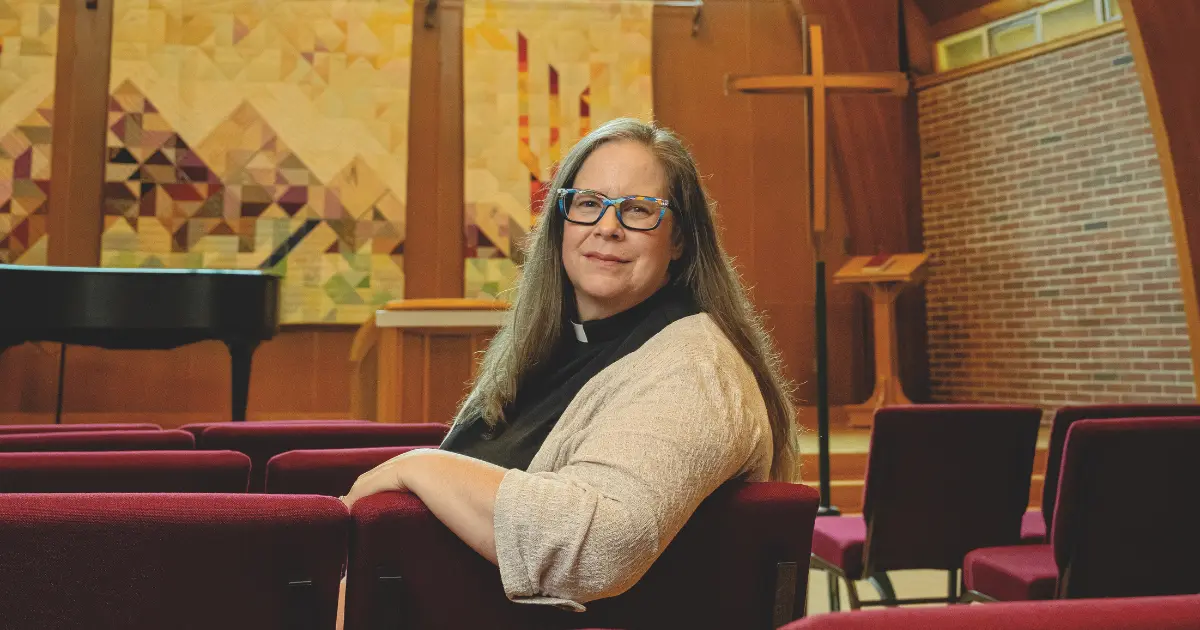
As traditional church membership numbers continue to decline across North America, religious communities are increasingly forced to rethink how they operate, govern, and sustain themselves in the modern era. According to Rev. Heather McCance, president of the Atlantic School of Theology, this period of contraction is not necessarily a death knell for faith communities, but rather an opportunity to return to the foundational models of early Christianity.
Reflecting on the historical evolution of the church, McCance notes that the way modern congregations organize weekly services bears little resemblance to the earliest communities of faith. During the time of Jesus and the early apostles, followers did not rely on sprawling institutional infrastructure, highly specialized clerical hierarchies, or dedicated professional clergy for every facet of community life. Instead, figures like the Apostle Paul simply trained local believers to do whatever was necessary to lead, support, and sustain their communities from the ground up.
Today, as contemporary congregations grapple with shrinking rosters, tighter budgets, and a growing leadership gap, McCance observes that churches are naturally reverting to that original apostolic way of being. In doing so, modern ministries are becoming more decentralized and ecumenical, shedding rigid institutional habits in favor of flexibility and resilience.
Despite the challenges posed by declining attendance, McCance sees a unique and powerful silver lining in the current landscape. The people who remain actively involved in churches today do so out of a deep, intentional desire to participate in their faith communities. That high level of personal commitment, she suggests, can become a tremendous organizational strength if harnessed correctly.
Yet, translating that commitment into sustainable leadership requires a fundamental shift in how congregations operate. To help faith communities navigate this transition, McCance has outlined ten strategic approaches designed to bridge the leadership gap, distribute responsibilities equitably, and ensure long-term vitality without burning out dedicated members.
At the foundational level, congregations must first reframe their overall mindset. Rather than clinging to traditional methods simply because "that is the way it has always been done," modern churches should view themselves through an apostolic lens. This means asking a more fundamental, forward-looking question: how can the community faithfully respond to the specific needs of today?
Part of that mindset shift involves leaning heavily into shared leadership. In many traditional church models, a single minister or a tiny handful of volunteers carry the overwhelming burden of administration, pastoral care, and programming. McCance emphasizes the importance of identifying each person’s unique spiritual gifts and ensuring that no single individual is left to shoulder the responsibilities of the church alone. By distributing the various tasks of ministry among a broader group, congregations can ensure that everyone feels valued, included, and adequately cared for.
However, shared leadership cannot succeed without adequate preparation. McCance points out a common pitfall among religious organizations: churches are often exceptionally good at asking volunteers to step up and take on new roles, but they frequently fail to provide the training necessary for them to succeed. To combat this, communities must actively seek out relevant resources, mentorship opportunities, and leadership development programs to equip their teams properly.
Alongside leadership training, fostering ongoing spiritual study is vital for community cohesion. When a whole congregation engages in regular spiritual development together, it creates a deeper bond and strengthens the collective fabric of the group. McCance notes that this shared learning process allows the community to renew itself from within, creating a resilient foundation built on collective growth rather than top-down instruction.
Practicality and pragmatism are also essential for survival in a changing landscape. Adapting to shifting circumstances often requires embracing new ideas, technologies, and operational approaches, even when doing so feels uncomfortable or unfamiliar. McCance encourages congregations to view these changes not as losses of tradition, but as new opportunities, noting that God is excited for what modern communities are able to accomplish today.
Part of being pragmatic involves targeting energies realistically. McCance stresses that recognizing limitations is not a sign of failure. It is entirely acceptable for a church to do less when resources are constrained. Successful modern churches understand when it is time to scale back certain offerings, events, or programs in alignment with the actual capacity of their members, preventing exhaustion and protecting the long-term health of the community.
In addition to internal adjustments, congregations are increasingly finding strength through local partnerships. By asking basic collaborative questions—such as evaluating what resources one group holds compared to another—churches can pool their strengths. This cooperative spirit can manifest as sharing physical church buildings, administrative resources, or even rotating leadership between neighboring communities or different denominations.
Preventing burnout also requires intentional planning for turnover and succession. Because human energy and time are finite, churches must design systems where individuals can step back and take a well-deserved break without ministry grinding to a halt. As McCance aptly notes, God does not call people to burn themselves out in service. Without a clear plan for leadership succession, a thriving initiative might last for five or ten years before abruptly collapsing when key individuals move on or tire out. Consequently, she urges congregations to continually cultivate new generations of leadership to ensure continuity.
Finally, McCance emphasizes that modern churches should never try to operate in isolation. A wide array of support systems is readily available, ranging from regional church councils and ecumenical organizations to broader community networks. Reaching out for external guidance can provide much-needed perspective and logistical relief.
Despite the structural hurdles facing modern religious institutions, McCance remains deeply hopeful about the future. Small churches, she maintains, will always find a way to remain faithful to who God is calling them to be, proving that the heart of community life transcends institutional scale.