
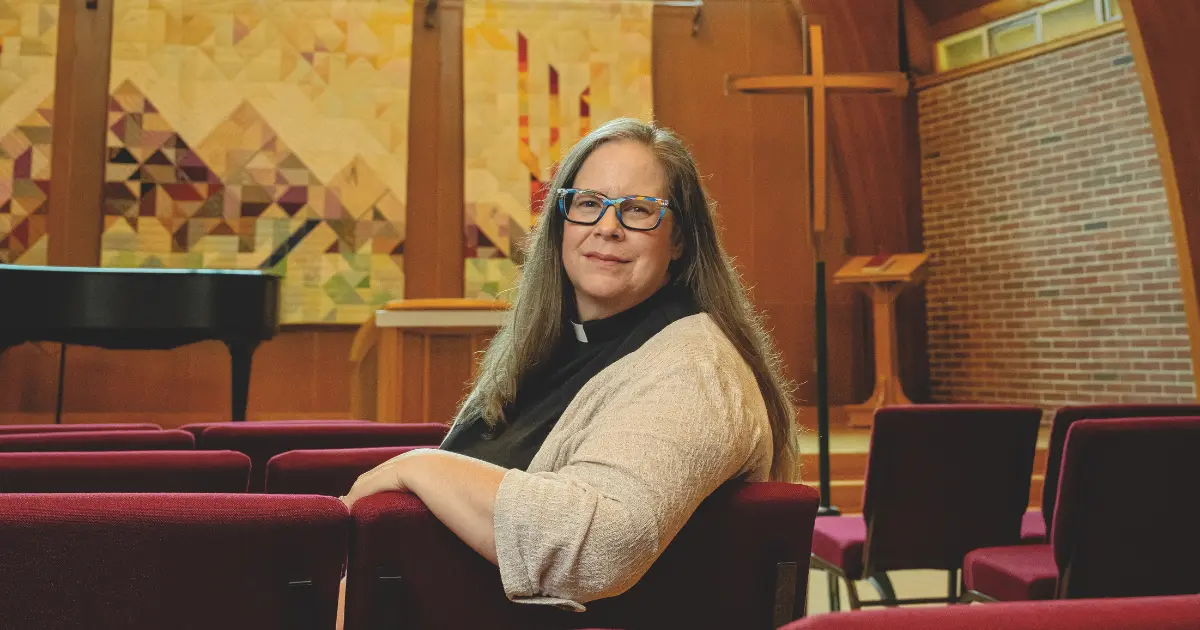
As religious institutions navigate an era of shifting demographics and declining traditional membership, faith leaders are being forced to reimagine what it means to gather, lead, and sustain a congregation. According to Rev. Heather McCance, president of the Atlantic School of Theology, the contemporary struggles facing organized religion may actually be pointing communities back to their earliest historical foundations.
Reflecting on the modern structure of religious services, McCance notes a stark contrast with antiquity. “The way we have church today, if you look at Jesus’ time, they didn’t really have any of these things,” she observes. During the formative years of the Christian movement, the Apostle Paul did not rely on rigid institutional hierarchies or heavily specialized, full-time clerical professionals to run every local operation. Instead, he simply trained everyday local individuals to do what was necessary to lead, nurture, and sustain their communities.
Today, as formal membership numbers decline and traditional operational models strain under financial and personnel pressures, McCance sees many modern churches organically reverting to that foundational, apostolic way of being. Rather than viewing this shift as a sign of defeat, she identifies a growing trend toward more decentralized and ecumenical structures as a vital opportunity for reinvention. Furthermore, this transition is often accompanied by a profound renewal of commitment from the faithful. “The people who are still involved in churches really do want to be there,” she says, pointing out that this deep-seated dedication can serve as a massive structural and spiritual strength for communities willing to adapt.
To help congregations navigate these profound transitions and bridge the widening leadership gaps within modern parishes, McCance has outlined a comprehensive framework of strategic approaches. These principles are designed to move churches away from unsustainable traditional expectations and toward a more resilient, shared model of community life.
At the foundational level, congregations must fundamentally reframe their mindset. Instead of mourning the loss of the past or stubbornly clinging to traditional methods of operation simply because “that is the way it has always been done,” churches are encouraged to view themselves through an apostolic lens. This requires asking hard, honest questions about how a given faith community can best respond to the pressing needs of today’s society using the exact resources it currently possesses.
Hand in hand with this mindset shift is the necessity of leaning into shared leadership. Historically, many religious communities have placed an unsustainable burden on a single ordained minister or a tiny, exhausted core of volunteers. McCance emphasizes the importance of identifying and activating each individual’s unique spiritual gifts, ensuring that no single person carries the entire administrative and pastoral weight of the church alone. By distributing the tasks of ministry evenly across the community, churches can ensure that everyone is cared for and that burnout is actively prevented.
However, distributing labor effectively requires adequate preparation. McCance points out a common pitfall in contemporary religious organizations: churches are frequently exceptional at asking people to step up and take on new roles, but they often fail to provide the necessary training for those individuals to succeed. Overcoming this gap requires communities to actively seek out relevant educational resources, mentorship opportunities, and structured leadership programs designed to build confidence and competence among volunteer leaders.
Beyond administrative and operational training, ongoing spiritual study remains a crucial anchor for community resilience. Establishing consistent opportunities for spiritual development across the entire congregation does more than simply deepen theological understanding; it actively bonds and strengthens the community from within. When members engage in spiritual learning together, they experience a collective renewal that fortifies them against external challenges and internal fatigue.
Embracing this new reality also demands a high degree of pragmatism. Adapting to rapidly changing circumstances is no longer optional for survival; it is an absolute necessity. McCance encourages congregations to willingly embrace fresh ideas, novel approaches, and unfamiliar operational models, even when doing so feels uncomfortable or challenges long-held institutional habits. Approaching this evolution with faith, she reminds communities that God welcomes the creative ways modern believers utilize their current capabilities.
Targeting institutional energies wisely is another critical component of survival. McCance stresses that recognizing limitations and scaling back operations is not synonymous with failure. Successful contemporary churches understand when it is time to realistically assess their capacity and scale back programs, services, or physical maintenance according to what their active members can sustainably handle. Doing less, when done intentionally, allows a community to focus its remaining energy on what truly matters.
In tandem with internal adjustments, reaching outward for local partnerships can dramatically expand a church’s capacity. McCance suggests starting with a simple, collaborative question: “What do we have, and what do you have?” Exploring these cooperative answers can pave the way for sharing physical church buildings, administrative resources, or even joint leadership across different faith communities or local organizations, thereby reducing overhead while maximizing community impact.
To prevent the cycle of exhaustion that plagues modern volunteers, churches must also create intentional plans for turnover. When an active leader or volunteer inevitably needs a break to rest or attend to personal matters, a pre-arranged system ensures that another capable person can seamlessly step in. As McCance aptly notes, God does not call individuals to burn themselves out in the service of the church.
This emphasis on sustainability naturally extends into broader succession planning. A chronic lack of intentional succession planning often means that an energetic new ministry or program manages to survive for five or ten years before abruptly collapsing the moment its original founder steps away. McCance urges congregations to continually and intentionally cultivate new tiers of leadership so that the mission of the church can outlive any single individual’s tenure.
Finally, McCance emphasizes that congregations should never try to navigate these complex transitions in isolation. Abundant support networks are readily available for those willing to look outward, whether those resources come from regional administrative church councils, ecumenical organizations, or the broader secular community.
Despite the profound challenges facing traditional religious infrastructure, McCance remains fundamentally hopeful about the future of faith communities. Small churches, she insists, will always find a way to remain faithful to who God is calling them to be, provided they are willing to embrace flexibility, collaboration, and a return to their communal roots.