
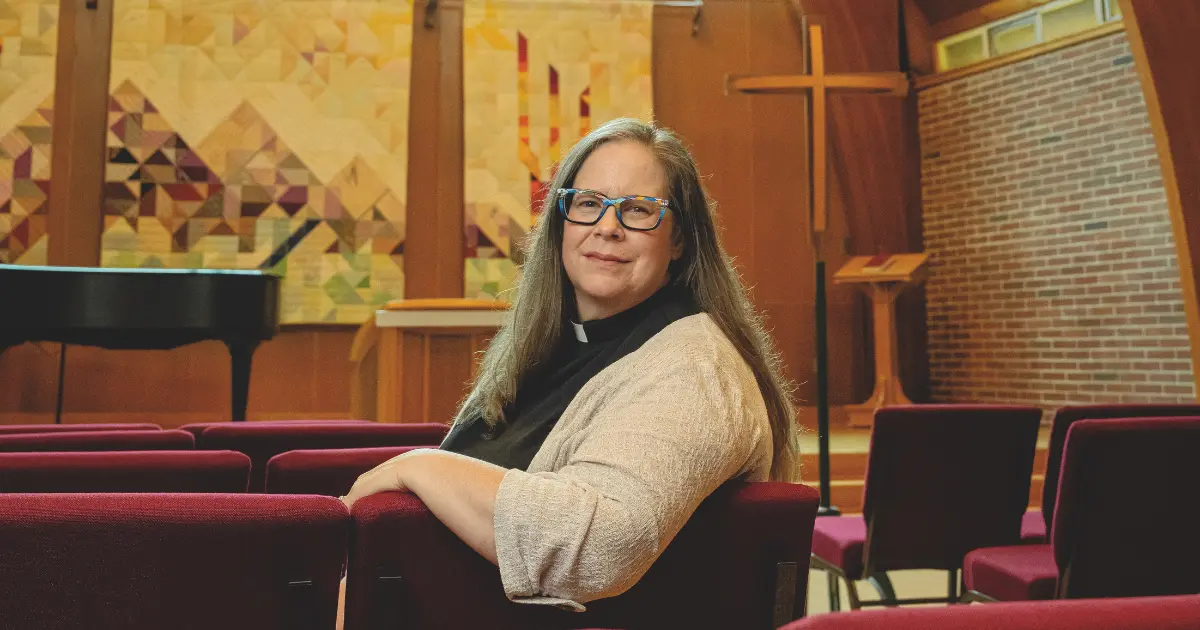
As traditional models of institutional religion face unprecedented financial, demographic, and structural pressures across North America, faith communities are increasingly forced to reexamine what it means to gather, lead, and sustain a congregation. According to Rev. Heather McCance, president of the Atlantic School of Theology, the contemporary crisis in church membership may not be a death knell, but rather an invitation to return to the foundational practices of early Christianity.
Reflecting on the historical evolution of religious institutions, McCance points out that the modern architectural, bureaucratic, and hierarchical church experience bears little resemblance to the earliest gatherings of faith. In the time of Jesus and the early apostles, formal institutional infrastructure was virtually nonexistent. Instead, the Apostle Paul simply traveled throughout the Mediterranean world, empowering and training local community members to take up whatever tasks were necessary to lead, nurture, and sustain their emerging communities.
Today, facing steep declines in formal membership and a severe shortage of professionally trained, full-time clergy, McCance observes that many modern churches are organically reverting to that ancient, apostolic way of being. Rather than relying on rigid, centralized corporate models, these congregations are becoming increasingly decentralized, flexible, and ecumenical. While the shrinking size of congregations poses undeniable operational challenges, McCance emphasizes that this shift brings a distinct hidden advantage: the people who remain active in church life today are there by deliberate choice.
"The people who are still involved in churches really do want to be there," McCance notes, identifying this deep personal commitment as a powerful foundation for future resilience. "And that can be a huge strength."
This transition away from heavy institutional structures requires a fundamental reimagining of how congregations operate day-to-day. To help faith communities navigate this transition and bridge the widening leadership gap, McCance has outlined a comprehensive framework for transformation, urging congregations to shift their mindsets from traditional maintenance to apostolic adaptability.
At the heart of this transition is a departure from historical norms. McCance encourages church communities to actively reframe their mindset, viewing their purpose through an apostolic lens that prioritizes responsiveness to modern needs over rigid adherence to historical habits. This involves letting go of the expectation that a single religious professional should bear the entire burden of spiritual and administrative leadership.
Instead, modern congregations must lean into shared leadership models. By identifying the unique gifts, talents, and capacities of individual members, communities can ensure that no single person carries the exhaustive responsibilities of running the church alone. Sharing the practical and spiritual tasks of ministry ensures that everyone is cared for and that the burden remains manageable.
However, shared leadership cannot succeed without adequate preparation. McCance highlights a common pitfall among modern religious institutions: while churches are historically adept at asking members to volunteer for vital tasks, they frequently fail to provide the necessary training for those roles. Overcoming this hurdle requires actively sourcing relevant educational materials, leadership programs, and practical resources to equip volunteers for success.
Alongside operational training, intentional spiritual development plays a critical role in binding congregations together during times of transition. Creating ongoing opportunities for spiritual study across the entire community fosters a sense of collective renewal. When a congregation engages in spiritual growth together, the communal bond deepens, strengthening the group’s overall resilience.
Adapting to shifting circumstances also demands a high degree of pragmatism. Embracing new ideas, alternative approaches, and unfamiliar operational structures can feel uncomfortable for long-standing members accustomed to tradition, but McCance stresses that such flexibility is essential for survival. Framing these changes with a positive theological outlook, she notes that communities should trust that "God is excited for what we are able to do now."
In practical terms, this pragmatism means learning to target energies effectively and shedding the guilt associated with scaling back operations. Acknowledging that being realistic does not equate to failure, McCance points out that successful contemporary churches understand when to reduce the number of offerings, committees, and programs to match the actual capacity of their active members. It is entirely acceptable to do less in order to do it well.
When internal resources fall short, congregations are increasingly looking outward to establish local partnerships. By initiating collaborative conversations centered around mutual asset mapping—asking fundamental questions about what one group possesses versus another—churches can pool their strengths. Such cooperation can manifest as shared physical buildings, joint administrative resources, or collaborative leadership arrangements across different denominations or independent groups.
Sustainability also requires proactive administrative planning, particularly when it comes to managing volunteer burnout and leadership turnover. McCance notes that burnout is antithetical to spiritual well-being, observing that "God doesn’t call us to burn ourselves out." Designing intentional plans for turnover ensures that when one individual needs a temporary break or steps down entirely, another community member can seamlessly step into the breach.
Furthermore, long-term viability demands rigorous succession planning. Without a deliberate strategy for cultivating and mentoring new leaders, a revitalized initiative or partnership risks collapsing after a brief five- or ten-year window. Continual leadership development must be woven into the fabric of congregational life to prevent institutional amnesia and sudden operational failure.
Finally, McCance stresses that struggling congregations do not need to operate in isolation. External support systems are widely available through regional church councils, ecumenical networks, and broader community organizations. Tapping into these wider webs of solidarity provides isolated groups with external perspective, encouragement, and practical assistance.
Despite the very real difficulties facing contemporary religious institutions—ranging from aging demographics to tightening financial constraints—McCance maintains an outlook rooted in hope and endurance. Even as formal structures contract and traditional methods fade, she remains confident that small, dedicated faith communities will continue to discover innovative, faithful pathways to express their spiritual missions in an ever-changing world.