
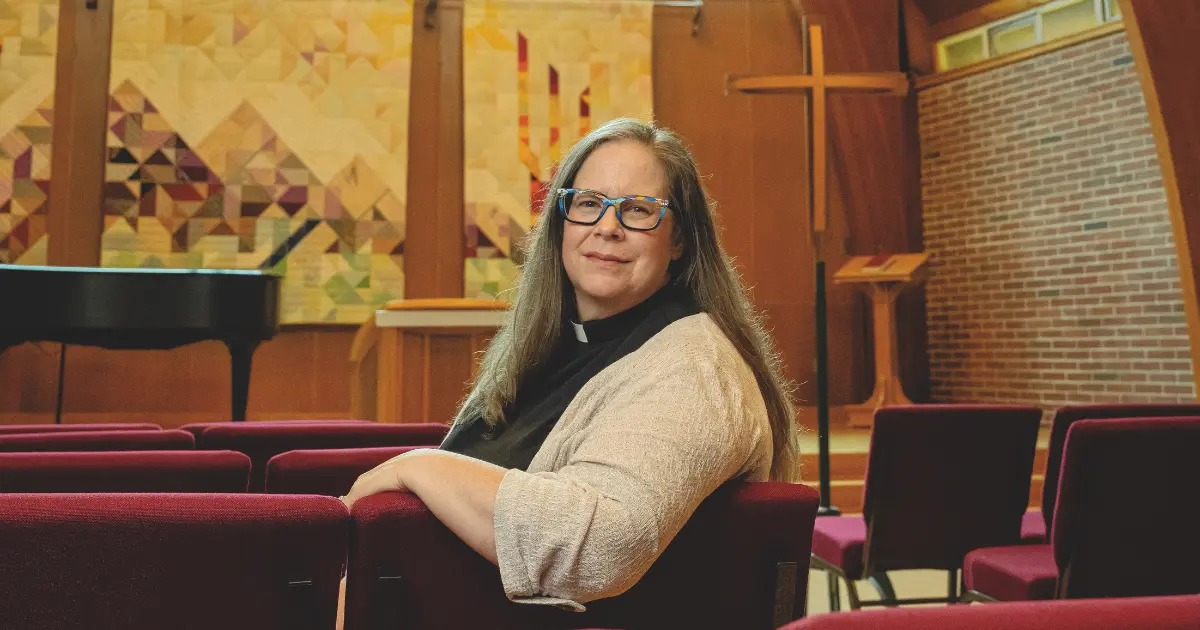
The contemporary landscape of religious worship is undergoing a profound transformation. As pews empty and congregations grapple with shifting demographics and financial pressures, faith communities are being forced to reimagine what it means to gather, lead, and sustain a ministry. According to Rev. Heather McCance, president of the Atlantic School of Theology, this modern dilemma paradoxically mirrors the earliest days of Christianity.
Reflecting on the historical evolution of the faith, McCance points out that the structured, institutionalized models of church organization familiar to modern believers did not exist during the time of Jesus. Instead, early Christian communities relied on a decentralized, apostolic approach. The Apostle Paul, rather than installing rigid bureaucratic hierarchies, simply trained local individuals within communities to step up, lead worship, and perform whatever tasks were necessary to keep the fellowship alive and functioning.
Today, as membership numbers decline and traditional full-time, solo-pastor models become increasingly financially and logistically unsustainable, McCance sees churches organically reverting to that foundational, apostolic way of being. Modern congregations are becoming more decentralized, highly collaborative, and deeply ecumenical in response to the pressures of the twenty-first century.
Crucially, McCance views this period of contraction not merely as a crisis of survival, but as an unexpected moment of consolidation and strength. The people who remain actively involved in church life today are there by deliberate choice, driven by a deep personal commitment to their faith and community. That intentionality, she suggests, represents a powerful foundation upon which congregations can build a sustainable future.
To help faith communities navigate this transition and bridge widening leadership gaps without falling victim to burnout, McCance has outlined a comprehensive framework for congregational renewal. Rather than relying on the traditional expectation of a single leader carrying the weight of an entire institution, she encourages churches to rethink their foundational mindsets. Congregations are urged to view themselves through an apostolic lens, asking how they can meaningfully respond to contemporary needs rather than stubbornly clinging to traditional methods simply because "that is the way it has always been done."
At the heart of this renewed approach is a heavy emphasis on shared leadership. McCance stresses the vital importance of identifying and harnessing the unique spiritual gifts of every individual within a congregation. By distributing responsibilities, churches can ensure that no single person is left to shoulder the burdens of administration, pastoral care, and community outreach alone. Sharing in the everyday tasks of ministry ensures that everyone is cared for and that the community remains vibrant and mutually supportive.
However, shared leadership cannot succeed without adequate preparation. McCance notes a recurring vulnerability in many religious organizations: churches are often exceptionally efficient at asking volunteers and members to take on new roles, but frequently fail to provide the necessary training for them to succeed. Overcoming this hurdle requires actively sourcing relevant educational materials, leadership programs, and skill-building resources to empower members to step into new responsibilities with confidence.
Alongside practical training, McCance highlights the necessity of ongoing spiritual study. Fostering regular spiritual development for the entire congregation acts as a vital social and theological glue, bonding the community together. When members engage in spiritual renewal collectively, the internal fabric of the church is fortified, creating a resilient culture capable of weathering external challenges.
Embracing this new reality also demands a high degree of pragmatism. Adapting to changing circumstances is no longer optional for survival; it requires an openness to novel ideas and unconventional approaches, even when those changes cause initial discomfort. McCance offers an encouraging perspective on this uncomfortable transition, suggesting that faith traditions are expansive enough to meet the present moment, and that communities can find renewed purpose in what they are able to achieve today.
Being pragmatic also means targeting energies wisely and shedding the guilt of doing less. McCance reassures congregations that recognizing limitations is not a sign of failure. Successful modern churches understand when to scale back programs, reduce the frequency of events, or sunset offerings that exceed the current capacity of their members. Acknowledging these boundaries protects the mental and spiritual well-being of the community.
In tandem with scaling back internally, churches are increasingly finding strength through local partnerships. By asking fundamental collaborative questions—such as evaluating what resources one community possesses compared to another—churches are discovering innovative ways to share physical buildings, administrative resources, and even leadership personnel across denominational or neighborhood lines.
To prevent the exhaustion that has plagued religious workers for decades, McCance advises congregations to institute clear plans for turnover. When one leader or volunteer needs to step back for a break, a pre-arranged successor should be ready to step in smoothly. This intentional rotation protects the health of the community, grounded in the theological reminder that burnout is not a divine expectation.
Furthermore, intentional succession planning is critical for long-term viability. Without a continuous pipeline for cultivating new leaders, ministries often experience a temporary burst of energy that lasts for only five or ten years before ultimately collapsing. Continuous leadership development ensures organizational continuity from one generation to the next.
Finally, McCance emphasizes that modern congregations do not need to navigate these turbulent waters alone. A wealth of support remains available for struggling or transitioning ministries, ranging from regional church councils and ecumenical organizations to broader community networks. By leaning on these external alliances, local groups can share best practices and emotional labor.
Despite the very real challenges facing institutional religion today, McCance remains fundamentally hopeful about the road ahead. Small churches, she asserts, will always find a way to remain faithful to the calling they perceive, adapting their structures to ensure their spiritual missions endure.