
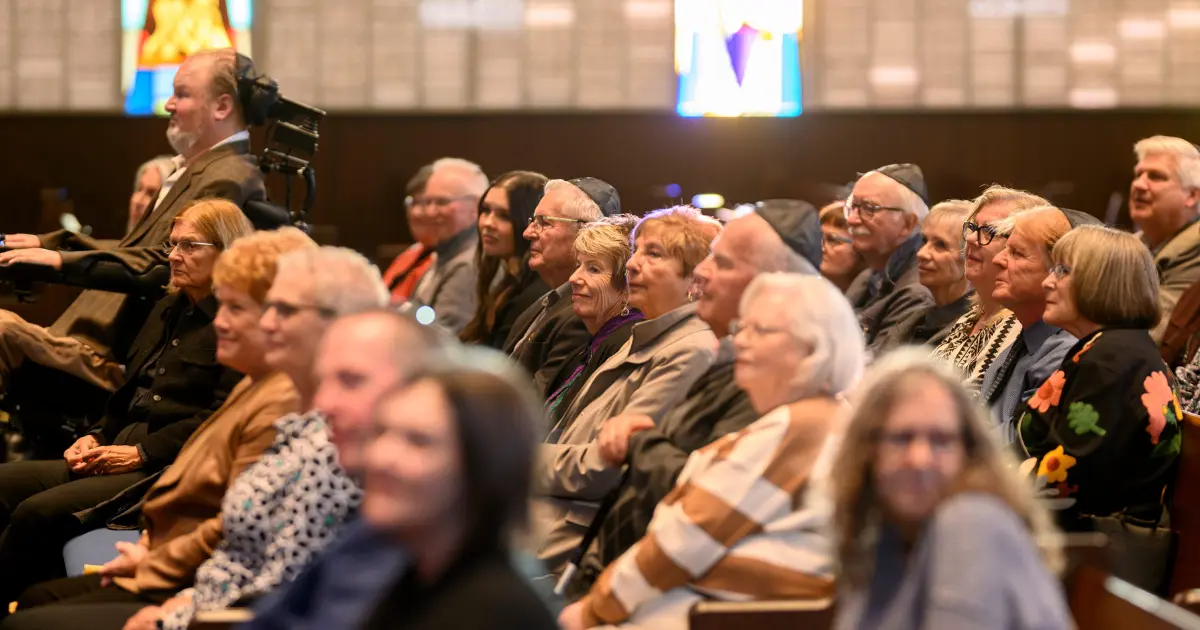
WINNIPEG — As the setting sun cast a warm golden light through the high, arched windows of Shaarey Zedek Synagogue last Friday, Cantor Leslie Emery stepped forward to perform a deeply sacred ritual. She approached a pair of sliding brass doors at the front of the sanctuary and gently slid them open, revealing six magnificent scrolls wrapped in rich coverings intricately embroidered with Hebrew lettering.
Five of these venerable scrolls contain the complete Torah—the foundational first five books of the Hebrew Bible—meticulously handwritten with quill and ink on genuine parchment by specialized scribes. Several of these sacred texts have endured for more than a century, carrying the prayers, laws, and histories of generations past. The congregation at Shaarey Zedek reads aloud from these very scrolls several times a week as part of their regular religious observance.
"When we read the stories of the Bible, when we read the stories of the prophets, when we observe Jewish holidays, we’re actually recounting the history of our ancestors," Emery explained to the hushed room.
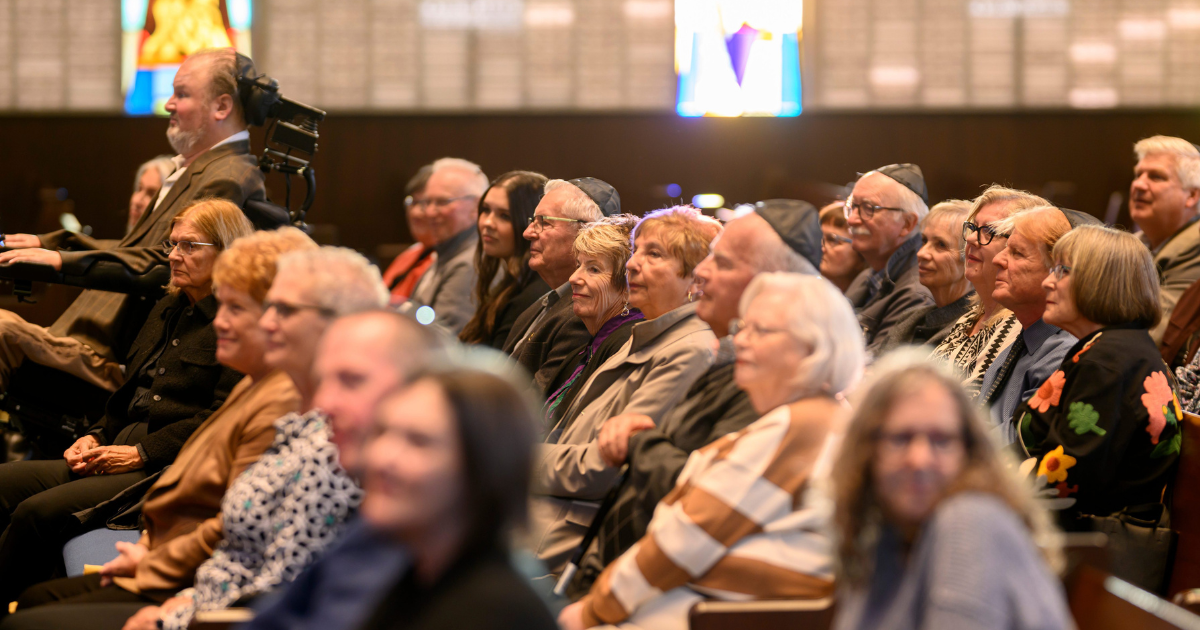
Every Friday evening, a rabbi and a cantor traditionally lead the Winnipeg congregation in a prayer service to welcome the arrival of the Sabbath. However, this particular Friday evening was entirely different. The service served as the centerpiece of a unique and deliberate interfaith exchange designed to foster mutual understanding and local solidarity. Exactly half of the individuals gathered inside the sanctuary were members of the Jewish community, while the other half were Christian visitors. Twenty-five members of Charleswood United Church had journeyed across the city to join the congregation of Shaarey Zedek Synagogue for Friday evening worship, followed by a shared communal meal. The reciprocal visit is already planned for the following month, when 25 members of the synagogue will travel to Charleswood United to experience a Christian service and fellowship.
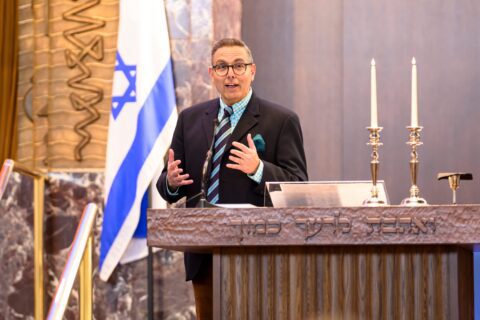
"We’re not walking into each other’s buildings trying to persuade one another to join our religion. That’s not what it’s about," said Rabbi Carnie Rose, addressing the assembled crowd. "We want to be in fellowship, sharing what makes us tick, what makes us feel, what makes us special and unique."
The initiative comes at a time of notable social friction. "We’re recognizing that there’s been some tensions and difficulties for the Jewish community in Winnipeg, and we want to be part of the resolution to that, to be neighbours and friends," noted Charleswood United Reverend Michael Wilson.
For some observers, the prospect of a United Church congregation joining a synagogue for joint prayer might come as a surprise given historical and recent geopolitical tensions between the United Church of Canada and various Jewish organizations. In December 2023, the United Church of Canada publicly characterized Israel’s military campaign in Gaza—launched in retaliation for the devastating October 7 Hamas attack—as a genocide, while simultaneously issuing a call for an immediate ceasefire. That stance provoked strong condemnation and upset from the Centre for Israel and Jewish Affairs. Furthermore, the United Church of Canada has previously drawn sharp criticism from Jewish groups for supporting targeted boycotts of specific commercial goods produced within Israeli settlements in the West Bank.
Reverend Wilson acknowledged that he was fully aware of those high-profile institutional tensions, but he emphasized that political disputes were purposefully excluded from the evening’s agenda. "I don’t think our congregation is totally on board with some of the positions the United Church has taken, and in the United Church you’re allowed to do that," Wilson remarked, pointing to the denomination’s internal diversity of thought. The core focus of the gathering, he reiterated, remained firmly rooted in the simple, local calling of being "good neighbours" with another spiritual community sharing the city of Winnipeg.
Moments before the liturgical service commenced, Cantor Emery translated a famous inscription written in Hebrew across the front of the lectern: "Love your neighbour as you love yourself." She noted that the sentiment is instantly recognizable to anyone raised within a Christian tradition.
"I feel like I’m welcoming some neighbours into our sacred space today," she told the congregation.
The evening quickly transformed into a collaborative cultural and theological dialogue. During an informal introductory period, a curious member of Charleswood United raised a hand to ask why the Hebrew language is traditionally read from right to left. Rabbi Rose drew a lighthearted laugh from the crowd when he replied, "You think that’s difficult? I was a rabbi in Japan," gesturing vertically to indicate Japanese script. "That’s a whole other story."
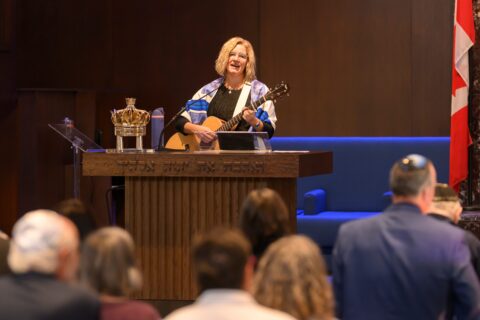
As Emery tuned her acoustic guitar in preparation for the liturgy, Rabbi Rose took a moment to explain the vital and multifaceted role of the cantor within Jewish worship. "The cantor is the minister of music, the heart and soul of what happens up here," Rose explained. "Much of what we do is singing, because we know that music moves the spirit and allows us to feel the presence of the divine in our lives."
To ensure that their Christian guests felt fully included in the service, Emery encouraged the visitors to sing along to the liturgy, pointing out transliterations of the Hebrew text that were projected clearly on a large screen next to the original script.
"Nobody in the history of Jewish tradition has ever been thrown out of synagogue for singing too loud or off key," Rabbi Rose added reassuringly. "Make a joyful noise unto the Lord. That’s what it’s all about."
The service officially opened with the recitation of the Kaddish, the traditional mourner’s prayer recited in memory of those who have recently passed away. The congregation then transitioned into joyous melodies welcoming the Sabbath, interspersed with the responsive reading of Psalms. Several musical arrangements resonated deeply across both faith traditions, including a familiar melody written by Canada’s legendary poet and songwriter, Leonard Cohen.
Following the formal prayer service, the two congregations transitioned to a social hall to share a traditional meal featuring roast chicken and fresh vegetables. Over dinner, participants broke the ice by discussing the various similarities and differences defining their respective religious traditions, as well as the practical challenges facing contemporary faith communities in the modern era.
Lively conversations touched on comparative religious milestones. Attendees explored how a Jewish bar or bat mitzvah differs structurally and spiritually from a Christian confirmation ceremony. They discussed theological symbolism, with Rabbi Rose explaining that the ritual cup of wine consumed during Sabbath blessings symbolizes joy and celebration, rather than representing blood as it does during a Christian communion service.
Conversations also drifted toward local culture and practical lifestyle differences. One lighthearted topic of discussion focused on the Winnipeg Blue Bombers football game playing that very evening—an event that observant Jews attending the Sabbath dinner were technically restricted from watching because the holy day had already commenced at sundown.
"Unless someone else turns on the TV and you just happen to walk through the room," Rabbi Rose quipped with a smile, acknowledging traditional halachic workarounds.
Beyond cultural anecdotes, the dinner conversations tackled heavier communal anxieties. Nancy Jeffries, a lifelong member of Charleswood United Church, shared her congregation’s deep-seated worries regarding dwindling weekly attendance figures and the near-total absence of young families in the pews. "How do we make it relevant for parents and their children?" she asked openly.
"It’s not just the Christian community asking those questions," observed Paulie Rose, who is married to the rabbi and participates actively in interfaith dialogue.
Other participants shared stories of institutional growth and social evolution within their churches. Karen Riddell recounted the emotional journey of how Charleswood United ultimately decided to formally become an affirming congregation welcoming of 2SLGBTQ+ individuals. "Every person voted yes," she recalled proudly, "even people in their 80s and 90s."
As the evening progressed, Reverend Wilson turned the conversation toward scripture, asking Rabbi Rose how Jews and Christians approach the reading and interpretation of sacred texts differently. Rabbi Rose explained that within traditional Judaism, sacred texts are never studied in a vacuum; instead, they are invariably read alongside centuries of rabbinic commentary, debate, and ongoing interpretation.
"We believe the Messiah is still on his way, and you believe he’s on his way back," Rose said, smiling warmly. Then, turning to a more serious note, he concluded: "It’s nice to talk about the things that are different. Not because they divide us, but because they’re interesting."