
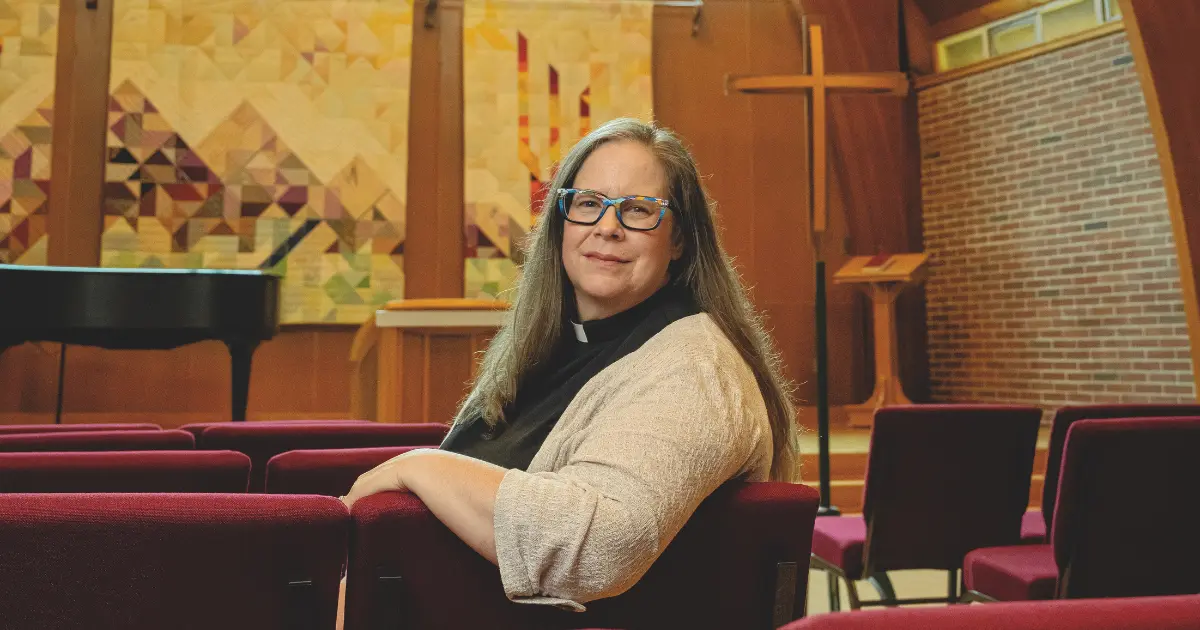
As traditional religious institutions across North America grapple with shifting demographics, declining membership numbers, and the practical challenges of modern organizational upkeep, church leaders are increasingly looking backward to find a path forward. According to the Rev. Heather McCance, president of the Atlantic School of Theology, the structural challenges facing contemporary congregations present a unique opportunity to revitalize faith communities by returning to the decentralized and ecumenical models practiced in the earliest days of Christianity.
Reflecting on the contemporary landscape of institutional religion, McCance notes a striking disconnect between modern expectations of church administration and the realities of the early church. "The way we have church today, if you look at Jesus’ time, they didn’t really have any of these things," she observes.
In the decades immediately following the ministry of Jesus, the Apostle Paul and other early Christian leaders did not rely on sprawling ecclesiastical bureaucracy, dedicated multi-purpose facilities, or heavily compensated professional clergy to maintain local congregations. Instead, the early apostolic method relied on empowering ordinary local believers, identifying community needs, and training local individuals to lead their own communities organically.
As congregational sizes shrink and financial resources tighten, McCance sees modern churches naturally reverting to this foundational apostolic way of being. Rather than viewing these structural shifts as a sign of terminal decline, she argues that the contemporary contraction forces congregations to shed unsustainable administrative weight and focus on what truly matters.
"The people who are still involved in churches really do want to be there," McCance emphasizes, pointing out that this high level of committed personal engagement can serve as a massive, often overlooked institutional strength. When congregations are stripped of passive attendees and casual participants, the remaining core membership frequently demonstrates a profound dedication to sustaining the spiritual and communal life of the church.
Navigating this transition from heavy institutional maintenance to lean, decentralized ministry requires deliberate changes in perspective and operational strategy. To help congregations bridge the widening leadership gap without falling into exhaustion and burnout, McCance has outlined ten strategic principles designed to help modern faith communities adapt, survive, and remain faithful to their spiritual missions.
Reframing Mindsets and Sharing the Load
The first step in addressing leadership shortages requires a fundamental shift in institutional self-understanding. McCance encourages congregations to reframe their collective mindset, viewing their local assembly through an apostolic lens rather than clinging to traditional, twentieth-century models of church management. Instead of asking how the church can maintain old programs, modern communities must ask how they can directly respond to the pressing spiritual and social needs of the present day.
Central to this new mindset is the abandonment of the traditional single-leader model, where an overworked pastor or a tiny group of exhausted volunteers shoulders the entire burden of church administration, pastoral care, and program planning. McCance advocates leaning into shared leadership by actively identifying the diverse gifts and talents of each individual within the congregation. By distributing responsibilities thoughtfully, no single person carries the weight of the church alone, ensuring that the tasks of ministry are shared equitably and that everyone in the community is adequately cared for.
However, implementing shared leadership cannot simply mean delegating tasks without support. McCance points out a common pitfall in ecclesiastical governance: "Churches are really good at asking people to do things but not giving them the training to do it." To ensure long-term viability, communities must intentionally equip their teams to succeed by sourcing relevant educational resources, providing mentorship, and utilizing leadership development programs tailored to volunteer-run organizations.
Strengthening Community Through Study and Pragmatism
Alongside administrative restructuring, fostering deep spiritual resilience is essential for congregations weathering times of transition. McCance highlights the importance of creating ongoing opportunities for spiritual study and development across the entire congregation. Shared spiritual growth acts as a powerful bonding agent, strengthening the social fabric of the community as members engage in mutual renewal and learning.
Adapting to changing circumstances also demands a high degree of pragmatism. Embracing new ideas and unconventional approaches can often feel uncomfortable for members accustomed to decades of institutional stability, but McCance stresses that flexibility is critical for survival. "God is excited for what we are able to do now," she notes, encouraging congregations to let go of rigid expectations about what church life is supposed to look like.
This pragmatic approach directly informs how churches manage their energy and resources. McCance notes that recognizing limitations should never be mistaken for moral or spiritual failure. "Understand that being realistic is not failing," she says. Successful contemporary churches recognize the wisdom of scaling back offerings, activities, and programs to match the actual, sustainable capacity of their active members, proving that it is entirely acceptable to do less in order to do it well.
Building Partnerships and Planning for the Future
Because no single congregation operates in an absolute vacuum, looking outward for collaborative opportunities is another vital strategy for survival. McCance encourages local churches to forge pragmatic partnerships with neighboring organizations, starting with a simple, foundational question: "What do we have, and what do you have?" For many communities, this cooperative spirit translates into sharing physical church buildings, pooling administrative or educational resources, or even sharing pastoral leadership across different neighborhoods or denominations.
Furthermore, protecting congregational health requires robust internal planning for personnel changes and leadership turnover. Burnout remains one of the greatest threats to volunteer-led organizations. McCance reminds communities that "God doesn’t call us to burn ourselves out," emphasizing the necessity of designing structural plans that allow individuals to step back and take necessary breaks while others seamlessly step into the breach.
Without long-term succession planning, even the most vibrant grassroots ministries face an uncertain future. A lack of intentional succession planning means that a successful initiative "lasts for five or 10 years and then it falls apart," McCance warns. To prevent this cycle of creation and collapse, she urges congregations to continually cultivate emerging leadership from within their ranks, ensuring that knowledge, vision, and operational responsibilities are passed down across generations.
Finally, McCance underscores the importance of resisting isolation. Churches navigating these complex transitions do not need to attempt the journey alone. Robust networks of support are widely available through regional church councils, broader ecumenical organizations, and the wider civic community, providing vital encouragement and external resources to struggling or transforming groups.
Despite the profound challenges facing organized religion today, McCance maintains an overarching message of hope. The structural contraction of institutional Christianity is not necessarily the end of faith communities, but rather a profound transformation. As small congregations strip away cumbersome legacy structures and return to their decentralized, collaborative roots, McCance remains confident in their enduring resilience: "Small churches will always find a way to be faithful to who God is calling them to be."